

For many individuals crossing the age of 50, the midsection undergoes a physiological transformation that often defies the traditional "crunch-heavy" fitness advice of the past. If your goal is to reduce belly overhang, the standard prescription of thousands of sit-ups is not only inefficient—it is often counterproductive. Achieving a flatter, more resilient midsection in your fifties requires a paradigm shift: moving away from localized muscle isolation and toward systemic, full-body metabolic training.
The Physiology of the Midsection After 50
To understand why traditional abdominal exercises fail to address belly overhang, we must look at the biology of aging. After 50, both men and women experience a decline in muscle mass, known as sarcopenia, and a shift in hormonal profiles that promotes visceral fat storage.
The "overhang" is rarely just a matter of weak abdominal muscles; it is a combination of subcutaneous fat, potential skin laxity, and a lack of deep-core stability. When you perform a crunch, you are isolating the rectus abdominis—the "six-pack" muscle. However, this movement does little to raise the heart rate, improve metabolic rate, or engage the deep transverse abdominis that acts as a natural corset for the waistline. Furthermore, excessive spinal flexion through repetitive crunches can exacerbate existing back issues common in this demographic.
The Morning Advantage: Why Timing Matters
Integrating movement into the early hours of the day is a strategic decision for those looking to manage body composition. Morning training serves three distinct purposes:
- Metabolic Priming: Engaging in strength-based movement upon waking triggers an immediate shift in glucose sensitivity and fat oxidation, setting a higher metabolic baseline for the remainder of the day.
- Psychological Momentum: Completing a purposeful workout before the stressors of the day—emails, meetings, and family obligations—prevents the "decision fatigue" that often leads to skipping workouts in the evening.
- Hormonal Regulation: Short, controlled morning sessions help manage cortisol levels, which, when chronically high, are directly linked to increased abdominal fat deposition.
The Core Five: A Comprehensive Morning Protocol
The following five-move circuit is designed to recruit the entire body, creating a high-output environment that burns more calories while building the structural integrity needed to flatten the midsection.
1. The Walking Lunge: Establishing Lower-Body Power
Walking lunges are a foundational movement that bridges the gap between mobility and strength. By forcing the lower body to work in a dynamic, single-leg stance, you recruit the glutes, quads, and hamstrings, while your core is forced to stabilize against the shifting weight of your torso.
- The Science: Compound movements like lunges require significant neurological input to maintain balance, which increases the caloric demand of the exercise compared to stationary movements.
- Execution: Keep your torso upright. As you step forward, ensure your front heel is grounded. Avoid letting the front knee cave inward.
- Volume: 3 sets of 8 to 10 reps per leg.
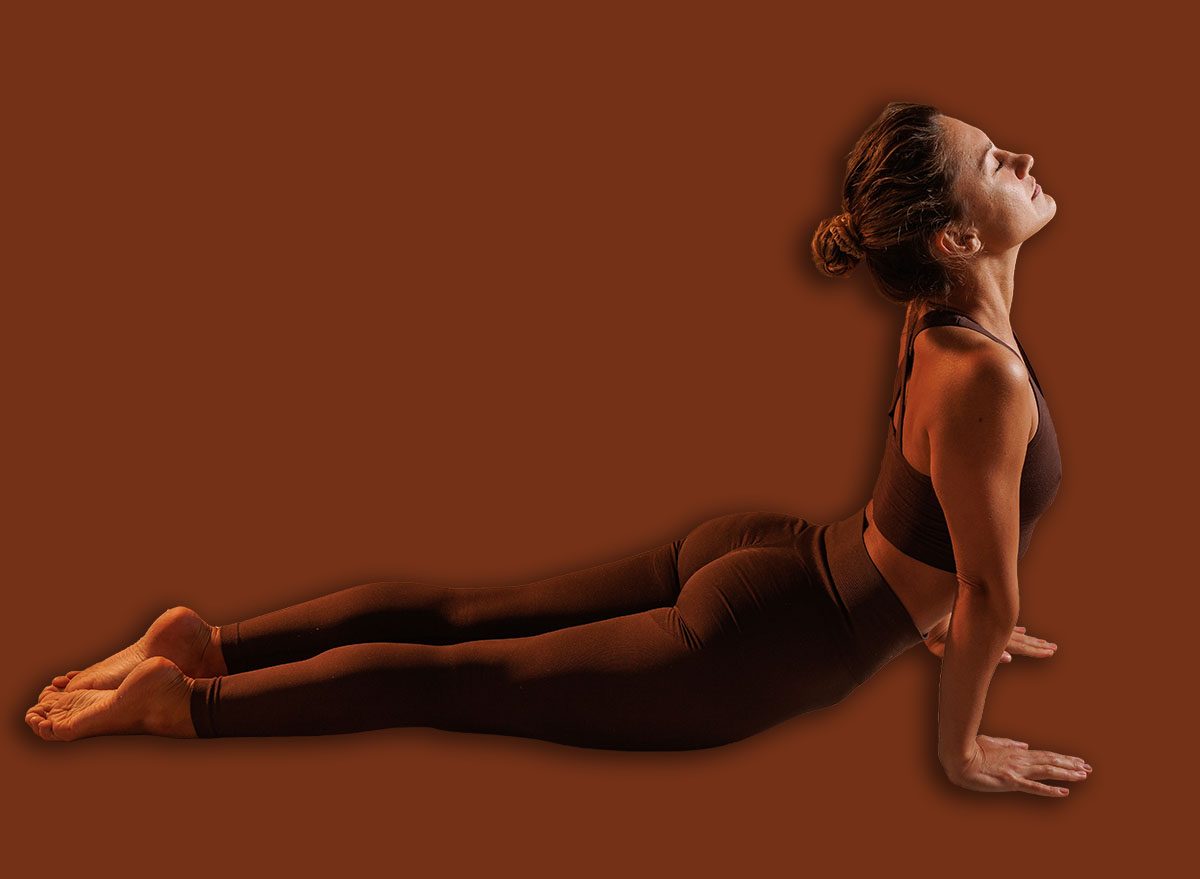
2. Down Dog to Cobra: The Mobility Reset
Before performing heavy resistance, the body must be prepared. The transition from Downward-Facing Dog to Cobra is a classic mobility drill that addresses the rigidity in the thoracic spine and the posterior chain.
- The Benefit: By lengthening the hamstrings and opening the chest, you improve your posture. Often, a "belly" appears more pronounced simply because of a slouching, forward-leaning posture. Opening the shoulders and spine creates a more lifted, athletic silhouette.
- Execution: Move fluidly. Focus on your breath—exhale as you push back into the dog, and inhale as you transition into the cobra.
- Volume: 2 to 3 sets of 6 to 8 reps.
3. Dumbbell Renegade Row: The Anti-Rotation Core Challenge
This is the ultimate alternative to the crunch. By holding a plank position while rowing a dumbbell, you force your obliques and transverse abdominis to fight against rotation.
- Why It Works: It trains your core to be a stabilizer rather than a flexor. By resisting the urge to tip your hips, you are building the exact muscle endurance needed to pull the midsection inward.
- Execution: Place your feet wider than shoulder-width to create a stable base. Keep your core tight, imagining you are bracing for a punch to the stomach.
- Volume: 3 sets of 6 to 8 reps per arm.
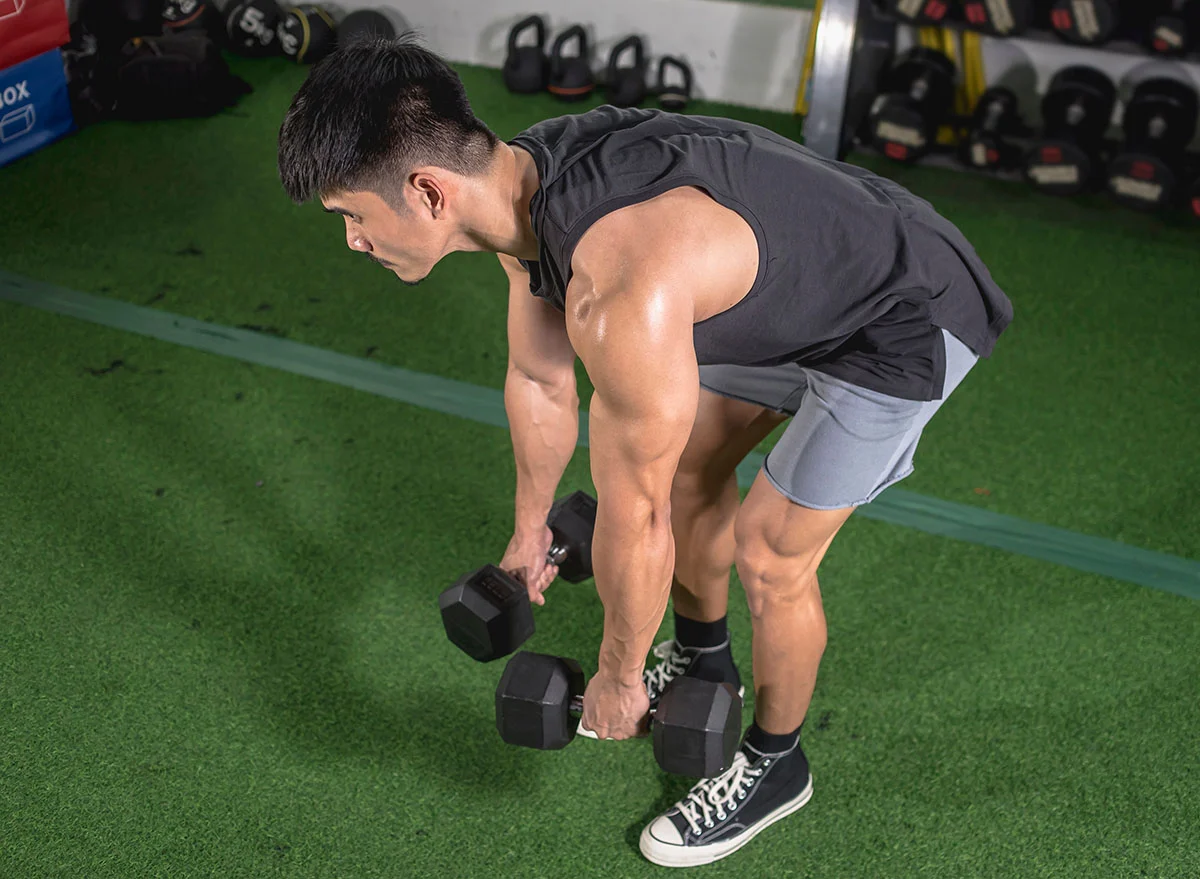
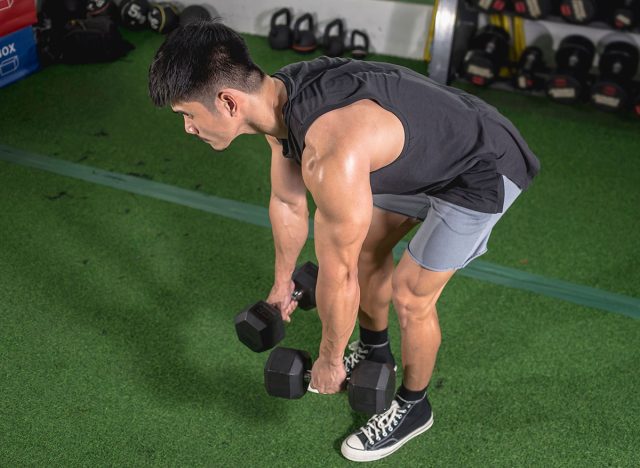
4. Dumbbell Deadlift: Engaging the Posterior Chain
The deadlift is the king of posterior chain development. By strengthening the glutes and lower back, you improve the support structure for your internal organs and abdominal wall.
- Implications: A strong posterior chain pulls the shoulders back and the pelvis into a neutral alignment, which is essential for reducing the appearance of a protruding stomach.
- Execution: Hinge at the hips, keeping your spine neutral. Let your glutes do the heavy lifting rather than your lower back.
- Volume: 3 sets of 8 to 12 reps.
5. Plank with Shoulder Taps: The Finishing Burn
This movement tests the limit of your stability. Every time you lift one hand to tap the opposite shoulder, you shift the load, challenging your core to hold the spine perfectly level.
- The Goal: It is not about speed; it is about the "anti-rock." If your hips are swaying, you are losing the core engagement. Slow down to maximize the tension on the abdominal wall.
- Volume: 3 sets of 20 to 30 seconds of continuous movement.
Supporting Data and Evidence
Research published in journals such as the Journal of Strength and Conditioning Research confirms that for individuals over 50, high-intensity, multi-joint resistance training is significantly more effective for visceral fat reduction than low-intensity, steady-state cardio or abdominal isolation.
The shift in body composition is not achieved through caloric expenditure alone, but through the hormonal signaling that follows muscle recruitment. When you lift weights, you stimulate the release of growth hormone and testosterone—both of which are critical for muscle preservation and fat metabolism as we age.
Official Guidelines and Clinical Perspective
Physical therapists and geriatric specialists generally endorse this transition toward functional movement. The "Core-First" approach (prioritizing stability over flexion) is recommended to prevent the disc-related injuries that often occur when older adults attempt high-volume sit-ups.
Dr. Aris Thorne, a specialist in aging and performance, notes, "The anatomy of a 50-year-old is different from that of a 20-year-old. We must prioritize spinal health. When we stop trying to ‘crunch’ the belly and start trying to ‘brace’ the core, we see a radical improvement in both posture and abdominal tone."
Implications for Long-Term Health
The implications of this routine extend far beyond aesthetics. Belly overhang is often a marker of visceral fat—the deep fat that surrounds the organs and contributes to metabolic syndrome, insulin resistance, and cardiovascular disease. By adopting this routine:

- Insulin Sensitivity: Improved muscle mass helps your body process carbohydrates more effectively.
- Fall Prevention: The focus on glute and core strength significantly reduces the risk of falls and hip injuries later in life.
- Functional Longevity: The ability to move through these planes of motion—hinging, pulling, and stabilizing—is a direct predictor of the ability to remain independent as you age.
Practical Implementation: How to Start
To make this routine a permanent fixture in your life, treat it like an appointment. You do not need an hour; 20 to 25 minutes, three to four times a week, is sufficient to stimulate change.
- The Circuit Method: Perform the exercises as a circuit. One set of lunges, one set of down dog-cobra, one set of rows, one set of deadlifts, and one set of shoulder taps.
- The Rest Protocol: Take 60 to 90 seconds between rounds to allow your heart rate to normalize, but keep the pace high enough that you feel a light sweat.
- Progressive Overload: Once the movements become comfortable, increase the weight of the dumbbells by 2 to 5 pounds, or add 5 seconds to your plank taps.
By shifting your focus from "folding" the body to "strengthening" the structure, you are not just targeting an aesthetic goal—you are investing in a more capable, resilient, and energetic second half of life. The "overhang" is merely a symptom; the solution lies in a holistic, full-body commitment to movement.
