


For millions of adults over the age of 60, the medical advice for managing hypertension has remained stubbornly static: "Walk more, eat less salt." While these recommendations are fundamentally sound, they often leave a significant gap in treatment efficacy. Many seniors diligently clock their daily miles and strictly limit their sodium intake, yet they continue to see their blood pressure readings hover in the hypertensive range.
For these individuals, the missing link may not be a lack of effort, but a misunderstanding of how specific types of movement influence the cardiovascular system. According to experts in the field of exercise physiology, the answer lies in incorporating targeted isometric and resistance training—movements that demand strength rather than just cardiovascular endurance.
The Core Problem: Why "Just Walking" Isn’t Enough
For four decades, personal trainer and educator at TRAINFITNESS, has been observing a recurring pattern in the over-60 demographic: a deep-seated fear of intensity. Many clients arrive with the conviction that any activity elevating the heart rate or requiring significant muscular exertion will trigger a dangerous spike in blood pressure. Consequently, they avoid any exercise that feels like "hard work."
This fear, while understandable, often leads to a sedentary lifestyle that compromises vascular health. Furthermore, many in this age bracket are prescribed antihypertensive medications. While these drugs are life-saving, they often mask the body’s natural signals. Beta-blockers, for example, artificially suppress the heart rate, rendering standard intensity-monitoring tools like heart rate monitors useless. In these cases, trainers must rely on qualitative markers: how the client breathes, their skin tone, and their ability to converse while exercising.

The result is a physiological paradox: a person who walks daily but experiences little to no change in their blood pressure because their muscles are not being challenged enough to promote vascular elasticity.
The Physiological Mechanism: How Isometric Holds Work
The most profound shift in recent hypertension research is the validation of "isometric" exercises—holds where the muscle engages without changing length.
When a person performs a wall sit or a firm handgrip, the working muscle temporarily compresses the blood vessels passing through it. This creates a localized, short-term resistance. When the muscle releases the hold, a surge of blood flows back through those vessels. This cycle of "squeeze and release" serves as a form of physical conditioning for the blood vessels themselves, improving their ability to widen and remain flexible.
Over several weeks, this mechanism helps lower resting blood pressure. Research suggests these holds can be more effective than traditional aerobic exercise at producing rapid, measurable improvements in vascular tone. Two minutes of a wall sit, for instance, provides a stimulus to the quadriceps that a casual stroll simply cannot replicate.

A Five-Step At-Home Protocol
To supplement daily walking, fitness professionals now recommend an integrated routine that combines isometric holds, resistance bands, and interval training.
1. The Wall Sit (Isometric Lower Body)
This exercise targets the thighs, the largest muscle group in the body. By engaging these muscles against the resistance of gravity and the wall, you create a powerful vascular stimulus.
- The Technique: Lean your back flat against a wall and slide down until your knees are bent. Keep your feet shoulder-width apart.
- Safety First: Never hold your breath. Count aloud or breathe rhythmically to prevent spikes in internal pressure.
- Progression: Start with 30-second holds and aim to reach a 2-minute duration. Perform four sets with a 1-to-2-minute rest between each.
2. Handgrip Squeeze (Isometric Vascular Conditioning)
Perhaps the easiest exercise to integrate into a daily routine, the handgrip squeeze has the most extensive clinical backing in cardiovascular research.
- The Technique: Using a soft stress ball or a rolled-up towel, squeeze firmly with one hand while sitting comfortably.
- The Goal: Maintain a steady, moderate grip—do not exert 100% force.
- Routine: Perform two 2-minute holds per hand, resting for one minute between each hold.
3. Band Chest Press (Resistance Training)
Resistance training is essential for preserving muscle mass in those over 60. Maintaining muscle mass is vital for metabolic health, which in turn supports healthy blood pressure.

- The Technique: Wrap a resistance band around a sturdy anchor behind you. Hold the handles and press forward.
- Form Tip: Keep your shoulders down and your neck elongated to avoid tension.
- Volume: Aim for 2–3 sets of 10–12 repetitions.
4. Band Side Steps (Glute and Hip Strength)
Side steps work the lateral muscles of the hips and glutes, which are critical for balance and mobility.
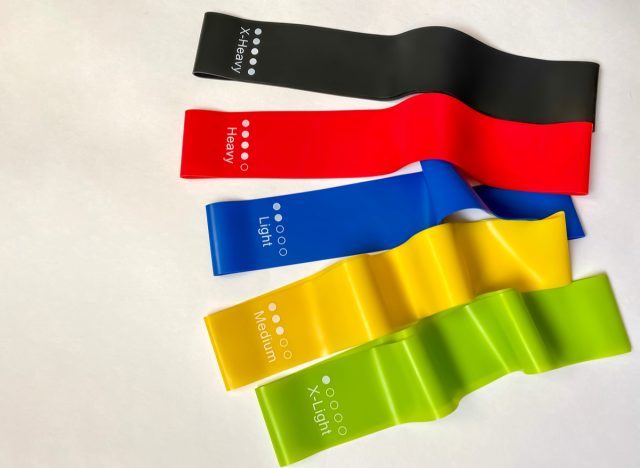
- The Technique: Place a small resistance band around your ankles. Step laterally while keeping the torso upright and stable.
- Volume: Perform three rounds of 10 steps in each direction.
5. Brisk Marching Intervals (Aerobic Conditioning)
This provides the "active" portion of the workout, replacing or augmenting the daily walk during inclement weather.
- The Technique: Alternate between one minute of very brisk marching (lifting knees high) and one minute of easy walking.
- Intensity: Use the "talk test." If you can hold a conversation during the brisk interval, you are at the correct intensity.
Safety Protocols and Medical Consultation
Before starting any new exercise regimen, especially if you have high blood pressure or experience chest pain/dizziness, you must consult your physician. It is a fundamental rule: never modify or discontinue medication based on your own assessment, even if your blood pressure readings begin to improve.
Furthermore, ensure you are transitioning out of floor-based exercises slowly to avoid orthostatic hypotension—the light-headedness that occurs when standing up too quickly.

Establishing a Sustainable Routine
Consistency is the engine of change. The recommended weekly schedule is simple:
- Monday, Wednesday, Friday: Perform the Wall Sits and Handgrip Squeezes (the isometric holds).
- Two to Three Times Weekly: Incorporate the Band Chest Press and Side Steps.
- Daily: Maintain your standard walking routine, but aim for 15 minutes of marching intervals to ensure you are consistently challenging your cardiovascular system.
During the first two weeks, focus on shorter durations and lighter resistance. As your body adapts and your confidence grows, increase the intensity.
Interpreting the Data: What to Expect
When monitoring blood pressure at home, it is critical to look for a trend, not a daily miracle. Blood pressure naturally fluctuates based on sleep, stress, salt intake, and even the time of day.
- The Immediate Response: You may notice a slight drop in blood pressure immediately following a workout. This is a healthy, normal response to exercise and should not be misinterpreted as a permanent shift.
- The 4–6 Week Window: Many individuals will begin to see a downward shift in their resting numbers within four to six weeks of consistent training.
- The 8–12 Week Trend: By the three-month mark, a clear trend usually emerges. If you see a consistent reduction, it is time to bring your logbook to your doctor. They will evaluate your progress and decide if your medication dosage requires adjustment.
Implications for Long-Term Health
The primary implication of this research is that physical activity for seniors must be multifaceted. Cardiovascular health is not merely a product of "moving more"—it is a product of training the body to be resilient.
By integrating isometric holds that challenge vascular elasticity and resistance training that preserves muscle mass, seniors can reclaim control over their blood pressure. However, the caveat remains: the benefits are tied to the habit. If the training stops, the vessels lose their "squeeze-and-release" conditioning, and the readings will inevitably drift back to baseline.
Ultimately, this approach represents a shift from passive management to active, performance-based health—a philosophy that empowers seniors to move beyond the constraints of their diagnosis and build a body that is genuinely stronger, more flexible, and more resilient.
