

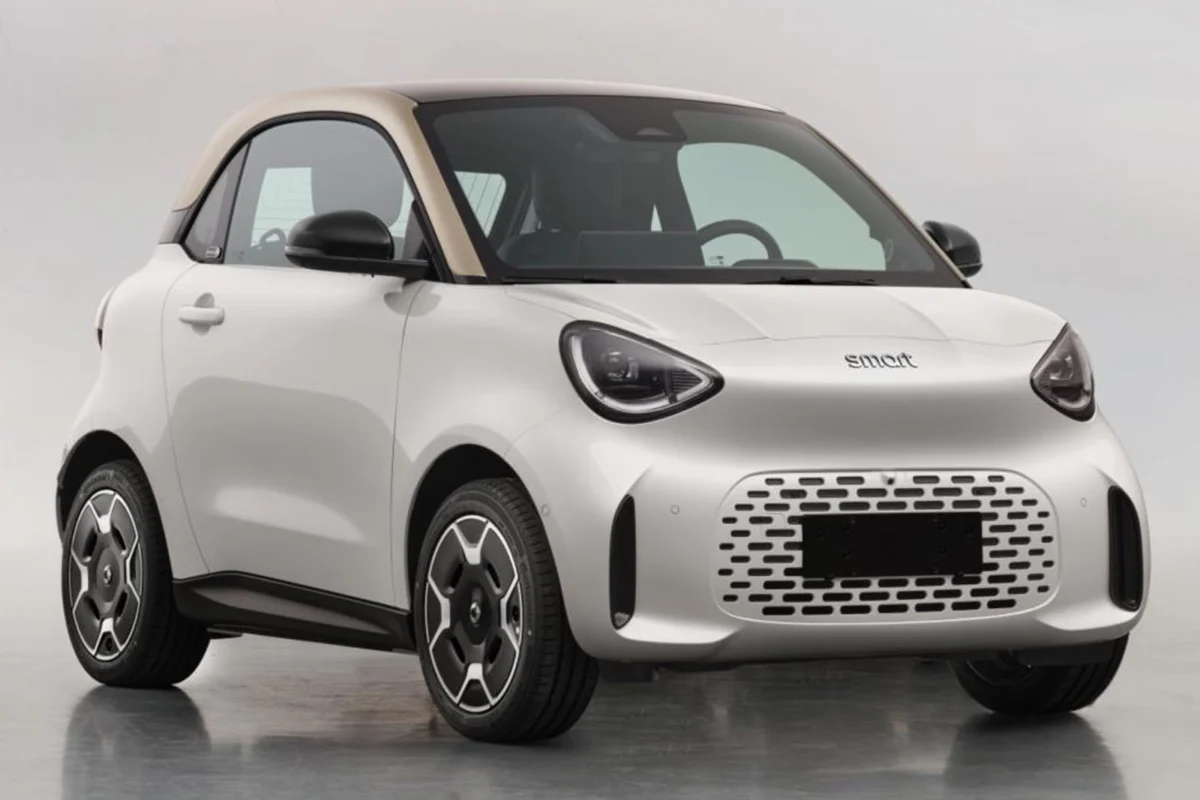
After a strategic pivot toward larger electric crossovers, Smart is returning to its roots. The production-ready design of the highly anticipated Smart #2—the spiritual and direct electric successor to the legendary Fortwo—has been leaked via filings with China’s Ministry of Industry and Information Technology (MIIT). This revelation provides a clear glimpse of the vehicle ahead of its official global debut at the Paris Motor Show in October.
The #2 represents a significant milestone for the brand, signaling a return to the "city car" segment that originally defined its identity. While the company has spent the last few years scaling up with the #1, #3, and the substantial #5, the #2 proves that Smart has not abandoned the niche that made it a household name in Europe’s congested urban centers.
The Evolution of an Urban Legend: A Chronological Retrospective
To understand the gravity of the #2’s arrival, one must look at the trajectory of the Smart brand over the last quarter-century.
The Fortwo Era (1998–2024)
Launched in 1998 as a joint venture between Swatch and Mercedes-Benz, the original Smart City-Coupé (later renamed the Fortwo) revolutionized parking and city driving. Its unique "tridion" safety cell and minuscule footprint made it the vehicle of choice for metropolitan dwellers from Rome to London. However, as the automotive industry shifted toward electrification and larger, more practical SUVs, the internal combustion-powered Fortwo began to feel outdated, eventually being phased out in 2024.
The Geely-Mercedes Partnership
In 2019, Mercedes-Benz and Chinese automotive giant Geely formed a 50:50 joint venture to revitalize the Smart brand. This partnership was specifically designed to leverage Mercedes’ design prowess and Geely’s rapid development cycle and EV architecture expertise. The #2 is the most significant product of this collaboration yet, as it is the first model to directly inherit the mantle of the original Smart icon, adapted for the modern electric age.
The Road to Paris
Following months of speculation and rumors, the official MIIT filings have finally lifted the veil on the production model. While the company intended to keep the design under wraps until the October reveal in Paris, the regulatory filing process in China—a standard requirement for vehicle homologation—has inadvertently provided the public with an early look at what the future of city driving will look like.
Design and Engineering: The DNA of the #2
Despite the jump in technology, the Smart #2 retains a striking resemblance to the outgoing Fortwo. It preserves the classic "stubby" proportions that allow it to fit into parking spaces where other cars simply cannot go. However, the design language has been brought into the modern era, aligning it with the rest of the Smart "hashtag" family.
Exterior Aesthetics
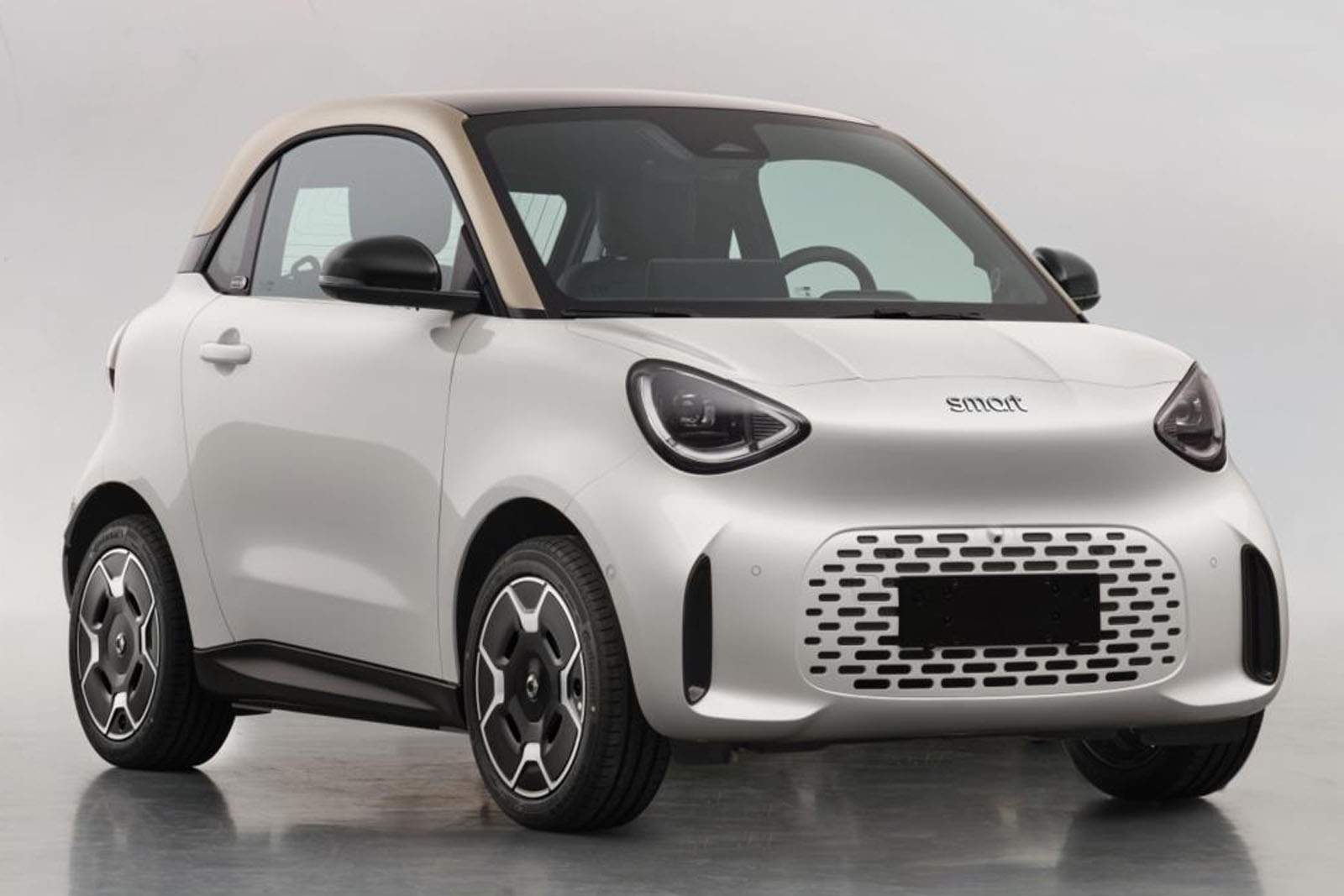
The #2 features a sharper, more aggressive front fascia compared to its predecessor. The headlamps are described as "scowling," providing a more determined, modern look, while the rear end utilizes rounded LED units that maintain a playful, friendly character. At just 2.75 meters in length, it remains one of the most compact vehicles in the world.
Architectural Innovation
The vehicle is built on a bespoke architecture engineered by Geely, specifically optimized for a small-car footprint. By moving away from the internal combustion engine’s constraints, engineers have managed to maximize interior volume. A key interior change involves the switch from two individual, somewhat cramped chairs to a single bench seat. This subtle change is intended to make the cabin feel more spacious and versatile, addressing one of the most common criticisms of the original Fortwo.
Technical Specifications and Performance
The #2 is designed to offer what the company calls "uncompromised urban capability." It is not intended to be a long-distance cruiser, but rather the ultimate tool for the "last mile" of modern commuting.
- Powertrain: The filings reveal an 80bhp electric motor paired with a lithium-iron-phosphate (LFP) battery pack. While 80bhp may seem modest by modern standards, it is more than sufficient for a vehicle weighing just 1,130kg.
- Range and Charging: Smart has confirmed that the #2 will offer a range of approximately 186 miles on a single charge—a massive improvement over the electric Fortwo’s original limitations. Furthermore, the vehicle is expected to support high-speed DC charging, capable of replenishing the battery from 10% to 80% in under 20 minutes.
- V2L Capability: A standout feature is the vehicle-to-load (V2L) capability. This allows owners to draw power directly from the car’s battery to charge external devices, such as laptops, portable speakers, or even camping equipment, making the car a mobile power hub.
- Maneuverability: Perhaps the most impressive statistic is the turning circle: just 6.95 meters. For context, this is significantly tighter than the turning radius of a London black cab, cementing the #2’s status as the king of narrow alleyways and tight city streets.
Market Positioning and Strategic Implications
The arrival of the #2 comes at a pivotal time for the electric vehicle market. While the segment is currently dominated by full-sized SUVs, there is a growing realization that "bigger is not always better" for urban environments.
The "Quadricycle" Comparison
The #2 is set to compete in a unique space. While it is technically a full-fledged passenger car, it occupies a size bracket often shared by quadricycles like the Fiat Topolino and the Micro Microlino. However, unlike these smaller, limited-capability vehicles, the Smart #2 provides the safety, build quality, and performance of a premium Mercedes-engineered product. This gives it a significant advantage over the Dacia Spring or Fiat 500e, which are larger and heavier, and potentially over the ultra-small quadricycles, which often lack highway capability.
Pricing and Premium Status
Smart has not yet released official pricing. However, industry analysts suggest that the #2 will be positioned as a premium product. With its vastly superior technical specifications, high-quality materials, and advanced infotainment, the #2 is expected to command a price higher than the original Fortwo, which sat at approximately £22,000 when it was discontinued.
Smart is clearly betting that urban consumers are willing to pay a premium for a car that is not only environmentally conscious but also offers a "joyful" ownership experience. As Kai Sieber, Head of Smart Design at Mercedes-Benz, has previously noted, the goal of the #2 is to prove that city cars should "spark joy," rather than being viewed as mere appliances.
Official Responses and Future Outlook
The industry response to the leaked images has been largely positive. Critics have praised the decision to keep the car compact, noting that many modern EVs have grown too large for traditional city infrastructure.
"Smart has found its mojo again," said one industry analyst. "By leaning into the small-car expertise of the past and combining it with the electrification technology of the future, they have created a product that actually solves a real problem: the difficulty of navigating and parking in the modern megacity."
What’s Next?
Following the Paris Motor Show reveal in October, the #2 is slated to arrive in UK dealerships in 2025. This launch will be closely watched by competitors. If the #2 succeeds, it could trigger a resurgence in the popularity of small, efficient, and technologically advanced city cars, potentially changing the landscape of urban planning and mobility as we know it.
For those who have lamented the loss of the original Fortwo, the #2 provides hope. It is a car that refuses to grow up, choosing instead to become smarter, faster, and more capable than ever before. It is a bold statement that in a world of automotive giants, there is still plenty of room for a little bit of genius.
