

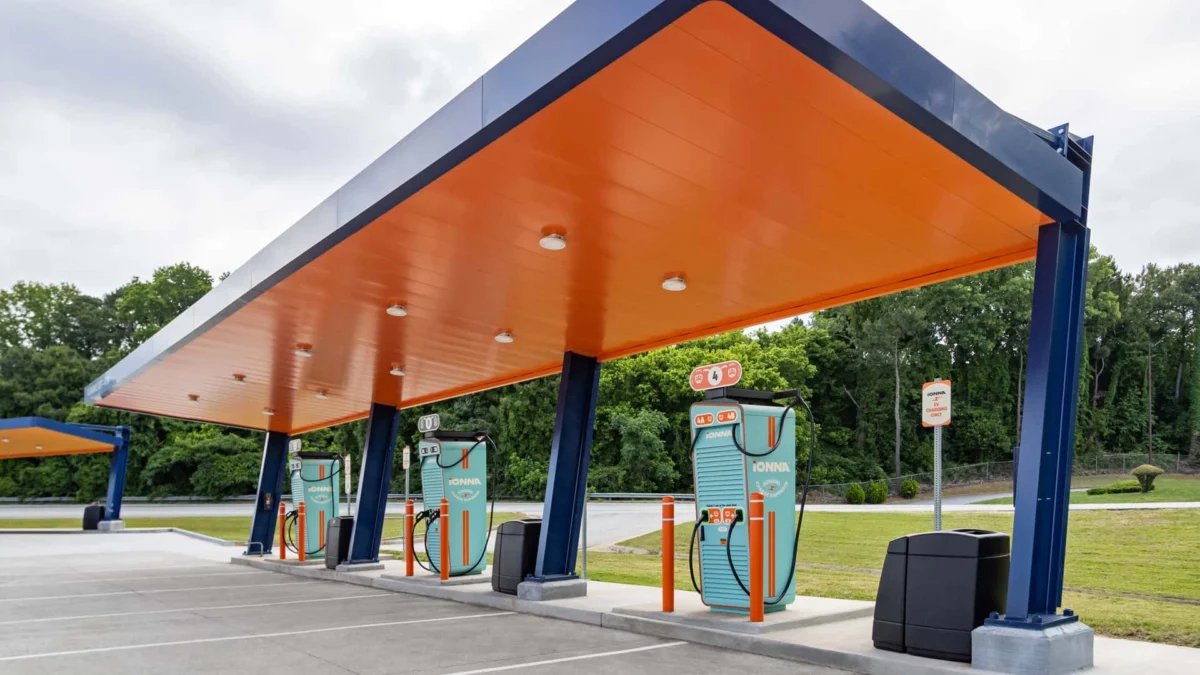
The transition to electric mobility has long been hindered by a singular, persistent "chicken-and-egg" dilemma: consumers are hesitant to adopt electric vehicles (EVs) without a robust, reliable charging network, yet developers are wary of investing in infrastructure until the market reaches a critical mass. Enter Ionna, the automaker-backed charging powerhouse that is not only bridging this gap but effectively dismantling the barriers to entry for millions of prospective EV drivers across the United States.
In recent months, Ionna has accelerated its expansion with a velocity rarely seen in the utility sector. By leveraging cutting-edge technology and a user-centric philosophy, the network has transitioned from a promising startup to a dominant force in the North American charging ecosystem.
A Rapid Expansion: The Numbers Behind the Growth
According to the latest data from the U.S. Department of Energy’s Alternative Fuels Data Center (AFDC), Ionna’s footprint has exploded over the last half-year. The network has expanded its reach by 74% in terms of total locations, while simultaneously increasing its number of available charging plugs by a staggering 50%. As of the latest reporting, the network boasts 1,488 high-speed charging ports spread across 174 strategically positioned stations nationwide.
This aggressive rollout is unprecedented. To put this into perspective, Ionna—which only energized its first DC fast-charging site in December 2024—managed to establish 51 locations and 478 ports within its first year of operation. Reaching its 100th station milestone this past March was not merely a vanity metric; it served as a signal to the industry that Ionna has mastered the logistics of deployment, permitting, and grid connection at a scale that competitors have struggled to replicate.
Chronology of an Infrastructure Revolution
The trajectory of Ionna’s growth provides a masterclass in modern infrastructure development. Following its inception as a joint venture between several of the world’s leading automotive manufacturers, the company focused on identifying the primary pain points of the existing charging experience: unreliability, complex payment interfaces, and sluggish charging speeds.
- December 2024: Ionna marks its entry into the market, unveiling its first DC fast-charging stations designed to address the "charging anxiety" prevalent among long-distance commuters.
- Late 2024 – Early 2025: The network establishes a "fast-start" phase, focusing on high-traffic corridors to ensure maximum utility for early adopters.
- March 2026: A major milestone is achieved as the 100th station goes online, bringing the total count of individual charging bays to 1,000.
- Mid-2026 to Present: The company enters a phase of hyper-growth, expanding its port count to nearly 1,500 and consistently improving station density in underserved suburban and rural regions.
The Technological Edge: Why Ionna Stands Out
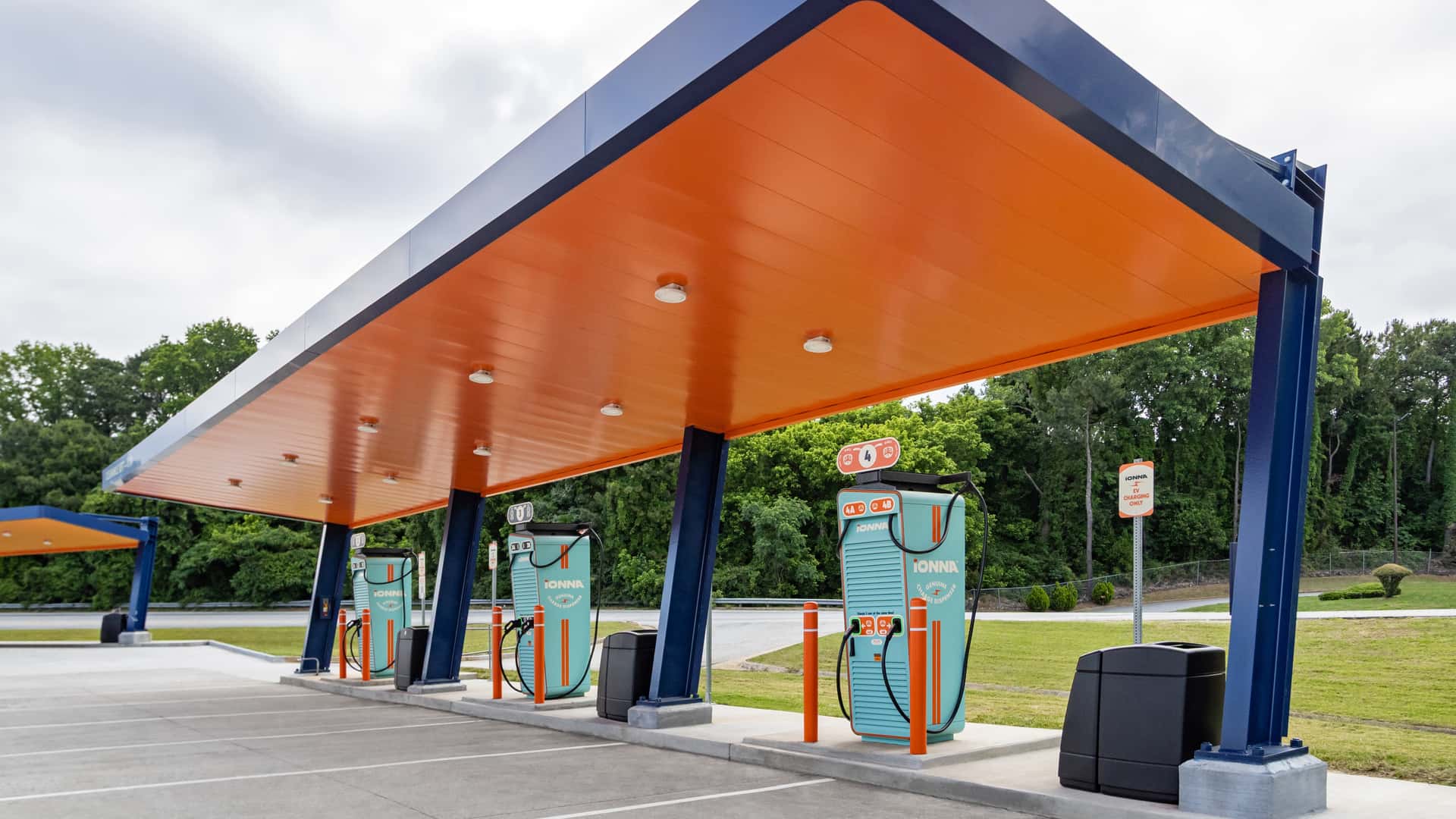
What sets Ionna apart in a crowded market is not just the volume of its installations, but the quality of the hardware. The company has standardized its infrastructure around the Alpitronic dual-cable charging stalls. These units are highly regarded in the industry for their modularity and reliability, capable of delivering up to 400 kilowatts of power per vehicle.
For the average EV owner, this means significantly reduced dwell times at charging stations. As vehicle architectures move toward 800-volt systems, Ionna’s hardware ensures that drivers can take full advantage of their vehicle’s maximum intake rate, effectively turning an hour-long stop into a brief 15-to-20-minute coffee break.
Furthermore, the design philosophy at Ionna prioritizes accessibility. Recognizing that the "app-first" requirement of many older charging networks creates unnecessary friction, Ionna has integrated credit card readers directly into every dispenser. This "plug-and-play" simplicity mimics the convenience of traditional gas stations, a critical psychological hurdle that must be cleared to achieve mass-market EV adoption.
Industry Recognition and User Satisfaction
The efficacy of Ionna’s strategy has been validated by both industry experts and the driving public. In the latest J.D. Power Electric Vehicle Experience (EVX) Public Charging Study, Ionna debuted with an impressive score of 803 points. This high rating in its inaugural year speaks volumes about the company’s focus on uptime and maintenance.
Frequent reports from independent reviewers—including those at InsideEVs—have consistently highlighted the "refreshingly flawless" nature of the Ionna experience. The combination of modern hardware, intuitive interfaces, and, most importantly, the fact that the chargers simply work when a user pulls up, has cemented the brand’s reputation as the "gold standard" for public fast-charging.
Strategic Incentives and the "Founding Brand" Advantage
Ionna’s competitive edge is further sharpened by its integration with the manufacturing side of the industry. By partnering with major automotive players such as General Motors, BMW, Hyundai, Genesis, and Mercedes-Benz, the network has created a tiered value proposition.
Owners of EVs from these manufacturers are now eligible for exclusive discounts, ranging from 10% to 20% off charging sessions. To access these savings, users simply utilize the "Plug and Charge" protocol—which automatically authenticates the vehicle and initiates payment upon connection—or manage their sessions through their respective manufacturer’s smartphone application. This vertical integration creates a seamless ecosystem that benefits both the automaker, who can guarantee a better experience for their customers, and the consumer, who receives a more affordable and convenient service.
The Road Ahead: 30,000 Bays by 2030
Looking toward the horizon, Ionna has outlined a gargantuan objective: to deploy 30,000 charging bays across the United States by the year 2030. Given that the company primarily utilizes dual-cable stalls, this translates to roughly 15,000 physical charging units.
While some critics might view this as an overly ambitious target, Ionna’s performance over the last 18 months suggests that they are operating with a clear, scalable roadmap. The company is not merely adding ports; it is building a foundational layer of the American transportation grid.
The implications of this expansion are profound. A national network of 400-kW chargers effectively eliminates the "range anxiety" that has been the primary deterrent for potential buyers. As the density of these stations increases, the threshold for switching from internal combustion engines to electric powertrains will drop significantly.
Implications for the Energy Grid and Market Competition
Ionna’s rapid expansion is also forcing a transformation among its competitors. Companies that previously relied on legacy hardware and opaque, proprietary software are finding themselves unable to compete with Ionna’s reliability and speed. The result is a "rising tide" effect: as the market leader sets a new standard for quality, other networks are being forced to upgrade their equipment and improve their maintenance protocols to survive.
Moreover, the heavy power demands of 400-kW stations are accelerating conversations regarding grid modernization. Ionna’s presence in various municipalities is driving collaboration between private industry, local utilities, and government planners to upgrade regional distribution networks. In this sense, Ionna is not just building charging stations; it is catalyzing the modernization of the electrical grid itself.
Conclusion
The story of Ionna is one of strategic focus, technological superiority, and a clear understanding of the consumer. By prioritizing the user experience, maintaining high standards for hardware reliability, and aligning with major automakers to provide tangible cost benefits, the company has positioned itself as the cornerstone of the American EV revolution.
As the network continues to grow, the focus will likely shift from simple geographic expansion to optimizing the "charging destination" experience—incorporating amenities and ensuring that the infrastructure is ready for the next generation of high-capacity EVs. For now, however, Ionna has proven that when the infrastructure is built right, the transition to electric mobility is not just an environmental imperative—it is a better way to drive.
As we move closer to 2030, all eyes will remain on this network, waiting to see if it can maintain its blistering pace and, in doing so, lead the United States into a new, electrified era of transportation.
