

For years, the luxury automotive landscape has been dominated by a select group of "land yachts"—the full-size, three-row SUVs that serve as the pinnacle of comfort, prestige, and family utility. While BMW, Mercedes-Benz, and Cadillac have long reaped the rewards of this lucrative segment, Audi has remained a notable holdout, sticking to its Q7 as the largest offering in its SUV hierarchy. That appears to be changing.
Recent spy shots have confirmed that Audi is finally moving forward with a full-size SUV, widely believed to be the long-rumored Q9. This vehicle is not merely an addition to the lineup; it represents a strategic pivot to capture the high-end American and Chinese markets, where size and road presence remain the ultimate symbols of luxury.
The Main Facts: A New Flagship Takes Shape
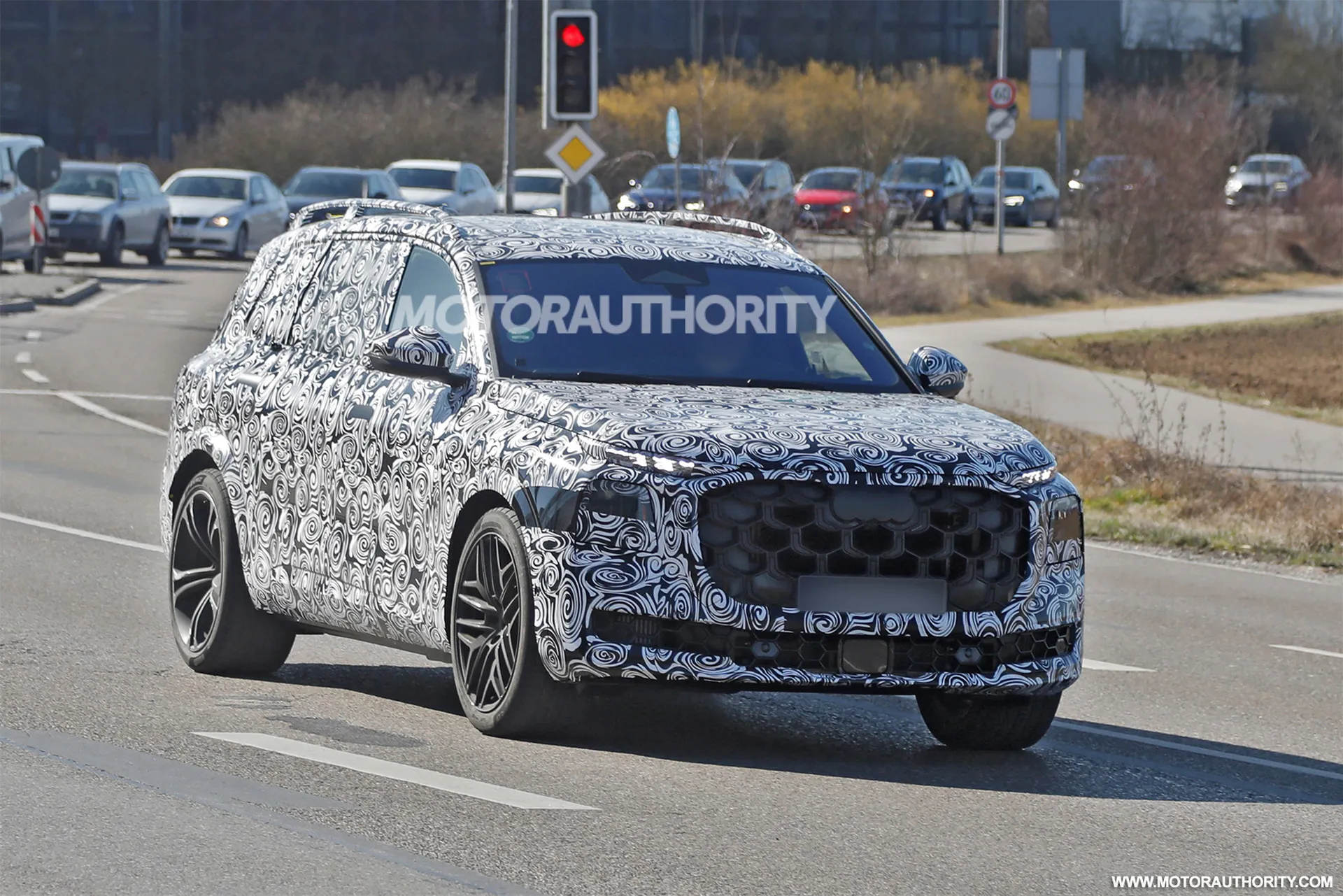
The automotive world was set abuzz this week as camouflaged prototypes of a massive new Audi SUV were spotted undergoing rigorous testing. These spy photographs provide the first tangible evidence that Audi is ready to bridge the gap between its current mid-size offerings and the true full-size behemoths of the industry.
The prototype in question carries the distinct design language of the next-generation Q7, yet it is visibly stretched. Analysts have noted a significantly longer wheelbase and a rear overhang that hints at a spacious, genuinely usable third row—a common criticism of the current Q7, which often compromises interior volume for a sleeker profile.
Perhaps most exciting is the evidence that Audi is not just targeting the mainstream luxury segment, but the performance-oriented niche as well. The test mule features a quad-exhaust setup, a hallmark of Audi’s "S" performance division. Industry insiders are already referring to the vehicle as the "SQ9," suggesting that Audi plans to launch the Q9 with a high-performance variant right out of the gate to compete with the BMW X7 M60i and the Mercedes-AMG GLS 63.
A Chronology of Anticipation: Years in the Making
The journey to the Q9 has been a slow burn, characterized by rumors, trademark filings, and intense speculation. The narrative of Audi’s potential full-size entry can be traced back nearly a decade.
- 2014–2018: The Trademark Phase: During this period, Audi officially filed for the "Q9" trademark in various jurisdictions globally. While automakers often trademark names to "bank" them for future use, the move signaled a definitive intent to explore the segment.
- 2020–2022: The Dealer Whispers: As the pandemic reshaped automotive demand, reports began to surface that Audi’s North American dealer advisory council had been briefed on a "large-scale" SUV project. Dealers, particularly those in the U.S. where the Cadillac Escalade dominates the local market, had long pushed for a larger vehicle to prevent customers from defecting to rivals.
- 2023: The Strategic Shift: As Audi pivoted toward a broader electrification strategy, questions arose regarding whether a new combustion-powered SUV was still on the table. However, internal reports suggested that the company would maintain a "hybrid" approach, keeping its premium internal combustion engine (ICE) flagships fresh while simultaneously expanding its e-tron range.
- 2024: The Spy Shot Confirmation: The appearance of the camouflaged prototype serves as the "smoking gun." With a targeted debut expected for early 2025, the vehicle is tracking for a 2027 model-year arrival in the U.S. market.
Supporting Data: The Competitive Landscape
To understand why Audi is finally committing to the Q9, one must look at the competitive landscape. The full-size luxury SUV segment is not just a high-volume category; it is one of the most profitable segments in the global automotive industry.
The Rivals
- BMW X7: Since its introduction, the X7 has proven that BMW can successfully translate its driving dynamics into a three-row package. Its presence is defined by bold styling and a highly refined chassis.
- Mercedes-Benz GLS-Class: The benchmark for interior opulence. The GLS is frequently cross-shopped by those who prioritize comfort and brand prestige above all else.
- Cadillac Escalade: The undisputed king of the U.S. market. Its sheer size and "road presence" have created a cultural phenomenon that Audi has yet to counter with a direct competitor.
Market Dynamics
Audi’s primary reason for the Q9 is the data regarding market preference. In the U.S., the trend toward "bigger is better" shows no signs of slowing down. Similarly, in China, the chauffeur-driven market demands a vehicle that offers not only luxury but also significant rear-seat legroom and an imposing silhouette. By failing to offer a Q9, Audi has essentially been leaving billions of dollars in potential revenue on the table.
Official Responses and Corporate Strategy
To date, Audi’s official stance remains characteristically guarded. When reached for comment, Audi spokespeople typically reiterate the company’s commitment to "a diverse, customer-centric lineup" while declining to confirm future product details.
However, the silence is strategic. By not confirming the Q9, Audi maintains the exclusivity and market freshness of its current Q7 and Q8 models. Yet, the evidence from internal dealer communications is clear: Audi is under immense pressure to round out its "Q" lineup. The move is widely seen as part of a broader "Product Offensive" that seeks to modernize the brand’s ICE portfolio even as it ramps up its electric vehicle (EV) infrastructure.

Inside the halls of Ingolstadt, the internal debate has likely focused on the powertrain. Will the Q9 feature a plug-in hybrid (PHEV) setup to satisfy tightening emissions regulations, or will it lean into the high-displacement V8s that the market expects for a vehicle of this size? Given the "S" badge spotted on the prototype, a twin-turbocharged V8 with mild-hybrid assistance is the most likely candidate for the top-tier engine configuration.
Implications: What the Q9 Means for Audi
The introduction of the Q9 will be a watershed moment for the Four Rings. Here are the broader implications:
1. Brand Positioning
The Q9 will serve as the halo SUV for the brand. Just as the A8 represents the pinnacle of Audi’s sedan engineering, the Q9 will consolidate the best of the brand’s technology—from AI-driven driver assistance systems to the latest generation of the MMI (Multi Media Interface) and sustainable luxury materials.
2. Engineering Challenges
Building a vehicle of this size presents significant engineering hurdles. To compete with the Escalade and GLS, the Q9 must not only be large but also agile. The use of adaptive air suspension and rear-wheel steering—as hinted by the prototype’s stance—will be essential to mask the vehicle’s weight and provide the "Audi-like" driving experience that enthusiasts demand.
3. The EV Transition Paradox
It may seem counterintuitive for Audi to launch a massive, likely thirsty, gasoline-powered SUV while simultaneously committing to a fully electric future. However, the Q9 is a bridge. It acknowledges that in markets like the U.S., the demand for large, long-range internal combustion vehicles remains high. The Q9 will likely exist alongside the electric Q8 e-tron, ensuring that Audi captures both the traditionalist luxury buyer and the early adopter.
4. Dealer and Customer Satisfaction
For Audi’s U.S. dealer network, the Q9 is the "holy grail." Dealers have been clamoring for a product that allows them to retain customers who move from the Q7 into larger, competing luxury SUVs. By providing a flagship model that keeps families within the Audi ecosystem, the brand can expect to see higher customer lifetime value and improved brand loyalty.
Conclusion: The Path Ahead
The road to the 2027 model-year arrival is still long, and much can change in the volatile automotive industry. However, the presence of the prototype confirms that the "Q9" is no longer just a hypothetical exercise or a trademark filing—it is a reality in motion.
As we look toward the expected debut early next year, the automotive world waits with bated breath. Will the Q9 be the definitive answer to the BMW X7 and the Cadillac Escalade? Will it capture the hearts of the Chinese market? And, most importantly, will it succeed in cementing Audi’s reputation as a top-tier contender in the luxury SUV space?
While the official specifications remain under wraps, the clues provided by the test mule tell a compelling story. Audi is ready to swing for the fences, and the result promises to be a massive, powerful, and technologically advanced flagship that could very well redefine the brand’s identity for the next decade. For Audi fans and luxury SUV enthusiasts alike, the wait for the biggest, boldest Audi yet is finally entering its final phase.
