

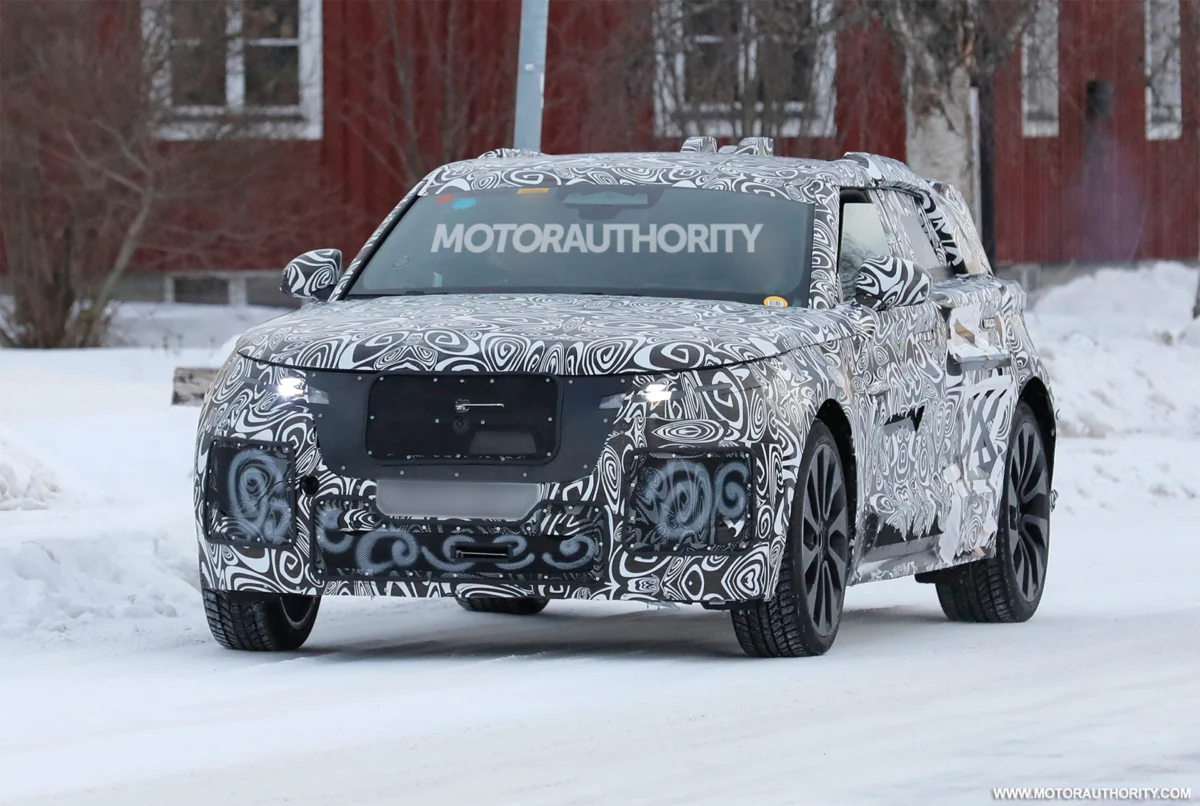
As the automotive industry pivots toward an electrified future, Jaguar Land Rover (JLR) is aggressively expanding its portfolio to ensure its iconic British marques remain relevant in a battery-powered world. Recent sightings of a mysterious, low-slung prototype undergoing rigorous testing have ignited speculation that JLR is preparing to introduce a groundbreaking addition to the Range Rover lineup—one that moves beyond the traditional boxy silhouette to embrace a sleeker, aerodynamic design language.
While enthusiasts have long anticipated the arrival of the fully electric flagship Range Rover, the vehicle recently spotted in spy shots suggests a different, perhaps more transformative, project. This prototype, characterized by its elongated wheelbase and aggressive, low-profile stance, is widely believed to be the first product to emerge from JLR’s new Electrified Modular Architecture (EMA) platform.
Main Facts: Decoding the Mystery Prototype
The prototype currently being evaluated by JLR engineers does not conform to the established visual identity of the standard Range Rover or the performance-oriented Range Rover Sport. While both the full-size electric Range Rover and the electric Range Rover Sport are designed to mirror their internal combustion engine (ICE) counterparts with only minor aerodynamic adjustments, this new test mule is distinct.
Its dimensions are the primary giveaway. It is noticeably lower, wider, and longer than the current Range Rover Velar, a model that has served as the brand’s design-led "middle child" since its 2018 debut. By shifting to a more aerodynamic, "crossover-coupe" aesthetic, JLR appears to be targeting the growing market for premium electric SUVs that prioritize efficiency and road-holding performance over traditional boxy off-road geometry.
The move to the EMA platform is the defining factor here. Unlike the MLA (Modular Longitudinal Architecture) platform—which currently supports the large, high-riding Range Rover and Range Rover Sport—the EMA is designed specifically for smaller, battery-electric vehicles. This suggests that while this new model will wear the Range Rover badge, it will occupy a segment defined by modern urban agility and high-tech efficiency rather than raw trail-crawling capability.
Chronology: The Road to the 2025 Reveal
JLR’s journey to this moment has been carefully orchestrated through a series of strategic announcements and technical developments:
- 2018: The Range Rover Velar officially hits the market, introducing a new, avant-garde design language for JLR that focused on flush door handles and minimalist interior aesthetics.
- 2023: JLR confirms the existence of the EMA platform, signaling a major shift in its manufacturing capability. The company outlines that the platform would be the foundation for its next generation of mid-size SUVs.
- Late 2023: JLR announces that the first vehicle built on the EMA platform will join the Range Rover family, with a target reveal date set for 2025.
- 2024: Spy photographers capture the first images of a camouflaged prototype testing on public roads. Initial analysis suggests the car is a direct successor to the Velar, bridging the gap between the compact Evoque and the full-sized Range Rover line.
- 2025 (Projected): The official global unveiling of the vehicle, expected to be marketed as a 2026 model year in North American markets.
This timeline reflects a deliberate, phased transition. JLR is not simply swapping engines; it is re-engineering its entire vehicle architecture to accommodate the unique packaging requirements of high-capacity battery packs while maintaining the brand’s premium identity.
Supporting Data: Platforms and Strategic Alignment
Understanding JLR’s future requires an understanding of its dual-platform strategy. The company is effectively bifurcating its product development to address two distinct segments of the luxury market.
The MLA (Modular Longitudinal Architecture)
The MLA platform is the heavyweight champion of the JLR lineup. It is designed for maximum versatility, supporting ICE, mild-hybrid, plug-in hybrid, and fully electric powertrains. This is the bedrock of the Range Rover and Range Rover Sport. It is intended for vehicles that require traditional towing capacity, deep-water wading capabilities, and a commanding road presence.
The EMA (Electrified Modular Architecture)
The EMA platform represents the future of JLR’s "Range Rover Family" and "Discovery" sub-brands. Built from the ground up for electrification, the EMA prioritizes battery density, interior space, and cabin technology. By moving to this platform for its mid-size offerings, JLR can lower the center of gravity of its vehicles, significantly improving handling and reducing drag—a crucial metric for extending electric range.
The upcoming model, likely replacing the Velar, will leverage the EMA’s flat-floor architecture to offer a significantly more spacious interior than the current model, despite its lower exterior profile.
Official Responses and Corporate Strategy
While JLR has remained tight-lipped regarding the specific nomenclature of the new prototype, the company’s "Reimagine" strategy provides a clear roadmap. CEO Adrian Mardell has frequently emphasized that JLR is not just an automaker but a "modern luxury" company.
In recent investor briefings, JLR representatives noted that the "Range Rover" brand has become so strong that it functions almost as an independent entity within the company. By folding the new EMA-based SUV into the Range Rover family, JLR hopes to capitalize on the prestige associated with the badge. This strategy allows them to move the Velar’s successor up-market, potentially increasing profit margins while reducing the number of disparate models in the lineup.
Furthermore, JLR has committed to a massive £15 billion investment over five years, with much of that funding directed toward the Halewood manufacturing plant in the UK, which is being overhauled to facilitate the production of these new EMA-based electric vehicles.
Implications for the Luxury SUV Market
The introduction of a sleeker, EV-first Range Rover has profound implications for the competitive landscape.
1. The Death of the Traditional "Box"
For decades, Range Rover has been synonymous with the upright, utilitarian box shape. By testing a prototype that is notably lower and longer, JLR is signaling a shift toward "aerodynamic luxury." As range anxiety remains a consumer concern, wind resistance becomes the enemy. This new vehicle indicates that JLR is willing to sacrifice some of the "go-anywhere" visual heritage to ensure the vehicle remains competitive with offerings from Tesla, Porsche, and Lucid.
2. Market Segmentation
With the Range Rover and Range Rover Sport staying on the MLA platform to cater to traditionalists and off-road enthusiasts, the new EMA-based model will likely cater to the "urban luxury" segment. This is a direct play for the demographic that currently buys vehicles like the Porsche Macan Electric or the Mercedes-Benz EQE SUV.
3. The Future of the Velar and Evoque
The spy shots suggest that the Velar’s days as a niche design exercise are numbered. By evolving into a broader, more technologically advanced EMA-based SUV, it will likely become a core volume seller. Similarly, the next generation of the Range Rover Evoque, which will also utilize the EMA platform, is expected to see a significant jump in cabin sophistication and range, effectively narrowing the gap between the entry-level and flagship models.
4. Beyond the Range Rover
The ripple effects of this development extend to the wider JLR ecosystem. With the Jaguar brand pivoting toward an ultra-luxury, low-volume "Type 00" electric series, Land Rover (specifically the Range Rover family) must carry the weight of the company’s volume sales. The success of this 2025/2026 launch is, quite literally, the foundation upon which the future of the company rests.
Conclusion: A Turning Point for JLR
As the automotive industry faces the most significant disruption in a century, Jaguar Land Rover is positioning itself as a leader in the premium electric space. The prototype spotted in testing is more than just a new model; it is a declaration of intent. It proves that JLR is capable of marrying the storied legacy of the Range Rover name with the cutting-edge requirements of the electric age.
While the "Range Rover" label has traditionally been associated with high-clearance, go-anywhere capability, the next generation of the brand will be defined by its ability to blend that heritage with the efficiencies of a dedicated electric platform. As we look toward the 2026 model year, the arrival of this sleeker, more aerodynamic SUV will likely serve as the definitive marker of the transition. For JLR, the future is not just electric—it is agile, sophisticated, and distinctly "Range Rover."
