

Across the United States, a quiet revolution is taking root in high school classrooms. As the realities of a changing climate move from abstract scientific models to daily lived experiences—manifesting in rising sea levels, record-breaking temperatures, and shifting weather patterns—a growing movement of students, educators, and activists is demanding a more practical approach to climate education. The solution gaining the most traction is the "Seal of Climate Literacy," a formal state-sanctioned endorsement that validates a student’s mastery of climate science and their commitment to community-based environmental action.
The Genesis of an Idea: From Curiosity to Concrete Action
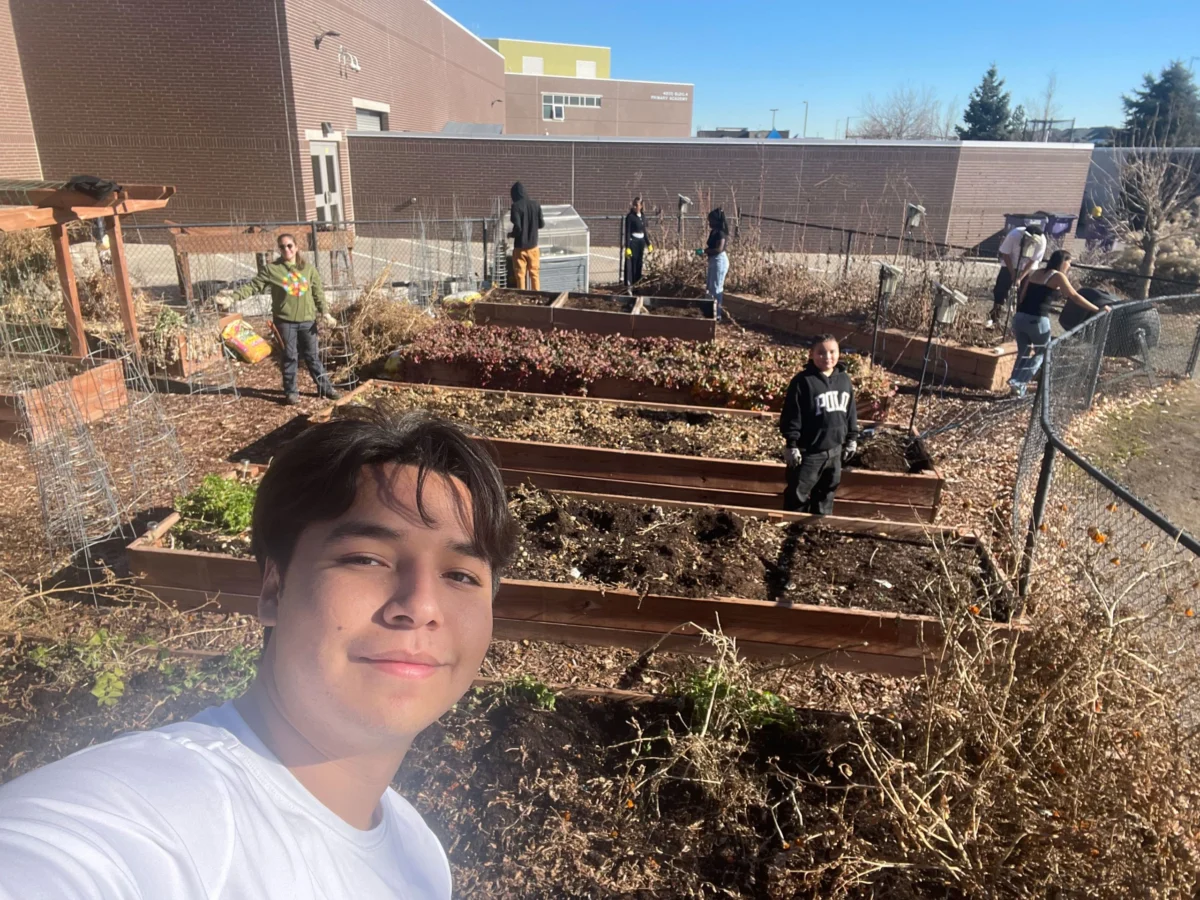
The journey toward a formal Seal of Climate Literacy began not in the halls of state legislatures, but in the garden beds of local schools. For Anthony Muñoz, a student at Vista Academy near Denver, the connection between the sky and the soil was personal. Living under the flight paths of Denver’s major airport, Muñoz grew concerned about the impact of jet fuel emissions on his local ecosystem.
An avid gardener, Muñoz transformed his curiosity into a capstone project. Partnering with the National Center for Atmospheric Research (NCAR) in Boulder, he designed an "ozone garden"—a living laboratory filled with native plants specifically chosen for their sensitivity to ground-level ozone. Under the guidance of climate scientists, he learned not only how to monitor leaf health as an indicator of air quality but also the vital role of milkweed in supporting monarch butterfly migrations.
"One garden is a very good data source," Muñoz reflects. "Colorado is so beautiful, and I would hate to see it wilt away."
This project served as a pilot of sorts for the Colorado Seal of Climate Literacy. The program, formalized by state lawmakers in 2024, requires students to complete at least two advanced courses covering Earth’s climate systems and execute an approved project that addresses a tangible environmental issue in their local community. For students like Muñoz, the seal provided more than just a credential; it provided a framework to translate anxiety into agency.

A Growing National Movement: Chronology of Adoption
Since its inception in Colorado, the model has spread with surprising speed. As of late 2026, 26 of Colorado’s 179 school districts have adopted the seal, a rollout spearheaded by the nonprofit Lyra Colorado. The momentum has since crossed state lines:
- 2024: Colorado officially approves the Seal of Climate Literacy, creating a template for state-level integration of climate-focused coursework and service learning.
- 2025-2026: Maine, recognizing the value of such a credential, adopts its own version of the seal through administrative action rather than legislative debate, streamlining the process.
- Late 2026: California signs into law a bill establishing a climate literacy seal for its graduates, marking a major victory for youth-led advocacy groups.
- Ongoing Advocacy: Youth coalitions in Hawaii and Minnesota continue to press for similar legislation, with varying levels of success and legislative pushback.
For Maine’s K-12 climate education specialist, Teddy Lyman, the rapid adoption is a response to student demand. "Students want to be involved in climate action," Lyman explains. "They’re often doing the work already but don’t have the recognition. They didn’t see a pathway to continue that work and embark on that as a potential career."
Supporting Data and Educational Integration
The strength of the Seal of Climate Literacy lies in its versatility. It is not a "one-size-fits-all" curriculum; rather, it is a graduation endorsement that can be earned through diverse pathways. While one of the two required courses must be in a scientific discipline—such as biology, environmental studies, or earth science—the second course can be drawn from the humanities, fine arts, or even civics.
In Denver Public Schools, for instance, climate change education is being woven into mandatory civics courses. This cross-disciplinary approach ensures that students understand the intersection of climate science with public policy, social justice, and economic sustainability.
The impact of these projects is measurable. From the restoration of beaver dams and the construction of sustainable hiking trails to the study of snowpack science and forestry management, the "capstone" requirement forces students to engage with their immediate environment. According to Mary Seawell, CEO of Lyra Colorado, an estimated 1,200 students have already earned the seal in Colorado alone, with many projects moving beyond the classroom to influence municipal decision-making.

Official Responses and the Ideological Divide
Despite the popularity of the seal among students and many educators, the initiative is not without its critics. The debate highlights a broader national tension regarding the role of schools in addressing modern crises.
Proponents argue that the seal provides a necessary bridge to the "green economy." As the workforce shifts toward solar grid maintenance, sustainable agriculture, and water resource management, these students are entering the labor market with practical, hands-on experience that their peers may lack. Furthermore, advocates suggest that the seal provides a therapeutic antidote to the "climate anxiety" plaguing many teenagers. By focusing on local, actionable change, students are shielded from the paralyzing effects of "global doom and gloom."
Conversely, critics express concern over the dilution of academic standards. Lance Izumi, senior director of education studies at the Pacific Research Institute, argues that the focus on "activist community projects" distracts from foundational science and math skills. Citing low proficiency levels in California, Izumi warns that diverting time and resources toward these projects could exacerbate existing performance gaps. "Diverting focus away from foundational science learning could worsen California’s already abysmal performance levels," Izumi wrote in an email.
Additionally, the program faces significant financial hurdles. With limited state funding—Colorado, for example, provided less than $20,000 for the initial rollout—many schools rely on grants or out-of-pocket contributions from students. The current political climate, characterized by skepticism toward climate science at the federal level, has also created a chilling effect on potential philanthropic donors, making the long-term sustainability of these programs a point of concern for organizers.
Implications for the Future: A New Workforce Pipeline
The long-term goal of the Seal of Climate Literacy is to create a seamless pipeline from high school into higher education and the green workforce. Lyra Colorado is currently collaborating with institutions like Colorado Mountain College to align the high school seal with professional certifications in skilled trades. The hope is that universities will eventually offer course credit or partial minors for incoming students who have demonstrated this level of commitment and expertise.

For the students, the seal serves as a springboard. Rylan Neumann, a recent graduate from the Boulder Valley School District now studying environmental economics at UC Berkeley, immediately leveraged her experience to lobby state lawmakers in Sacramento. "Students are the future," Neumann says. "We’re the ones growing up in this world."
Similarly, Anthony Muñoz, now a sophomore studying mechanical engineering at the Colorado School of Mines, continues to mentor younger students. Even as federal funding for research centers like NCAR faces uncertainty, Muñoz remains committed to the data. He is currently writing code to simplify data collection for the next generation of students at his former high school, ensuring that the ozone garden remains a functional research site regardless of shifting political tides.
Conclusion
The Seal of Climate Literacy represents a significant shift in how American schools define "preparedness." By formalizing the recognition of environmental stewardship, states are acknowledging that climate change is not merely a chapter in a textbook, but the defining challenge of the 21st century.
Whether the movement will face further legislative resistance or become a standard feature of the American diploma remains to be seen. However, for the students currently monitoring forest health, lobbying in state capitals, or building accessible gardens, the seal has already achieved its primary goal: it has given them a voice in their own future and the tools to protect the world they will inherit. As Muñoz poignantly asks, "Are you going to think beyond yourself and help not only those in need but the environment, or will you sit back and wait for someone else to change the world for you?"
