

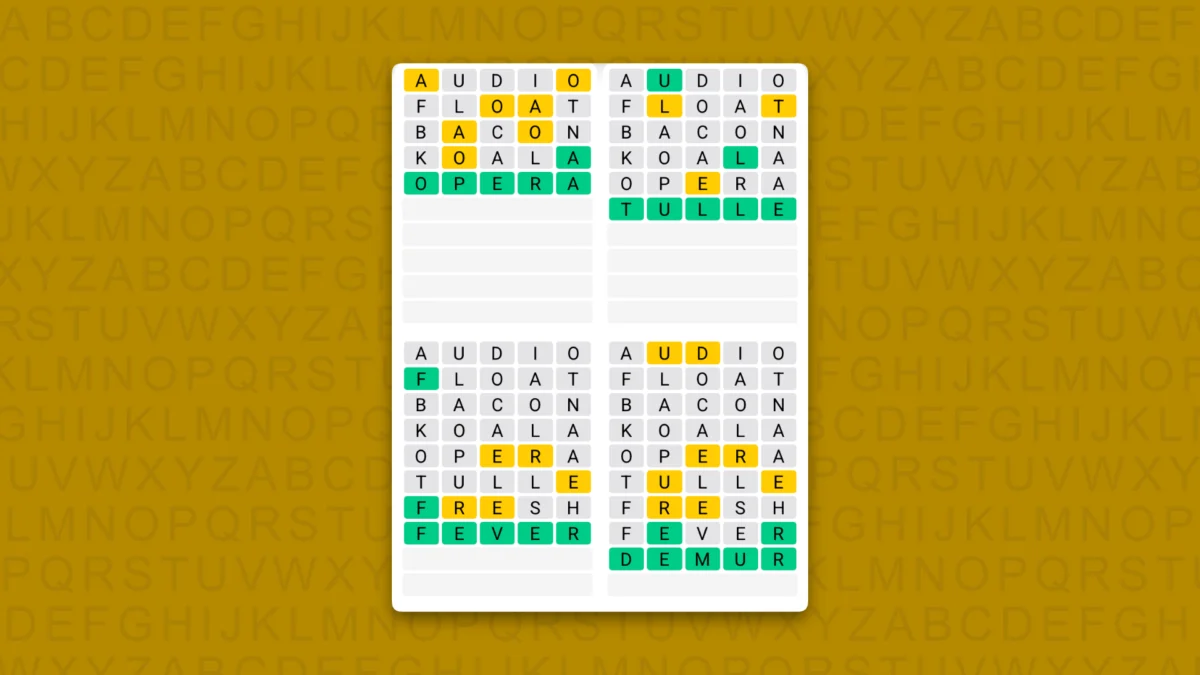
For millions of daily players, the morning routine is no longer defined by the newspaper crossword or the hum of the coffee machine alone. It is defined by the “click-clack” of keys on a smartphone screen as they navigate the increasingly complex world of daily word puzzles. Among these, Quordle stands as a titan of the genre, a high-stakes evolution of the viral Wordle phenomenon that has maintained a fiercely loyal following for over 1,500 games.
Today, we delve into the mechanics of Quordle game #1722, providing the essential clues, strategic insights, and context required to maintain your winning streak. Whether you are a casual player looking for a morning brain teaser or a competitive enthusiast tracking your stats, understanding the anatomy of these puzzles is key to success.
The State of Play: Why Quordle Still Captivates
When Wordle first took the internet by storm, it introduced a minimalist, elegant approach to daily gaming. However, as the digital landscape became saturated with clones, Quordle distinguished itself by ramping up the difficulty. Instead of solving one five-letter word, players must tackle four simultaneously.
This creates a cognitive load that demands a different set of strategies. In Wordle, you can afford to waste a guess or two on "filler" words to eliminate letters. In Quordle, those wasted guesses are luxury items you cannot afford. Every input must be calculated to provide maximum information across all four grids. As we reach game #1722, the game has evolved from a simple trend into a fixture of daily mental hygiene.
Analyzing Today’s Challenge: Quordle #1722
For those currently staring at their screens, let’s break down the data for game #1722.
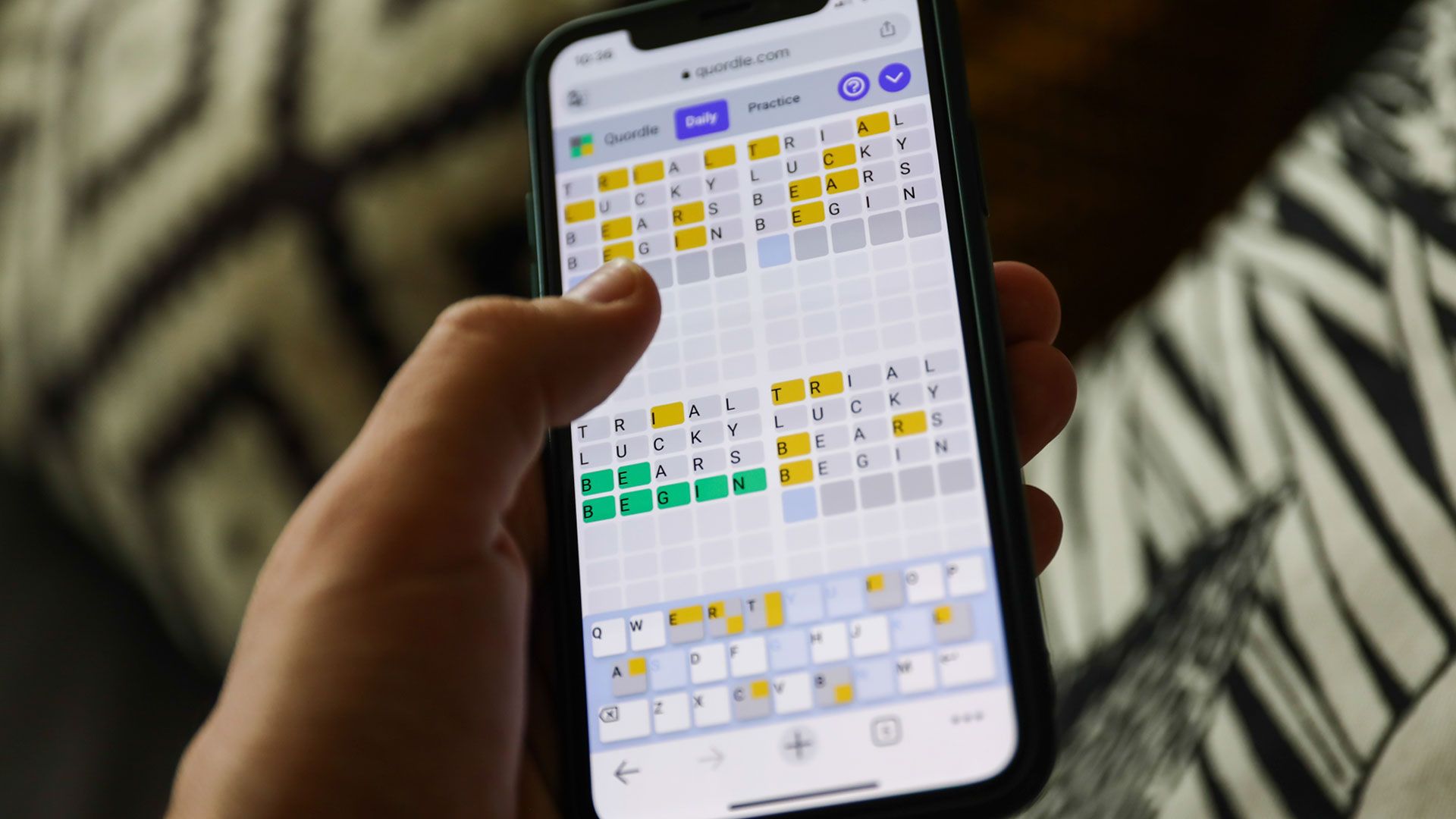
Clue #1: The Vowel Landscape
In the world of linguistics, vowels are the skeleton of the English language. In today’s puzzle, the distribution is relatively standard but requires precision. There are four unique vowels (A, E, I, O, U) present across the four solutions. Players should prioritize opening moves that utilize high-frequency vowels to secure an early foothold. Note that the letter ‘Y’ is excluded from this specific vowel count, adhering to the traditional five-vowel rule set.
Clue #2: The Complexity of Repeated Letters
One of the most frustrating hurdles in word games is the dreaded double-letter. Today, only one of the four target words contains a repeated letter. This is a significant piece of information for the mid-game phase. If you have identified the bulk of a word but are missing a letter, consider that one of your confirmed letters may need to be placed twice before looking for an exotic consonant.
Clue #3: The Rarity Factor
High-value, low-frequency letters—specifically Q, Z, X, and J—are often the "game-killers" that break a player’s winning streak. We can confirm that none of these letters appear in today’s solution set. You can safely focus your deductive efforts on more common English phonemes.
Clue #4: Structural Starting Points
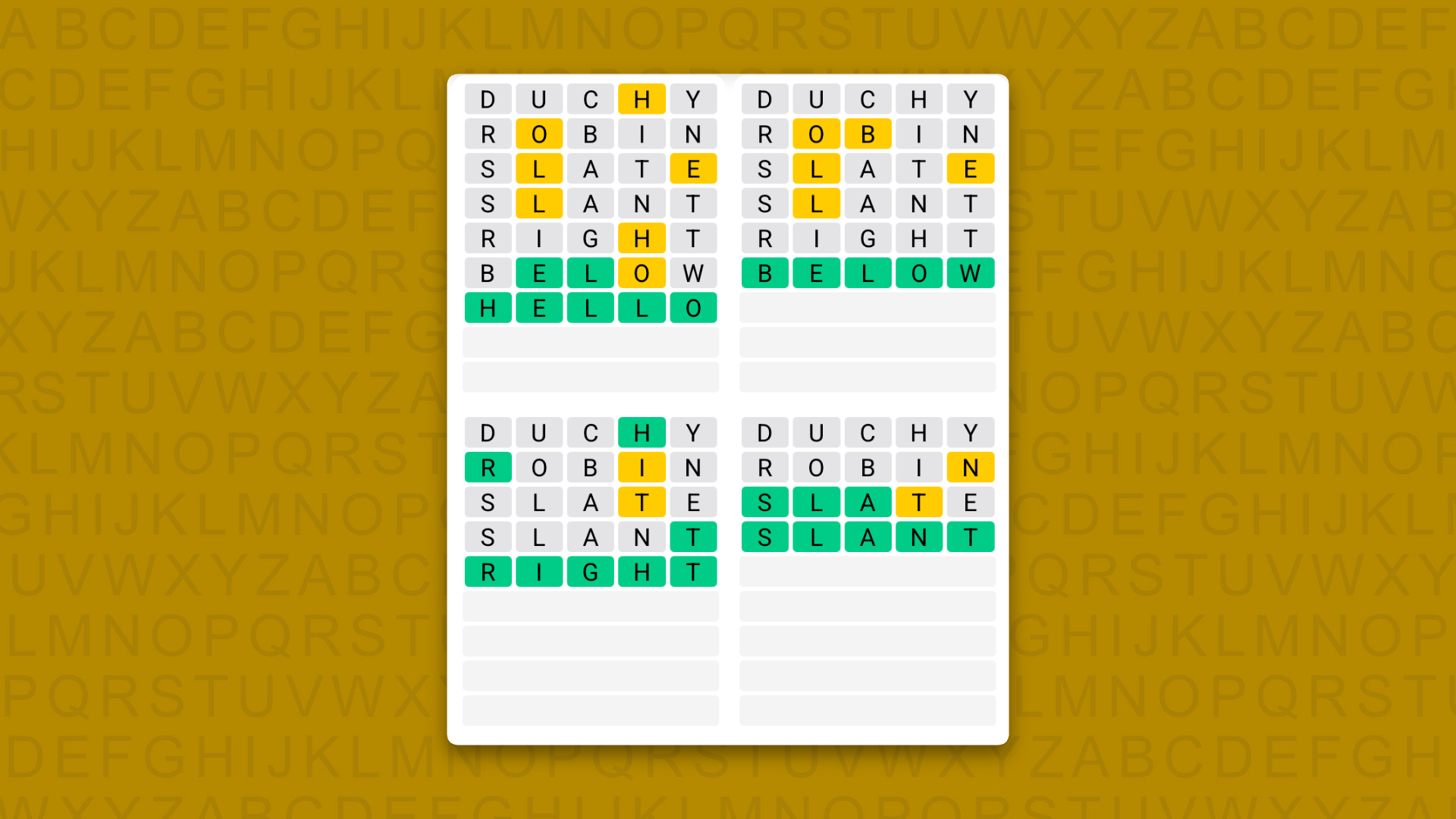
Starting letters provide the "anchor" for your guesses. Today’s puzzle is particularly interesting because all four answers begin with different letters. There is zero overlap in the initial characters, which means you cannot rely on a single strong opening guess to unlock multiple boards simultaneously. The starting letters for today are H, B, R, and S. Use this to pivot your strategy: instead of searching for a common word, look for words that fit these specific prefixes.
Chronology of a Daily Habit: From Viral Hit to Digital Staple
The rise of daily word games like Quordle represents a fascinating shift in digital culture. Unlike the "infinite scroll" of social media platforms designed to keep users engaged for hours, these games are intentionally finite. They respect the user’s time, offering a brief moment of intellectual stimulation before concluding.
Game #1722 is part of a long lineage of daily updates. Since its inception, the developers behind Quordle have maintained a strict, midnight-reset schedule tied to the user’s local time zone. This creates a staggered global rollout, where the "answer of the day" is a moving target that shifts as the sun travels across the globe.
For those who have recently started playing, the learning curve is steep. The transition from one grid to four requires a fundamental change in mindset. While Wordle allows for a linear, targeted approach, Quordle requires a parallel processing style. You aren’t just solving a word; you are managing a resource—your total number of guesses—against four distinct linguistic problems.
Supporting Data: Strategies for Long-Term Success
To maintain a high "win rate" over thousands of games, data analysts and enthusiasts often suggest a tiered strategy:
- The Information Gathering Phase (Guesses 1-3): Your primary goal is not to solve the words, but to identify the presence or absence of the most common letters in English (R, S, T, L, N, E).
- The Pivot (Guesses 4-6): Once you have a general sense of the letters involved, you must move from broad searches to specific word construction.
- The Resolution (Guesses 7-9): This is where you finalize the specific words. Given that today’s words start with H, B, R, and S, this is the phase where you apply those constraints to your remaining guesses.
Implications for the Gaming Industry
The enduring popularity of Quordle provides a case study for the gaming industry. In an era where AAA titles require hundreds of dollars in hardware and massive time commitments, these lightweight, browser-based games have captured the public imagination through simplicity and accessibility.
The fact that Quordle remains a top-tier destination for millions of users long after the initial "viral" phase proves that user retention is driven by habit and personal challenge. The game does not rely on flashy graphics or microtransactions; it relies on the intrinsic human desire to solve problems and the communal aspect of sharing results on social media.
Looking Ahead: The Future of Word Puzzles
As we look toward future games, the integration of AI and predictive analytics in word games is a topic of much discussion. Players are increasingly using "solver" tools to analyze their gameplay, leading to a more sophisticated, albeit competitive, environment. However, the soul of the game remains the human element—the "aha!" moment when a difficult word clicks into place after a series of failed attempts.
For those who found today’s challenge particularly rewarding, the broader ecosystem of word puzzles remains a vast playground. From the thematic associations of NYT Connections to the lateral thinking required by NYT Strands, there is no shortage of ways to exercise the mind.
Final Thoughts on Game #1722
Every player has a different relationship with the grid. For some, it is a race against the clock. For others, it is a meditative practice. Regardless of your approach, the data provided for today’s session should serve as the roadmap you need to conquer the board.
Remember, if you find yourself struggling, the most effective move is often to step back and look at the puzzle as a whole rather than focusing on a single, stubborn grid. Today’s solutions are well within reach, and with the H, B, R, and S starters in your arsenal, you are well-positioned to keep your streak alive.
Note: If you have already played today’s game and are looking for resources to improve your average, consider analyzing your past 20 games to identify patterns in your guessing habits. Do you rely too heavily on the same opening word? Do you ignore certain letters? Self-reflection is the quickest path to mastery in the world of Quordle.
