

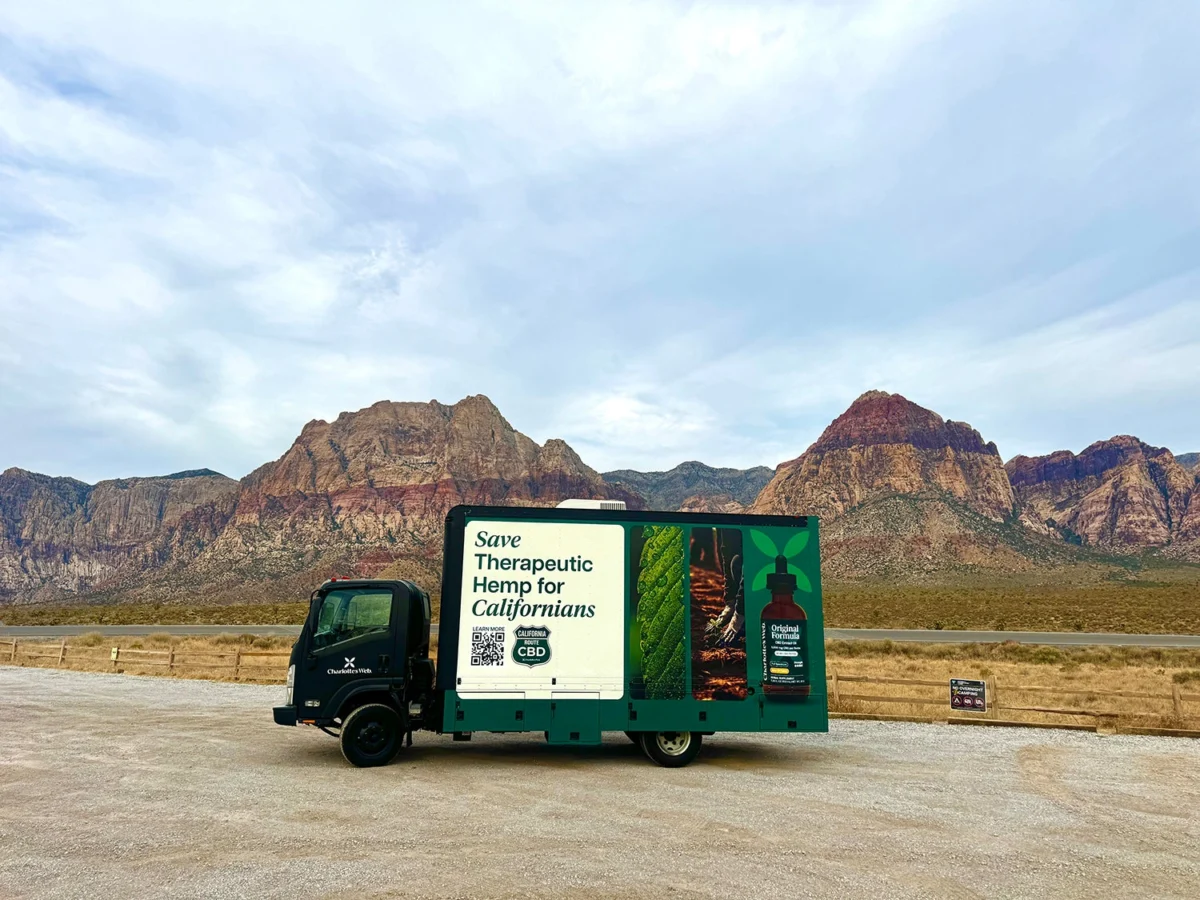
In the volatile landscape of American hemp regulation, few states have presented as complex a challenge as California. For years, the Golden State was viewed as a pioneer in cannabis and hemp accessibility. However, a sudden shift in the legislative climate in the summer of 2026 sent shockwaves through the industry, leaving thousands of consumers without access to the products they rely on for daily wellness.
When California enacted emergency regulations that effectively eliminated access to full-spectrum hemp products—those containing a complete profile of cannabinoids, including trace amounts of THC within federal limits—the industry’s largest player, Charlotte’s Web, did not retreat. Instead, the Colorado-based botanical wellness leader launched "Route CBD," a high-stakes, seven-city mobile tour designed to bypass retail restrictions, mobilize a disenfranchised voter base, and provide a literal lifeline to families caught in the crossfire of state politics.
Main Facts: A Strategic Pivot in Response to Regulatory Hardline
The genesis of the "Route CBD" tour was rooted in necessity. In July, California authorities moved to implement strict new standards on hemp-derived products. These rules, aimed at curbing the sale of intoxicating synthetic cannabinoids, inadvertently (or by design, according to critics) swept up non-intoxicating, full-spectrum CBD oils and topicals. Because these products contain a fractional, federally legal amount of THC (less than 0.3%) to facilitate the "entourage effect," they were suddenly classified alongside intoxicating hemp products, making them illegal for sale through traditional California retail and e-commerce channels.
Charlotte’s Web, a brand built on the legacy of Charlotte Figi—the young girl whose struggle with epilepsy helped ignite the global CBD movement—viewed this as a fundamental breach of consumer rights. Mindy Garrison, Chief Commercial Officer at Charlotte’s Web, articulated the brand’s defiant stance: “We thought to ourselves, ‘Well, if we can’t sell it online or in retail, we’ll sell it across the border.’”
The resulting "Route CBD" tour was an experiential marketing campaign with the soul of a grassroots political movement. Partnering with the agency Moment, Charlotte’s Web deployed a custom-branded mobile unit that served three distinct functions:
- A Mobile Dispensary: Allowing consumers to legally purchase full-spectrum products in jurisdictions where they remained accessible.
- An Advocacy Hub: Facilitating direct communication between constituents and California legislators.
- A Content Studio: Capturing the raw, emotional testimonials of users to be used in a larger documentary project aimed at federal regulators.
Chronology: From Legislative Shock to Mobile Mobilization
The timeline of the "Route CBD" initiative reflects the rapid-response nature of modern cause marketing.
- July 2026: California enacts emergency bills and regulatory shifts that restrict the sale of full-spectrum hemp products. Retailers are forced to pull products from shelves, and e-commerce shipments to California addresses are halted.
- Late July 2026: Charlotte’s Web and agency partner Moment conceptualize a mobile tour that utilizes the geography of the Nevada-California border to maintain consumer access.
- August 10, 2026: The "Route CBD" truck officially launches its month-long journey. The tour begins by targeting key border regions and high-traffic areas where California residents could easily travel to procure their wellness products.
- August – September 2026: The truck traverses seven cities across Nevada and California. To maximize reach, the team moved the truck to different locations within each city once or twice a day. Real-time updates were provided via social media and a dedicated landing page on the Charlotte’s Web website.
- September 11, 2026: The tour concludes its initial run, having collected thousands of signatures and hours of video footage.
- Post-Tour (Present): The brand begins the "Phase 2" of the campaign: synthesizing the data and stories gathered into a documentary format to influence federal policy and the upcoming Farm Bill discussions.
Supporting Data: Measuring the Impact of Advocacy
The success of "Route CBD" was measured not just in product sales, but in the volume of political pressure it generated. In an era where "slacktivism" is common, Charlotte’s Web managed to convert foot traffic into high-intent political action.
Advocacy Metrics:
- Email Volume: The tour generated more than 9,000 direct emails sent to California legislators and Governor Gavin Newsom. Each email represented a consumer demanding the restoration of access to therapeutic hemp.
- Geographic Reach: By visiting seven major hubs, the tour covered thousands of miles, bridging the gap between the rural border towns and major urban centers where the ban was most felt.
- Digital Amplification: The truck functioned as a "content studio," capturing dozens of high-quality video testimonials. These stories were shared across social platforms, reaching hundreds of thousands of users who were unaware of the legislative changes in California.
The Human Cost:
The data is underscored by poignant human stories. One of the most significant data points was the distance consumers were willing to travel. At the Las Vegas stop, the team met the Morales family. They had driven three hours from San Bernardino, California, specifically to reach the "Route CBD" truck. Their goal was to secure full-spectrum products for their daughter—products that had become unavailable in their home state overnight. This narrative became a cornerstone of the campaign’s messaging, illustrating that the ban wasn’t just a business hurdle, but a healthcare crisis for specific families.
Official Responses: A Mission of "Awareness, Advocacy, and Access"
The leadership at Charlotte’s Web has been vocal about the philosophy driving this unconventional campaign. For Mindy Garrison, the tour was about creating a "sanctuary" for a community that felt suddenly marginalized by their own government.
“We set out from the very beginning with the idea that Route CBD needed to feel like a refuge, like a destination,” Garrison stated. “Somewhere where you’re welcome, you can receive education, be a part of a community and not feel ostracized.”
The brand’s official position is that California’s regulations are overreaching and fail to distinguish between therapeutic hemp and intoxicating "copycat" products. By setting up the truck as an educational center, Charlotte’s Web sought to demystify full-spectrum hemp for passersby who might have been confused by the recent headlines.
The "Route CBD" team even took the unusual step of radical transparency. The tour manager and driver provided his personal cell phone number to consumers to ensure they could find the truck’s location at any given time. This level of "white-glove" service was designed to contrast with the cold, bureaucratic nature of the legislative ban.
Garrison noted that if she could change one thing about the execution, it would be the lead time. “The only thing I’d change is starting the planning a little earlier,” she admitted, reflecting the frantic pace required to respond to "emergency" legislation.
Implications: The Future of Hemp Advocacy and Experiential Marketing
The "Route CBD" tour serves as a blueprint for how brands can navigate hostile regulatory environments through experiential marketing. It marks a shift from passive "cause marketing" (where a portion of proceeds goes to a charity) to "activist marketing" (where the brand’s primary operation becomes a vehicle for political change).
1. The Legal Precedent
The success of Charlotte’s Web in "border-hopping" to maintain sales highlights the difficulty of state-level bans in a country with open state borders. It also puts pressure on California regulators to refine their definitions. If thousands of citizens are willing to cross state lines to bypass a law, the law itself may be viewed as unenforceable or culturally out of step with the population.
2. The Road to the Documentary
Charlotte’s Web is not letting the momentum die with the end of the tour. The brand is currently compiling the footage gathered—including the story of the Morales family—into a short documentary. This film is intended for a very specific audience: federal regulators in Washington D.C. As the U.S. Congress debates the next iteration of the Farm Bill, Charlotte’s Web intends to use these stories to argue for a clear federal framework that protects full-spectrum hemp from being lumped in with intoxicating synthetics.
3. A New Era for Experiential Agencies
For the agency Moment, "Route CBD" demonstrates that mobile tours are no longer just about handing out samples. In a regulated industry like cannabis or hemp, the mobile unit is a versatile tool for compliance, education, and political mobilization. The "truck as a studio" model allows for the rapid creation of authentic, user-generated content that carries more weight than traditional advertising.
4. Consumer Loyalty through Shared Struggle
By physically showing up for their customers in a time of crisis, Charlotte’s Web has likely fostered a level of brand loyalty that traditional marketing cannot buy. For the parents who drove three hours to a truck in a Nevada parking lot, Charlotte’s Web is no longer just a manufacturer—it is an ally.
In conclusion, the "Route CBD" tour was more than a clever workaround for a sales dip. It was a high-profile demonstration of corporate advocacy that prioritized the needs of the consumer over the ease of the business. As California continues to grapple with its hemp policies, the 9,000 emails and the recorded voices of families like the Morales’ remain as a testament to a community that refuses to be silenced by a pen stroke in Sacramento.
