

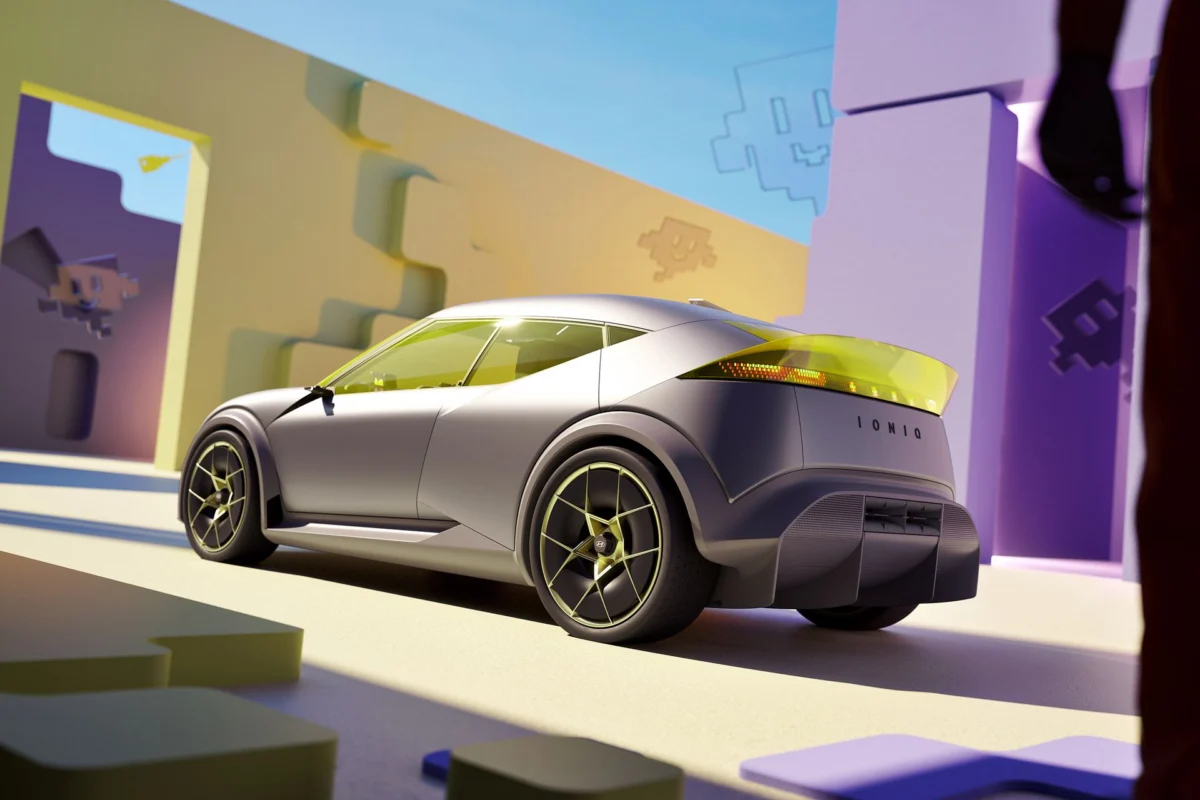
The Canadian automotive landscape is currently undergoing a seismic shift. For years, the barrier to entry for electric vehicle (EV) adoption has been the exorbitant price tag, often relegating zero-emission mobility to the luxury or upper-middle-class segments. However, a new battleground has emerged: the compact and sub-compact crossover market.
As consumer demand shifts toward utility-focused, reasonably priced vehicles, manufacturers are racing to fill the gap. Following the recent market entry of the budget-friendly Nissan Leaf S ($34,995) and the highly anticipated Kia EV3 ($36,995), the industry’s focus has sharpened on the sub-$40,000 category. Sensing the urgency to maintain market dominance, Hyundai has officially confirmed its intention to expand its acclaimed Ioniq lineup with the introduction of the Ioniq 4, a compact electric crossover designed to challenge the status quo.
The Strategy: Expanding the Ioniq Ecosystem
Hyundai’s Ioniq sub-brand has been a runaway success, effectively rebranding the company from an economy manufacturer to a leader in EV technology and design. Currently, the Canadian portfolio includes the award-winning Ioniq 5, the aerodynamic Ioniq 6 sedan, and the recently launched, three-row flagship Ioniq 9. While the Hyundai Kona Electric continues to provide an entry-level option at $43,999, it sits on a legacy platform rather than the dedicated E-GMP (Electric-Global Modular Platform) that defines the Ioniq series.
The Ioniq 4 is set to change this by bringing the sophisticated architecture, fast-charging capabilities, and V2L (Vehicle-to-Load) features of its larger siblings to a more accessible price point. According to recent reports from AutoExpress, a senior Hyundai executive confirmed that the development of the Ioniq 4 is well underway. While the company has teased concepts that feature futuristic, angular aesthetics, industry insiders suggest the production version will favor a traditional, high-utility crossover silhouette—a body style that continues to resonate most strongly with North American consumers.
Chronology of Hyundai’s Electrification Journey
To understand the significance of the Ioniq 4, one must look at the rapid evolution of Hyundai’s EV strategy over the past decade:
- 2016: Hyundai launches the original Ioniq, the first vehicle to offer hybrid, plug-in hybrid, and battery-electric powertrains in a single body style.
- 2018: The Kona Electric arrives, proving that mass-market EVs could offer legitimate range and performance.
- 2021: The Ioniq 5 debuts, marking the shift to the dedicated E-GMP platform, featuring 800-volt charging architecture.
- 2023: The Ioniq 6 is introduced, focusing on extreme aerodynamic efficiency and long-range capability.
- 2025: The Ioniq 9 completes the lineup, offering a premium, full-size electric experience.
- The Future (2026/2027): The Ioniq 4 is slated to bridge the gap between the Kona Electric and the Ioniq 5, targeting the "sweet spot" of the Canadian family vehicle market.
The Economics of Accessibility: Can it Hit the $40,000 Mark?
The primary hurdle for the Ioniq 4 will be pricing. In the Canadian market, the $40,000 price point is a psychological and practical barrier. When combined with the federal iZEV rebate ($5,000) and provincial incentives—such as the $2,000 rebate available in Quebec—an Ioniq 4 with a sub-$40,000 MSRP would effectively be priced at parity with high-end internal combustion engine (ICE) crossovers.
Economists and automotive analysts point out that economies of scale are finally beginning to work in favor of the consumer. Battery costs have plummeted by over 80% since 2010, and as Hyundai scales its production of the E-GMP platform, the cost of manufacturing compact vehicles has become significantly more viable. If the Ioniq 4 utilizes a slightly smaller battery pack or a more simplified trim structure compared to the Ioniq 5, it could comfortably slide under the $40,000 threshold, potentially undercutting even the current Kona Electric.
Why the "Ioniq 3" and "EV2" Won’t See Canadian Roads
While Hyundai is expanding globally, it is being highly selective about which models reach North American shores. Hyundai currently manufactures the Ioniq 3 in Turkey, primarily to satisfy European demand for ultra-compact city cars. Similarly, sister company Kia has developed the EV2.
However, market research consistently shows that Canadian consumers favor larger cargo spaces and longer highway ranges than the average European or Asian city dweller. Consequently, the Ioniq 3 and EV2 are viewed as "too small" for the Canadian context. Hyundai is betting that the Ioniq 4’s footprint—likely slightly smaller than the Ioniq 5 but larger than a sub-compact hatchback—will offer the perfect balance of urban maneuverability and road-trip readiness.
Implications for the Competition
The entry of the Ioniq 4 into the Canadian market is not merely a product launch; it is a defensive and offensive maneuver against legacy automakers who have been slow to electrify their compact fleets.
1. Pressure on Legacy ICE Vehicles
As affordable EVs become more capable, the traditional gas-powered crossover market faces an existential threat. If a consumer can purchase an Ioniq 4 for the same monthly payment as a gas-powered compact SUV, while benefiting from drastically lower "fuel" and maintenance costs, the argument for internal combustion diminishes rapidly.
2. The Infrastructure Catalyst
Increased adoption of affordable EVs will force a secondary wave of infrastructure development. With more "average" consumers buying EVs, the pressure on the federal and provincial governments to expand public charging networks will reach a fever pitch. The Ioniq 4 is poised to be a vehicle that appeals to the "early majority" rather than just the "early adopters," which is a crucial transition for any technology to hit mainstream saturation.
3. Supply Chain Localization
Hyundai’s decision to move toward more localized production strategies—or at least optimized global supply chains—will be essential to keep the Ioniq 4 competitive. By leveraging their existing manufacturing expertise, they are positioning themselves to weather the volatility of the global lithium-ion supply chain better than newer, smaller EV startups.
Official Stance and Future Outlook
Hyundai has maintained a disciplined silence regarding the specific technical specifications of the Ioniq 4, but executives have hinted that the vehicle will prioritize "efficiency, connectivity, and value." In recent investor calls, Hyundai’s leadership emphasized that their "Ioniq" brand is intended to cover every major segment, and the "missing link" between the small Kona and the mid-size Ioniq 5 is the most logical next step for growth.
For the Canadian consumer, the message is clear: the era of the $60,000+ electric vehicle as the standard-bearer is ending. The next two years will see a rapid democratization of electric mobility. Whether the Ioniq 4 will be the "iPhone of EVs"—the device that makes the technology accessible to everyone—remains to be seen, but the intent is clear. Hyundai is not just building a car; they are building the future of the Canadian driveway.
As the Canadian government continues to push for 100% zero-emission vehicle sales by 2035, the Ioniq 4 appears to be exactly the kind of vehicle that will make those targets achievable. By blending the prestige of the Ioniq label with the practicality of a compact crossover, Hyundai is positioning itself to lead the next phase of the electric revolution.
