

In the landscape of modern existential inquiry, few cultural touchstones have resonated as deeply as the A24 juggernaut Everything Everywhere All at Once. A chaotic, kaleidoscopic masterclass in genre-bending, the film serves as both a frantic action romp and a profound meditation on the nature of existence. However, the film is not merely a piece of entertainment; for many, it has become a catalyst for a fundamental re-evaluation of how we construct our personal realities.
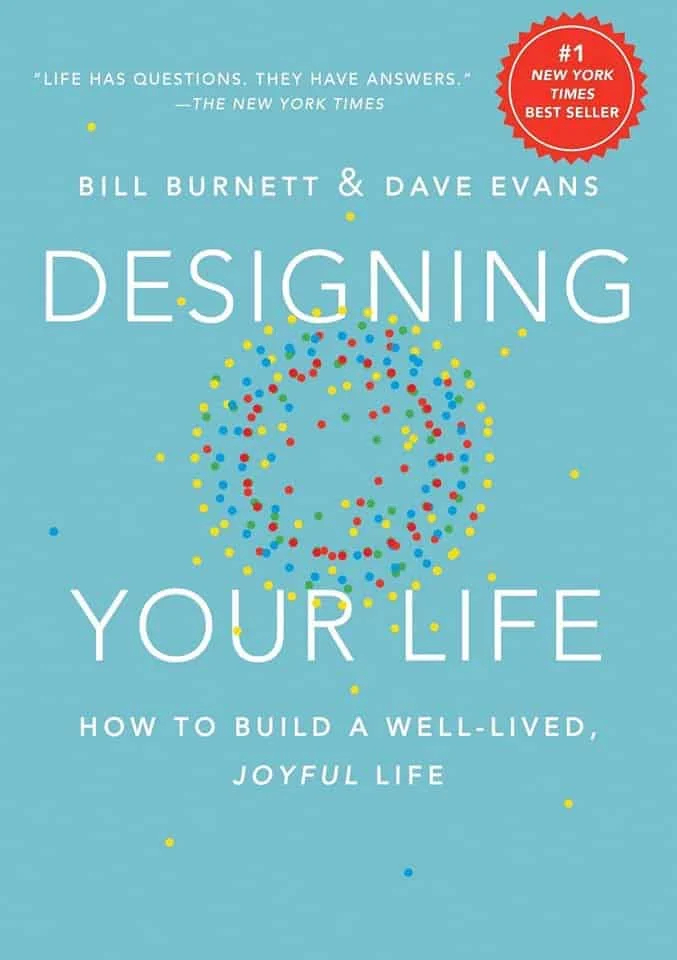
By pairing the film’s nihilistic-yet-hopeful philosophy with the structured, academic methodology of Bill Burnett and Dave Evans’ Designing Your Life, individuals are finding a practical framework to navigate their own “multiverse” of potential futures.
The Existential Mirror: Why the Multiverse Matters
At its core, Everything Everywhere All at Once follows Evelyn Wang, a beleaguered laundromat owner struggling with a failing marriage, an estranged daughter, and the crushing weight of tax audits. When she is thrust into a battle across parallel universes, the film shifts from the mundane to the metaphysical.
The villain, Jobu Tupaki, acts as the personification of modern existential dread. Having experienced "everything everywhere," she concludes that nothing matters. Yet, the film’s protagonist offers the counter-argument: if nothing matters, then the only things that remain are the small, deliberate acts of kindness and the meaning we choose to create for ourselves.
For viewers, this message is not just cinematic poetry; it is a call to action. In a year defined by global uncertainty and personal loss, the concept of the multiverse serves as a powerful metaphor for the "paths not taken." It asks a daunting question: If you are dissatisfied with your current timeline, what is stopping you from architecting a new one?
Chronology of a Paradigm Shift
The bridge between the film’s abstract philosophy and tangible life planning is best articulated through the work of Stanford’s Life Design Lab. Bill Burnett and Dave Evans, the minds behind Designing Your Life, have spent years translating design-thinking principles—traditionally used for creating hardware or software—into a toolkit for human development.
The journey toward a "designed life" typically follows this progression:
- Recognition of Stagnation: A realization that the current "timeline" or career path is no longer yielding personal fulfillment.
- The Nihilistic Nadir: A period of questioning the inherent value of one’s current trajectory, similar to the crisis faced by the film’s protagonist.
- The Coherence Phase: An active effort to align one’s beliefs, work, and identity.
- Odyssey Planning: The creation of multiple, viable versions of the future to mitigate the fear of choosing the "wrong" path.
This methodology has moved from the lecture halls of Stanford to the bookshelves of millions, proving that even in a world of infinite choices, the most difficult task is simply deciding which version of oneself to cultivate.
The Methodology of Design: Five Disciplines for Life
The core of Designing Your Life rests on five distinct disciplines that provide the "how-to" for building a coherent existence. Coherence, as defined by Burnett and Evans, is the state where who you are, what you believe, and what you do all align.
- Curiosity: Moving away from the pressure to "have it all figured out" and instead approaching life as a series of experiments.
- Reframing: Shifting perspectives on "wicked problems"—problems that are unsolvable—to make them actionable.
- Awareness: Recognizing that life is a process, not a destination.
- Bias to Action: Prioritizing "prototyping" (small-scale tests of a career or lifestyle change) over excessive planning.
- Radical Collaboration: Seeking input from mentors and peers, understanding that no one designs a life in a vacuum.
These disciplines act as a structural ballast against the "multiverse" of anxiety that comes with modern decision-making. By applying these, individuals stop treating their lives as a fixed, unchangeable script and start treating them as an iterative design project.
Odyssey Plans: Mapping the Infinite
Perhaps the most potent tool in the life-design arsenal is the "Odyssey Plan." This exercise requires individuals to draft three distinct, five-year visions for their lives. This exercise is designed to prove that there is no singular "right" life, but rather a spectrum of lives that could lead to fulfillment.
Future #1: The Iterative Path
The first plan is built around your current trajectory. It asks: "If I keep doing exactly what I am doing, where does it lead?" For a content creator or a professional, this means doubling down on current skills, optimizing the existing output, and refining the "product" of one’s life. It is the path of professional mastery and intensification.
Future #2: The Pivotal Shift
The second plan is the "What if?" scenario. It asks: "If my current work vanished tomorrow, what would I do?" This often leads to altruistic or legacy-based endeavors—such as recording the oral histories of family members or working in hospice care. It highlights that our value is not tied to a specific job title, but to our innate talents.
Future #3: The Pipe Dream
The third plan is the "no-holds-barred" scenario. It removes the constraints of money, status, or the judgment of others. For many, this is the most revealing exercise, as it often unearths suppressed passions—such as a transition into the arts, the creation of a creative project (like a personal finance webcomic), or a complete lifestyle relocation.
Implications for the Modern Individual
The intersection of Everything Everywhere All at Once and the life-design movement suggests a profound shift in how we approach our personal development. We are moving away from the "linear career" model—where one chooses a path at twenty and sticks to it until sixty—toward a "portfolio life" model.
The implications are clear:
- Resilience: By embracing the possibility of multiple futures, individuals become more resilient to sudden shifts in the economy or personal circumstances.
- Reduced Decision Paralysis: The act of drafting an Odyssey Plan removes the pressure to pick the "one perfect life," acknowledging that all three plans are valid, viable, and potentially successful.
- Increased Agency: When one realizes they are the author of their own multiverse, the "stuck" feeling that defines the beginning of the movie begins to dissolve.
A Critical Note on Practical Implementation
While Designing Your Life offers an essential roadmap, it is not without its limitations. Readers often note the lack of a comprehensive index, which can make it difficult to reference specific exercises as one iterates through their life-design process. Furthermore, the "design" terminology can occasionally feel clinical, contrasting sharply with the messy, human experience of life.
However, these are minor criticisms compared to the utility of the framework. The true success of the methodology lies in its ability to take the abstract—the feeling that life is a series of disparate, chaotic choices—and turn it into a deliberate, manageable, and coherent series of experiments.
Conclusion: The Choice is Yours
As the credits roll on Everything Everywhere All at Once, the audience is left with a simple, quiet truth: the multiverse is not a threat; it is a playground of potential. Whether we find our meaning in the quiet act of filing taxes or the wild pursuit of a creative passion, the power to define that meaning rests entirely within us.
By utilizing the principles of life design, we can stop staring into the abyss of our own infinite potential and start building the specific reality that resonates with our deepest values. We are not just victims of the universe; we are its architects. It is time to start designing.
