

As the 2024 U.S. election cycle reaches its fever pitch, the airwaves are saturated with competing narratives about the state of the American economy. From the campaign trail, voters are bombarded with apocalyptic warnings of financial ruin or promises of a miraculous, state-led resurgence. However, for those who prioritize financial literacy and rational decision-making—often referred to as "Mustachians"—the current discourse is less of a policy debate and more of a theater of the absurd.
By analyzing the data through a lens of economic reality rather than political optics, it becomes clear that the "economic crisis" presented by candidates is, in many ways, a manufactured narrative that ignores the resilience of the U.S. financial system.
The Divergence: Perception vs. Performance
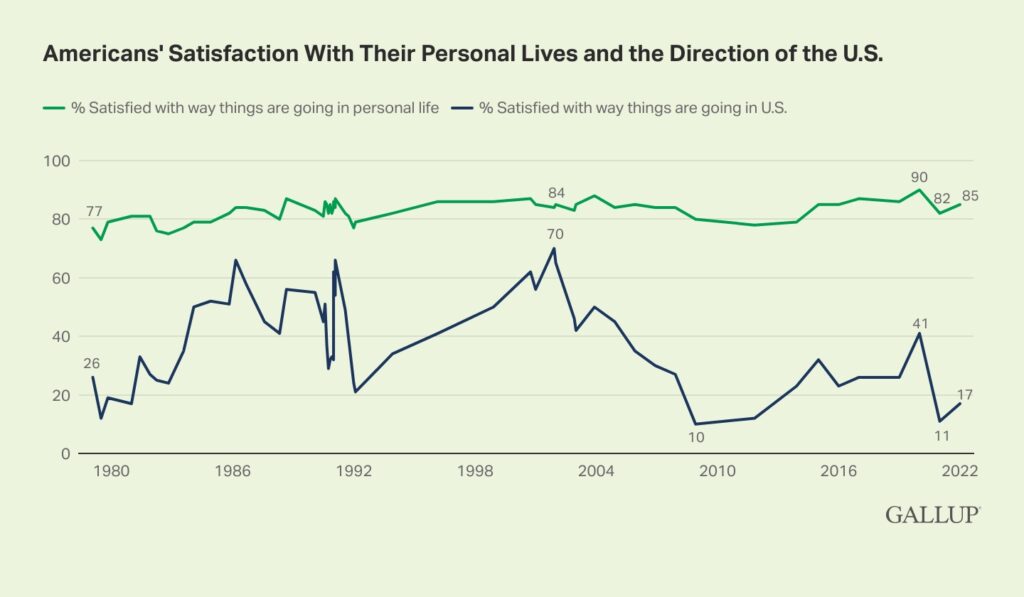
The disconnect between the actual health of the U.S. economy and public perception is staggering. Current data indicates that the United States is experiencing one of the strongest economic periods in recent history, characterized by record-low unemployment and robust GDP growth. Yet, according to Gallup polling, only 17% of Americans view the economy as "good," even while 85% report that they are doing well personally.
This mathematical impossibility—that most people are succeeding while simultaneously believing the country is failing—points to the corrosive impact of misinformation. In an era dominated by social media echo chambers, economic sentiment has been uncoupled from empirical reality. While politicians are incentivized to frame every hiccup as a catastrophe to secure votes, the actual data suggests that the "bad economy" is a fiction fueled by political opportunism and amplified by digital feedback loops.

Chronology of Modern Economic Discontent
To understand how we arrived at this point of disconnect, one must look at the timeline of the post-COVID recovery:
- The Supply Shock (2021–2022): The global economy faced a rare, synchronized shutdown. When demand roared back, supply chains were not ready, leading to inevitable inflationary pressure.
- The Correction (2023): In response to rising prices, the Federal Reserve hiked interest rates, a standard and necessary "braking" mechanism to cool an overheated economy.
- The Stabilization (2024): Inflation has successfully moderated to approximately 2.4%. Crucially, wage growth has outpaced inflation since 2019, with nominal wages rising 21% against a 19% increase in prices. By any objective metric, the average American worker has more purchasing power today than they did five years ago.
The Six Myths of Political Economics
1. The Fallacy of Presidential Control
The most pervasive myth is that the sitting President possesses a "dial" to control the economy. In reality, the U.S. economy is a massive, decentralized machine representing 26% of global economic activity. It is far too large and too fluid to be commanded by the White House. Presidential policy often has a long lag time, and short-term fluctuations are usually the result of global market cycles, consumer behavior, and the "animal spirits" of greed and fear rather than executive orders.
2. The Federal Reserve and Interest Rates
Candidates frequently campaign on "fighting" to lower interest rates. This is an dangerous oversimplification. The Federal Reserve operates as an independent body for a reason: to prevent monetary policy from becoming a tool of political populism. If the President had the power to set interest rates, political pressure would almost certainly lead to short-term stimulus at the cost of long-term hyperinflation—a lesson learned the hard way by nations like Argentina.
3. The Inflation Narrative
Politicians often promise to "bring prices back down," ignoring the fact that a return to 2019 price levels (deflation) would be a catastrophic economic event, typically associated with deep depressions and mass unemployment. The current objective of 2% inflation is a sign of a healthy, growing economy. The narrative that we are in a state of "unaffordable prices" ignores the parallel reality of increased wage growth, which has largely shielded the average household.
4. The Housing Crisis: A Supply Problem
Housing affordability is perhaps the most legitimate grievance, but the proposed solutions—subsidies and demand-side stimulus—are counterproductive. They merely inject more cash into an already constrained market, driving prices higher. The reality is that housing is a supply-side issue. By reducing bureaucratic red tape, eliminating restrictive zoning laws, and curbing NIMBY-driven litigation, the cost of construction could be slashed by as much as 50%. This, however, is a localized policy change, not something a President can dictate from the Oval Office.
5. The Obsolescence of Gasoline
The ongoing political obsession with gas prices is an artifact of the past. Gasoline has remained relatively stable in inflation-adjusted dollars since 1950. Furthermore, as electric vehicles (EVs) become cheaper and more efficient than their internal combustion counterparts, the "cost of fuel" is becoming a legacy expense for the tech-savvy consumer. Focusing on gas prices is akin to arguing over the cost of typewriter ribbons in a digital age.
6. The "Enough" Threshold
Perhaps the most fundamental error is the belief that the economy is the sole determinant of human happiness. We have reached a point of "Enough" in the developed world. While income inequality is a valid area for policy reform, the obsession with aggregate GDP growth often obscures the importance of individual life skills and mindset. Wealth, in the Mustachian sense, is a tool for freedom, not a scorecard for political success.
Official Responses and Independent Fact-Checking
In response to the growing chasm between political rhetoric and data, figures like former Microsoft CEO Steve Ballmer have launched initiatives such as USA Facts. These projects strip away the spin, providing objective data on government spending, energy usage, and economic trends.
The consensus among independent economists is that while the U.S. faces structural challenges—such as the national debt and the housing shortage—the current economic health of the American consumer is historically strong. Official government responses from the Treasury and the Fed consistently point to the success of the "soft landing" strategy, where inflation was brought under control without triggering a recession, a feat few economists thought possible in 2022.
Implications for the Future
The implication of this political theater is clear: when voters prioritize the dramatic narratives of politicians over sound economic literacy, they lose. The candidate who promises to "fix" the economy is often the one most likely to suggest policies that disrupt the delicate balance of the free market.
For the individual, the path to prosperity remains unchanged by who occupies the White House. It involves:
- Focusing on the Circle of Control: Concentrating on personal savings, career development, and cost management rather than national political cycles.
- Data Literacy: Looking past headlines and campaign stump speeches to consult objective, primary sources like the Bureau of Labor Statistics or USA Facts.
- Rational Asset Allocation: Recognizing that the stock market and the economy are long-term compounding machines, not short-term political instruments.
Ultimately, the most effective "economic policy" is not found in a voting booth, but in the deliberate, daily choices of the individual. While politicians will continue to argue over the temperature of the ocean, the prudent individual will continue to focus on the stability and growth of their own ship.
