

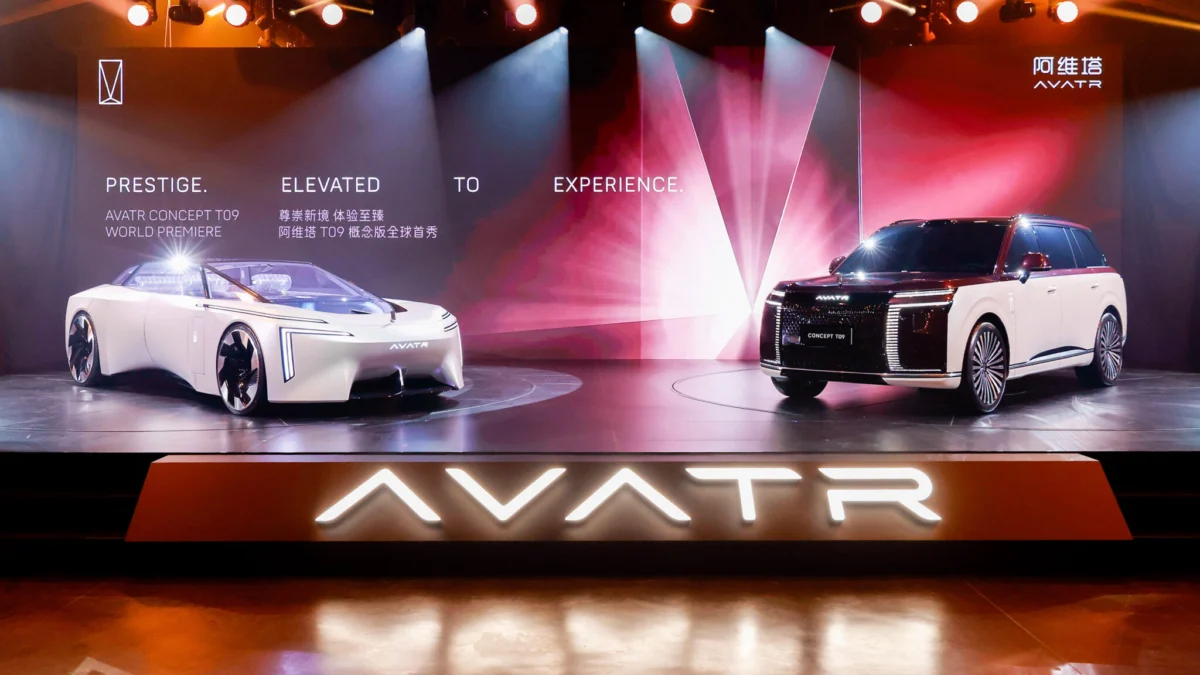
The landscape of the European automotive market is on the precipice of a significant transformation. At the recent Paris Motor Show, Avatr, the premium electric vehicle brand backed by automotive giant Changan and battery behemoth CATL, officially signaled its long-anticipated entry into the European continent. After three years of meticulous planning and strategic positioning, the manufacturer has confirmed that its primary beachhead for this expansion will be the markets of Norway and Spain, with operations set to commence in 2027.
This move is not merely an export exercise; it represents a comprehensive effort by a high-tech Chinese OEM to integrate itself into the sophisticated fabric of European consumer expectations, service requirements, and regulatory standards.
Main Facts: The European Blueprint
Avatr’s arrival in Europe is anchored by a diverse initial product lineup that aims to bridge the gap between high-performance engineering and cutting-edge digital luxury. The company has confirmed that the first models to reach European shores will be the Avatr 06T and the Avatr 07L.
The 06T is a sleek, evocative estate—a body style that has historically enjoyed significant popularity in Europe—while the 07L is positioned as a premium SUV, designed to challenge the dominance of established mid-size and full-size luxury crossovers. These two vehicles are merely the vanguards; the brand has committed to a robust roadmap that will see a total of six distinct models introduced to the European market over the next three years.
To ensure long-term viability, Avatr is eschewing the "import-and-forget" model. Instead, the company is actively building localized sales and service networks in Norway and Spain. Furthermore, they are establishing a European spare-parts logistics system and dedicated roadside assistance, addressing the primary concerns of European buyers regarding the longevity and support of imported vehicles.
A Three-Year Chronology of Ambition
The journey to Paris began long before the 2026 announcement. For more than three years, Avatr has been laying the groundwork for this international expansion.
- Initial Conception (2023): Avatr executives first outlined a global growth strategy that emphasized a transition from a domestic-focused entity to an international powerhouse. This period saw the strengthening of partnerships between Changan’s manufacturing expertise and CATL’s battery technology, creating a unique value proposition for global markets.
- The Munich Connection: While the brand has yet to sell a vehicle in Europe, it has maintained a significant footprint through its global design center in Munich, Germany. This center has served as a cultural and aesthetic bridge, allowing Avatr’s designers to harmonize the bold, futuristic design language of Shanghai with the refined, ergonomic sensibilities preferred by European drivers.
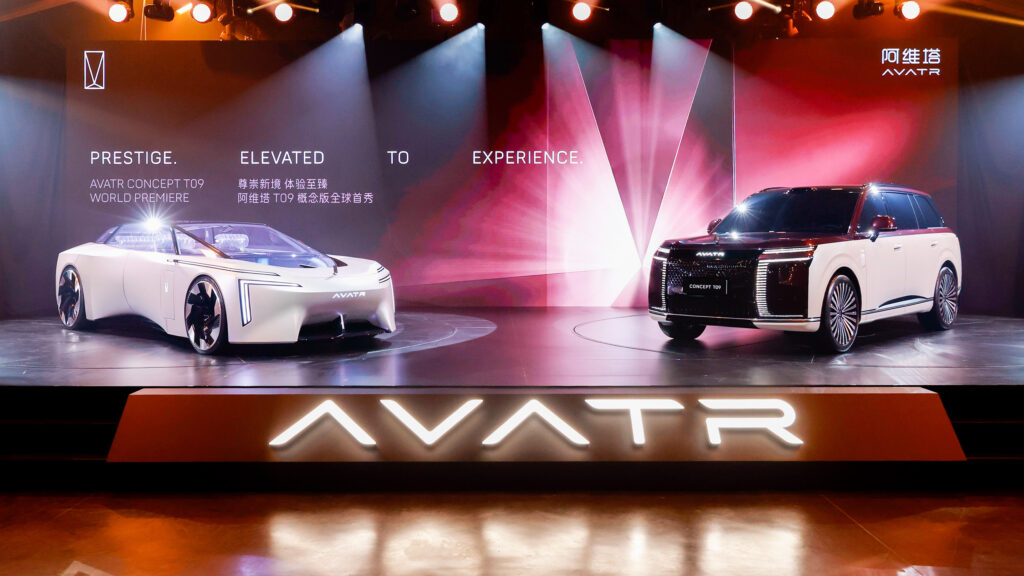
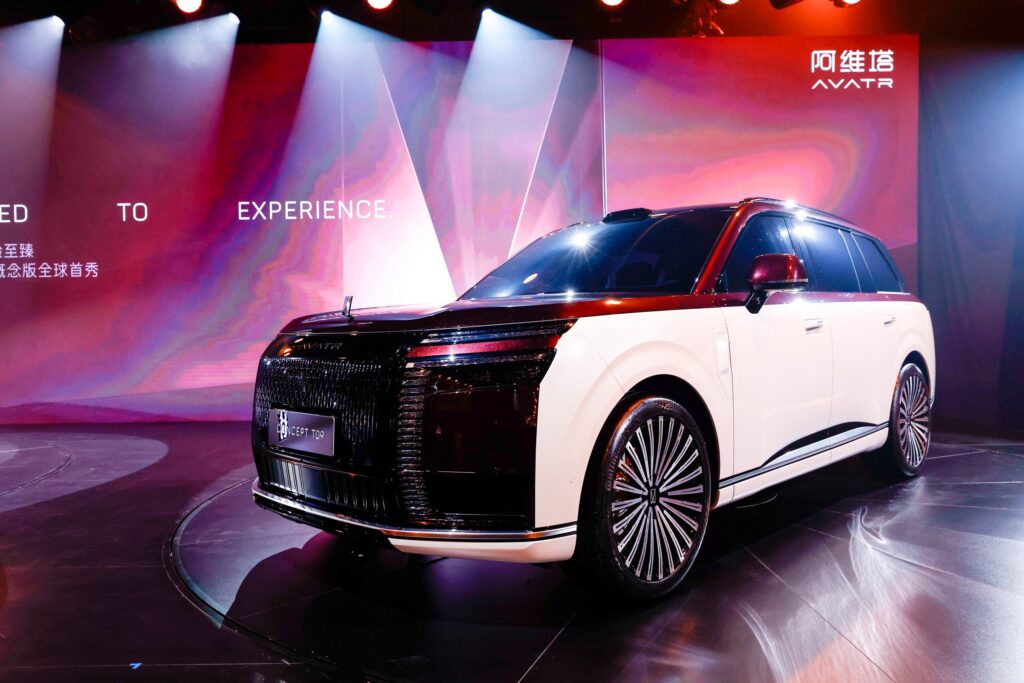
- The Paris Reveal (2026): The Paris Motor Show acted as the official global coming-out party. It was here that the brand debuted the T09 Concept, a full-sized luxury SUV, signaling their intent to compete not just with volume-segment manufacturers, but with the upper echelon of the luxury market.
- Future Milestones (2027–2030): The official launch in Norway and Spain in 2027 marks the start of a broader scaling phase. By 2030, Avatr aims to have an operational presence in 110 countries and regions worldwide, building upon its existing success in over 70 territories where it has already moved more than 280,000 units.
Supporting Data: The T09 and the Tech Arsenal
The flagship T09 Concept, which took center stage in Paris, is the clearest indicator of Avatr’s high-end ambitions. Designed to compete with the likes of the Mercedes-Maybach GLS and the Rolls-Royce Cullinan, the T09 is not just a car; it is a statement of technical prowess.
The vehicle is expected to utilize a range-extender (EREV) architecture, a technology that is increasingly relevant for European markets where long-distance travel is common and charging infrastructure remains inconsistent in certain regions. While specific configurations for Europe are pending finalization, the technical specifications from Chinese market filings suggest a highly flexible powertrain:

- Option 1: A turbocharged 1.5-liter inline-four engine producing 141 hp (105 kW) serving as a generator, paired with a 241 hp (180 kW) front motor and 415 hp (310 kW) rear motors.
- Option 2: A more robust 2.0-liter turbocharged four-cylinder with 201 hp (150 kW), complemented by a 241 hp (180 kW) front motor and a high-performance 302 hp (225 kW) dual-rear motor setup.
These power figures, combined with a 71.24 kWh battery pack, position the T09 as a formidable contender in the luxury SUV segment, offering both the silent, emission-free driving of an EV and the practical range of an internal combustion engine.
Official Perspectives: The Vision of Global Integration
Justin Li, head of Avatr’s Overseas Business, provided a clear insight into the brand’s philosophy during the Paris unveiling. His comments underscore a company that views itself as a "born-global" entity rather than a localized Chinese brand looking to export excess stock.
"Avatr has been a global brand from the very beginning," Li stated. "Our mission in Europe is not just to sell cars, but to provide a complete, premium ownership experience. Over the next three years, our lineup will span the most critical segments for European consumers—mid-size SUVs, large SUVs, and the classic, elegant shooting-brake body styles."
Li emphasized that the choice of Norway and Spain was deliberate. Norway remains the world’s most advanced market for EV adoption, providing the perfect testbed for Avatr’s high-tech features, while Spain represents a massive, growing market that values design and performance. By establishing localized support systems, the company is attempting to mitigate the "trust gap" that often plagues new entrants in the European market.

Implications: A Shifting European Market
The entry of Avatr into Europe arrives at a pivotal moment. The European automotive sector is currently navigating a complex transition to full electrification, complicated by rising protectionist sentiments and the ongoing "price war" between domestic manufacturers and Chinese imports.
1. Competitive Pressure on Domestic Manufacturers
Avatr’s focus on the premium segment puts it in direct conflict with European heavyweights like BMW, Mercedes-Benz, and Audi. By offering "supercar power" combined with the sophisticated, software-first approach pioneered by Chinese EV manufacturers, Avatr could disrupt the status quo. Their ability to deliver rapid technological updates (OTA) and high-end digital cockpits presents a challenge to European brands that have historically struggled with software integration.
2. The Role of the "Design-Led" Approach
The success of the Munich design center cannot be overstated. By embedding themselves in the heart of European automotive culture, Avatr is effectively "localizing" its design DNA. This creates a psychological familiarity that helps the cars feel less like "Chinese imports" and more like globally-engineered products.
3. Sustainability and the EREV Strategy
The use of range-extender technology (EREV) is a shrewd tactical move for Europe. While many Western manufacturers are betting everything on pure Battery Electric Vehicles (BEVs), the EREV provides a bridge for consumers who are wary of charging anxiety. This could give Avatr an edge in capturing the "middle ground" of the market—buyers who want the benefits of electrification without the perceived drawbacks of current charging infrastructure.
4. Long-Term Economic Impact
With over 280,000 units sold globally, Avatr brings a scale of production that few new-market entrants can match. The establishment of a European spare-parts logistics chain suggests that the company is prepared for a long-haul commitment. If they succeed in Spain and Norway, the template for a pan-European expansion is already well-defined, potentially leading to increased employment in logistics, sales, and service sectors across the continent.
Conclusion: The Road Ahead
Avatr’s entry into Europe is a masterclass in strategic patience. By opting not to rush the market, but rather to spend years aligning their design, engineering, and service infrastructure with European standards, they have positioned themselves as a sophisticated challenger rather than a fleeting trend.
As the brand prepares for its 2027 debut, the eyes of the industry will be firmly fixed on Norway and Spain. If the Avatr 06T and 07L perform as well in real-world European conditions as they do on paper, the brand may well prove that the future of the European luxury car market is increasingly being written in Shanghai and designed in Munich. The transition of the automotive industry is no longer a regional event; it is a global one, and Avatr is clearly determined to be at the forefront of this new, electrified era.
