

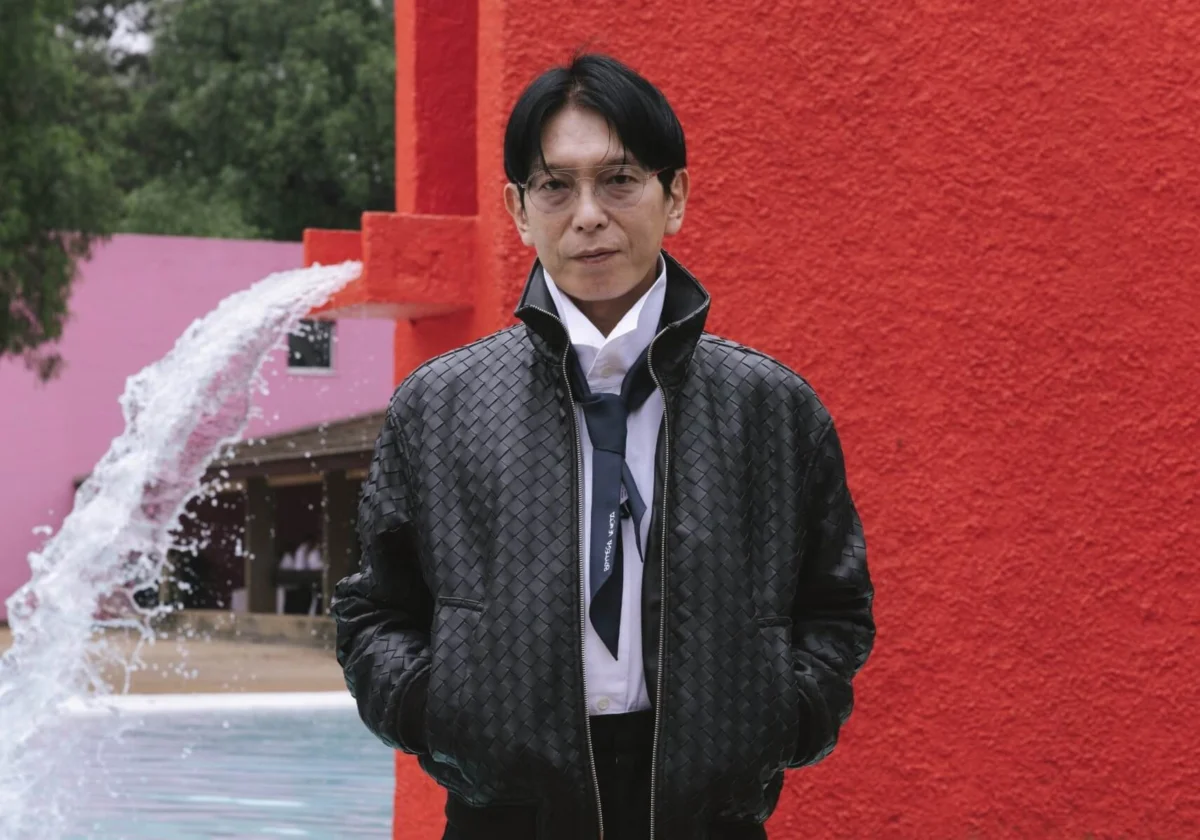
In a landmark moment for global architectural recognition, Japanese visionary Junya Ishigami has been named the first-ever recipient of the Barragán Prize. The accolade, a collaborative initiative between the Mexico City-based cultural organization La Cuadra and the luxury fashion house Bottega Veneta, seeks to honor individuals who fundamentally challenge the conventions of the built environment. Ishigami’s selection marks the launch of an ambitious program designed to bridge the gap between historical architectural mastery and the fluid, nature-integrated sensibilities of the 21st century.
The Essence of the Barragán Prize
Named in honor of Luis Barragán, the legendary Mexican architect whose work defined the poetic intersection of light, color, and structural minimalism, the prize carries significant prestige and a substantial endowment. The award package includes a commemorative medal and a $100,000 grant. In a progressive move, the funding structure is split: $50,000 is awarded directly to the laureate, while the remaining $50,000 is dedicated to financing a yearlong mentorship program, ensuring that the influence of the winner is passed on to the next generation of practitioners.
The prize was officially presented to Ishigami on October 9, 2026, at La Cuadra—a venue that is, in itself, a testament to the prize’s legacy. Located outside Mexico City, the site occupies a compound originally designed by Luis Barragán and his protégé, Andrés Casillas. This choice of venue serves as a symbolic bridge, connecting the rigid, sculptural geometry of Mexican modernism with the ethereal, landscape-focused practice for which Ishigami has become world-renowned.
A Jury of Global Icons
The selection process was handled by an illustrious, interdisciplinary panel of creative luminaries. The jury included performance artist Marina Abramović and sculptor Pedro Reyes, alongside a formidable roster of architects, including Jürgen Mayer H., Amanda Levete, Winy Maas, Kazuyo Sejima, and Benedetta Tagliabue. They were joined by curator Raymund Ryan and fashion designer Louise Trotter, alongside representatives from the La Cuadra organization.
This diverse assembly underscores the prize’s intention to view architecture not merely as a structural engineering task, but as a cultural and artistic discipline. The panel’s decision to crown Ishigami serves as a validation of his "airy" aesthetic—a design philosophy that often seeks to dissolve the boundaries between human construction and the natural world, a concept that resonates deeply with the spiritual depth found in Barragán’s own work.
Chronology: A Career of Ethereal Construction
Born in 1974, Ishigami’s trajectory from a quiet researcher to a global architectural icon is marked by a series of projects that defy gravity and traditional categorization. After honing his skills at the prestigious firm SANAA, Ishigami established his own practice, junya.ishigami+associates, in 2004.

The following timeline highlights the pivotal moments of his career:
- 2004: Foundational year of junya.ishigami+associates.
- 2008: The completion of the Kanagawa Institute of Technology, a project that garnered international acclaim for its forest-like interior, characterized by hundreds of slender, randomly placed columns that create an interior environment resembling a dense grove of trees.
- 2010: Ishigami is awarded the prestigious Golden Lion at the Venice Biennale of Architecture, cementing his status as a leading voice in contemporary design.
- 2011: Completion of the restoration of the Moscow Polytechnic Museum’s garden, showcasing his ability to intervene in historical landscapes with minimal, yet transformative, gestures.
- 2014: Unveiling of the House of Peace in Copenhagen, a project highlighting his fascination with structural lightness and environmental harmony.
- 2018: The Art Biotop Water Garden in Tochigi, Japan, is realized. This project is perhaps his most radical, involving the relocation of hundreds of trees from a construction site to a new plot, creating a man-made ecosystem that looks entirely organic.
- 2019: Ishigami is named the inaugural winner of the Obel Award and invited to design the Serpentine Pavilion in London.
- 2024: Completion of the Zaishui Art Museum in Rizhao, China, a structure that appears to float on the surface of a lake, emphasizing his signature "weightless" style.
Supporting Data: The Philosophy of the "New Nature"
Ishigami’s work is frequently categorized as "architectural minimalism," yet this term fails to capture the complexity of his research. Unlike the rigid, industrial minimalism of the mid-20th century, Ishigami’s output is often described as "nature-centric." His methodology involves deep-dive research into the ecology of a site before a single line is drawn.
In his 2018 Art Biotop project, for instance, he engaged in what he called "landscaping as architecture," where the construction was not a building but the creation of a new, sustainable geography. His structures often feel as if they are in a state of flux—permanently hovering between the man-made and the organic. This approach has earned him both fervent admirers and those who question the practicality of his designs. However, the Barragán Prize jury appears to be prioritizing his contribution to the possibilities of architecture, valuing his ability to shift the discourse away from purely functionalism toward the phenomenological experience of space.
A Legacy Complicated: The Serpentine Controversy
While the Barragán Prize recognizes Ishigami’s visionary prowess, his career has not been without significant professional turbulence. His 2019 commission for the Serpentine Pavilion in London, intended to be a career-defining moment, became the site of a major labor scandal.
Reports from the Architects’ Journal revealed that interns working on the pavilion project were subjected to grueling conditions, including expectations to work six days a week, thirteen hours a day, without pay. Furthermore, these interns were reportedly required to provide their own equipment. The ensuing backlash was immediate and international, casting a spotlight on the often-exploitative nature of the "starchitect" business model, where high-profile firms may rely on underpaid labor to execute labor-intensive, avant-garde designs.
The Serpentine Gallery, under intense public pressure, eventually stepped in, forcing junya.ishigami+associates to retroactively pay the interns. While this incident occurred seven years ago, it remains a critical chapter in Ishigami’s history, serving as a cautionary tale for the industry regarding the ethics of architectural production. The fact that the Barragán Prize jury chose to recognize him regardless of this history suggests a desire to decouple the man’s intellectual contributions from his past management practices, though it remains a point of contention among critics who argue that ethical labor practices should be a prerequisite for such high-level honors.

Implications: The Future of the Prize
The establishment of the Barragán Prize carries profound implications for the architectural industry. By aligning with a high-end fashion brand like Bottega Veneta, the prize signals a shifting landscape in how architectural excellence is funded and promoted. The "lifestyle" branding of architecture is becoming increasingly prevalent, as luxury houses seek to associate themselves with the prestige of world-class design.
For Ishigami, this prize provides a platform to continue his experiments on a larger, more institutional scale. The $50,000 mentorship fund ensures that his influence will be institutionalized, likely attracting a new cohort of young architects who wish to study his specific methodology of "fluid" design.
However, the prize also sets a high bar for future recipients. By selecting a figure as controversial as he is brilliant, the jury has signaled that the Barragán Prize will not be a "safe" award. It is clearly intended to provoke, to challenge, and to stir debate within the architectural community.
As we look toward the future, the Barragán Prize stands to become one of the few awards that truly bridges the gap between the artistic avant-garde and the practical realities of construction. Whether Ishigami’s tenure as the first winner will be remembered more for his ethereal designs or for the complex ethical questions he represents, his impact on the trajectory of 21st-century architecture is undeniable. Through the lens of this new award, his career serves as a reflection of the industry’s own struggle to balance artistic ambition with the fundamental responsibilities of the profession.
