

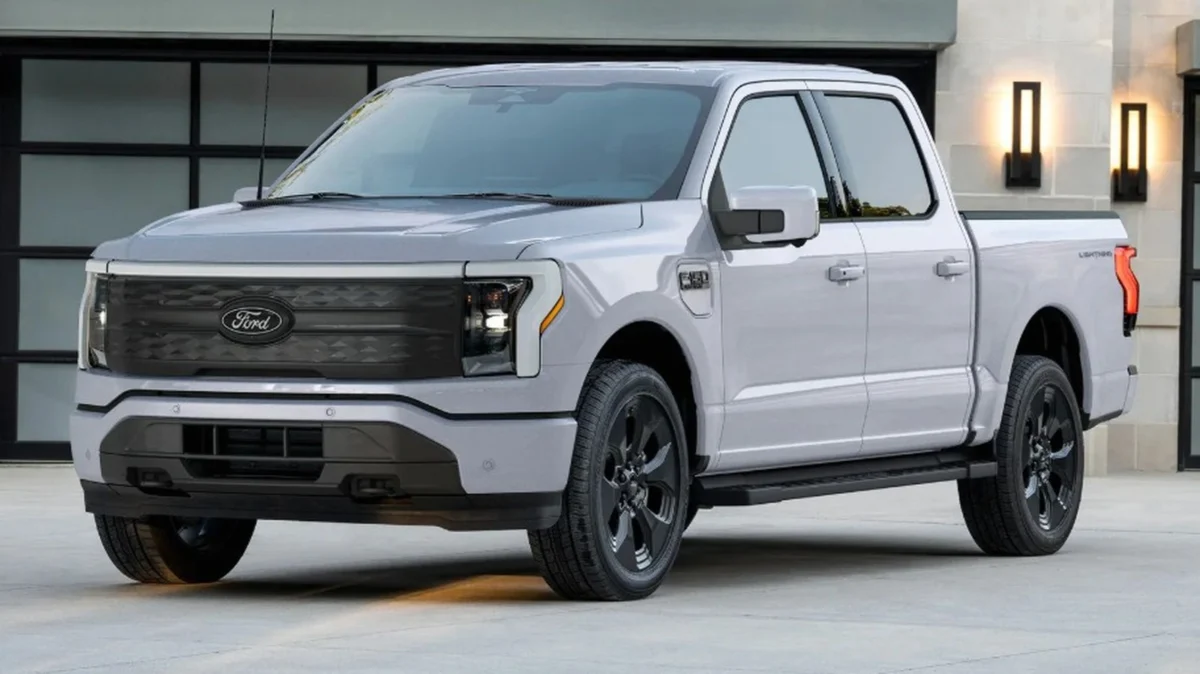
It has been roughly one year since the assembly lines at the Dearborn Truck Plant fell silent, marking the end of production for one of the most polarizing and ambitious experiments in modern automotive history: the Ford F-150 Lightning. At the time of its discontinuation, the decision sent shockwaves through the industry. Ford had effectively pulled the plug on its flagship electric pickup, a vehicle that had once been hailed as the vanguard of the electric revolution.
Yet, in a twist that has caught even industry analysts off guard, the F-150 Lightning is experiencing a robust, almost frantic, second act on the pre-owned market. While new car inventory sat stagnant in years past, these electrified workhorses are now flying off dealership lots, proving that while the market may have rejected the Lightning at its original premium price point, there is a voracious appetite for it when the cost is right.
The Main Facts: From Production Floor to Used Lot Stardom
The narrative of the F-150 Lightning is a classic tale of supply-side optimism clashing with the harsh realities of consumer elasticity. When Ford launched the Lightning, it was positioned as the pinnacle of the F-Series legacy—a truck that retained the utility, towing capacity, and iconic silhouette of the best-selling vehicle in America, but with a silent, electric heart.
Despite early success, the vehicle faced a "death by a thousand cuts" scenario. Rising raw material costs, a cooling EV market, and a series of pricing hikes that alienated core truck buyers turned a once-coveted product into a luxury item. However, in the used market, the dynamic has shifted entirely. Data from Bloomberg indicates that the average Ford F-150 Lightning now spends a mere 20 days on a dealer lot before finding a new owner. To put that in perspective, the industry average for a used vehicle is 44 days.
The primary driver of this demand is depreciation—the very thing that killed the truck’s new-car prospects has become its greatest asset in the used sector. Consumers who were previously priced out by MSRPs that climbed north of $70,000 are now snapping up units for as little as $40,000. It is a classic case of market correction: the product was never "bad"; it was simply overpriced for the segment it intended to capture.
A Chronology of the Lightning’s Rise and Fall
The timeline of the Lightning is marked by aggressive projections and subsequent retractions.
- 2021: The Hype Cycle. Ford unveils the F-150 Lightning to massive fanfare. Within the first month, the company records 100,000 reservations. The fervor is so high that Ford executives begin internal discussions to scale production to 150,000 units annually, basing their math on the historical success of the gas-powered F-Series, which frequently topped 900,000 units in annual sales.
- 2022: The Reality Check. As production ramps up, supply chain bottlenecks and a fire at a critical aluminum supplier cripple output. Simultaneously, the broader economic climate shifts; inflation rises, and interest rates climb, making high-priced EVs less attractive to the average consumer.
- 2023: The Price Inflation. In an attempt to protect margins, Ford incrementally raises the MSRP. The base model, initially promised at $39,974, eventually sees its entry price balloon to over $60,000.
- 2024: The Peak and the Pivot. The F-150 Lightning hits its apex in terms of sales volume, moving just over 33,500 units. While respectable for an EV, it falls disastrously short of the 150,000-unit goal. Ford executives announce the discontinuation of the model to pivot resources toward more profitable segments.
- 2025-2026: The Used Market Renaissance. Freed from the constraints of high MSRPs, the Lightning finds its true market value. Dealers of all stripes—including those representing non-Ford brands—begin aggressively acquiring used Lightnings, recognizing that the vehicle’s utility outweighs the stigma of its production cancellation.
Supporting Data: Why the Market Shifted
The disparity between the Lightning’s performance as a new vehicle versus a used one highlights a critical failure in Ford’s initial forecasting.
The Pricing Elasticity Gap
Ford’s internal data assumed that F-Series buyers would be willing to pay a "tech premium" for electrification. However, the data suggests that for the utility-focused pickup buyer, the threshold for a secondary vehicle or a work truck is significantly lower. The transition of the Lightning from a $79,000 asset to a $40,000 asset has effectively unlocked a new demographic of buyers who value the truck’s V2L (Vehicle-to-Load) capabilities and acceleration but were unwilling to subsidize Ford’s early-stage EV production costs.
Competitive Arbitrage
An interesting trend in the current used market is the involvement of competing brands. A significant percentage of used F-150 Lightnings are being sold through non-Ford dealerships. Typically, franchised dealers prefer to wholesale vehicles of a different brand back to the manufacturer’s local representative. In this case, however, the demand is so high that competing dealers are keeping the inventory on their own lots, signaling that they recognize a "hot" commodity that can draw foot traffic—a rare status for a discontinued EV.
Official Responses and Strategic Missteps
Ford’s official position throughout the lifecycle of the Lightning was one of "cautious optimism." Leadership frequently pointed to the 100,000 reservations as a definitive signal of market demand. Looking back, this was a critical error in judgment. Reservations are often non-binding expressions of interest, not financial commitments.
In hindsight, the decision to aim for 150,000 units was fueled by a desire to compete with the sheer hype cycle of competitors, such as Tesla’s Cybertruck. While the Cybertruck faced its own struggles with production and public perception, Ford’s attempt to scale its "tried and true" platform into the EV space failed because it underestimated how quickly the transition to EVs would plateau in the U.S. market. Ford’s executives have since acknowledged, in indirect ways, that they "over-indexed" on optimism, favoring long-term production projections over short-term market reality.
Implications for the Future: The "Fathom" Era
The most important question remaining is: has Ford learned its lesson? The company’s upcoming strategy suggests a mix of caution and continued, perhaps reckless, ambition.
Ford has announced the "Fathom," a midsize electric pickup slated for 2027. The pricing strategy for the Fathom—starting at an aggressive $28,350—is a clear response to the failure of the high-priced Lightning. By targeting a lower entry point, Ford is attempting to capture the market segment that was essentially priced out of the EV revolution entirely.
However, the "second lesson"—that of realistic scaling—seems to be under threat. Ford is currently pouring $2 billion into a new production system for the Fathom, with a goal of selling 100,000 units in the first year alone. While this is a more modest goal than the F-150’s projection, it still relies on the assumption that a massive, untapped market of EV-curious truck buyers is waiting for a midsize electric option.
Key Takeaways for the Auto Industry
- Affordability is the Only Catalyst: The success of the used F-150 Lightning proves that consumers are not anti-EV; they are anti-overpriced-EV.
- Reservations are Vanity Metrics: Automakers should treat initial pre-orders as market research, not as confirmed demand for high-volume production.
- The "Work Truck" Utility Factor: EVs in the utility space succeed when their functionality (power, towing, off-road capability) is prioritized over gimmicks.
As the industry watches the development of the Fathom, the ghost of the F-150 Lightning looms large. It remains a testament to the fact that while a product can be ahead of its time, it must also be within the reach of the people it is designed to serve. Whether Ford can successfully transition from the "optimistic failure" of the Lightning to the "pragmatic success" of the Fathom remains to be seen. For now, the used car market continues to scoop up the remaining Lightnings, proving that the truck itself was a success—the business model was simply a prototype that needed a bit more refinement.
