

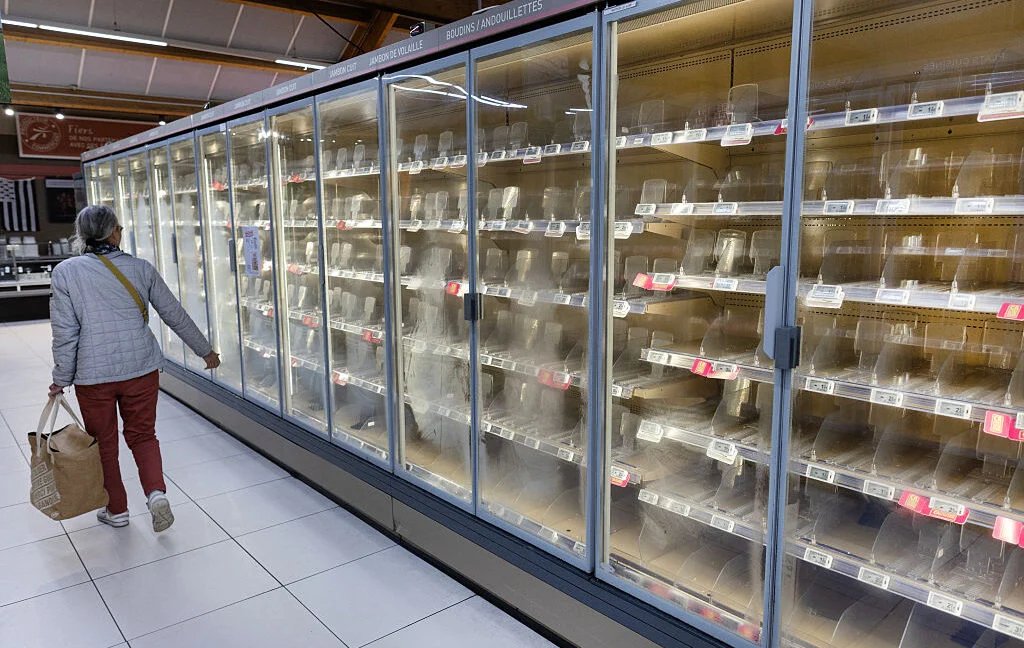
A series of widespread cyberattacks targeting refrigeration infrastructure across Europe has exposed a critical, often-overlooked vulnerability in the modern supply chain: the Internet of Things (IoT). By exploiting outdated firmware and poor network configuration in refrigeration controllers, unknown actors have triggered mass system failures, leading to the spoilage of perishable goods and resulting in financial losses estimated in the tens, if not hundreds, of millions of euros.
The incidents, which primarily affected supermarket chains in Spain, Portugal, Poland, Germany, and Belgium, have turned the spotlight on the "cyber hygiene" of retail giants and the inherent risks of connecting industrial control systems (ICS) directly to the public internet.
Main Facts: A Failure of Basic Digital Defense
At the heart of the crisis are industrial refrigeration controllers—small, connected computers that manage the temperature and power cycles of walk-in freezers and display cases. According to researchers at Pen Test Partners and Claroty, the attackers did not need sophisticated, nation-state-level exploits to gain entry. Instead, they relied on "low-hanging fruit": devices running on obsolete firmware with default or weak credentials, exposed directly to the public web.
The attackers leveraged the lack of foundational security protocols. Had the affected retailers implemented basic "defense-in-depth" measures—specifically placing these controllers behind a Virtual Private Network (VPN) and enforcing strict IP allowlisting—the controllers would have remained invisible to the attackers’ scanning tools. Instead, by leaving these systems reachable via standard web ports, store operators effectively handed the keys to their cold-storage infrastructure to any entity with an internet connection.
Chronology: From Warning to Catastrophe
The road to this mass outage was paved with explicit, repeated warnings that were largely ignored by the commercial sector.
- October 2023: Security researchers at the firm Claroty published a comprehensive report detailing vulnerabilities in Danfoss refrigeration controllers. They warned that the widespread use of these devices in retail settings created a "soft target" for attackers capable of manipulating temperature settings, which could lead to mass food spoilage.
- February 2024: The U.S. Cybersecurity and Infrastructure Security Agency (CISA) issued an official ICS advisory. The agency explicitly warned of the risks associated with outdated firmware in these specific controllers, urging operators to patch their systems immediately and remove them from the public-facing internet.
- The Incident Window: Following these warnings, a surge in unauthorized access attempts was observed across European retail networks. During this period, supermarkets in multiple countries reported anomalous behavior in their refrigeration systems, leading to sudden temperature spikes, system lockouts, and, ultimately, the mass loss of inventory.
- Post-Incident Investigation: As of this writing, security firms and forensic investigators are still piecing together the timeline of the intrusions, with evidence pointing toward a coordinated, multi-national effort that struck multiple chains nearly simultaneously.
Supporting Data: The Cost of Negligence
While exact figures remain proprietary, the scope of the damage is unprecedented in the retail sector. In the food industry, the "cold chain" is the most critical link; once a temperature threshold is breached, inventory worth thousands of euros per unit can become unsalvageable within hours.
The Anatomy of the Vulnerability
Researchers at Pen Test Partners noted that the exploit chain typically followed a predictable path:
- Discovery: Attackers used automated scanning tools (such as Shodan) to identify refrigeration controllers exposed to the internet.
- Access: Attackers exploited known vulnerabilities in legacy firmware or utilized default manufacturer passwords that had never been changed.
- Persistence/Action: Once inside, the attackers could alter thermostat setpoints, disable alarm systems, or brick the hardware entirely, leaving the retailer unable to remotely manage the environment.
The financial fallout is compounded by the cost of technical remediation. Replacing end-of-life controllers requires not only capital expenditure on hardware but also significant labor costs to physically access thousands of store locations to swap out or flash-update devices that no longer support modern security standards.
Official Responses: The Blame Game
The response from the manufacturing sector has been swift, if defensive.
Copeland, a major player in the climate technology space, issued a statement via email acknowledging that the vulnerabilities were tied to "a discontinued, end-of-life generation of controllers." The company stated that it is working closely with affected customers to mitigate the damage and provide guidance on upgrading to more secure, modern hardware.
Danfoss, another key manufacturer, has remained largely silent regarding the specifics of the breach, though reports from CNN suggest they have also pointed to the use of discontinued, legacy models as the primary driver of the security failure.
The consensus among manufacturers is clear: the responsibility for patching and network security lies with the end-user. However, retailers argue that manufacturers should have built more resilient, "secure-by-design" products that did not necessitate constant, manual intervention to prevent catastrophic failure.
Implications: The Tension Between Finance and Security
This incident serves as a grim case study in the friction between corporate financial departments and Chief Information Security Officers (CISOs).
The Financial-Security Tug-of-War
In many retail organizations, infrastructure upgrades are viewed as a "cost center" rather than a risk-mitigation investment. If a refrigeration system is functioning—even if it is insecure—there is often little appetite from the board to authorize the multi-million-euro budget required to replace or upgrade thousands of units. The rationale is simple: "If it isn’t broken, don’t fix it."
This mindset, however, fails to account for the "black swan" events that cybersecurity experts have been predicting for years. The supermarket hack proves that a lack of investment in "boring" security—like VPNs and firmware updates—can result in losses that far outweigh the cost of the original upgrades.
A Call for Industrial Hygiene
Pen Test Partners laid out a roadmap for companies looking to avoid a repeat of this scenario:
- Network Isolation: Move all industrial control kits off the public internet.
- Controlled Access: Use VPNs and IP allowlisting to ensure that only authorized personnel can communicate with internal systems.
- Third-Party Oversight: When bringing in third-party contractors, ensure their kits are integrated into a documented, secure network environment rather than allowing them to connect via their own insecure connections.
- Credential Management: Enforce strict password policies and replace all default credentials upon installation.
- Lifecycle Management: Establish a rigorous schedule for patching and, critically, sunsetting hardware that can no longer be updated.
Future Outlook: Vandalism or State-Sponsored Sabotage?
One of the most chilling aspects of this event is the silence of the perpetrators. There have been no ransom demands, no manifestos, and no claims of responsibility. This silence leads to two primary, equally concerning theories.
First, the motive could be pure, nihilistic vandalism. The attackers may have been testing their capabilities or simply seeking to cause chaos for the sake of causing chaos. The ability to destroy millions of euros in food supplies at the click of a button is an enticing prospect for bored or malicious hackers.
Second, the incident may be a "dry run" for a larger, more sophisticated operation. By hitting supermarkets across five different countries, the attackers demonstrated the ability to coordinate a cross-border strike on critical infrastructure. Some intelligence analysts speculate that this could be the work of a nation-state actor testing the resilience of European supply chains. If an actor can "defrost" a continent’s food supply, they hold a significant leverage point in any future geopolitical conflict.
Regardless of the motive, the lesson for the business world is stark: the "Internet of Things" is also an "Internet of Threats." As businesses continue to digitize their physical operations, the gap between traditional IT security and physical infrastructure management must be closed. Failure to do so will not only result in financial losses but will continue to leave our most essential services—like the food supply chain—vulnerable to those who wish to do us harm.
The cautionary tale is written in the spoiled inventory of European supermarkets; whether other industries choose to read it, or wait for their own disaster to occur, remains to be seen.
