

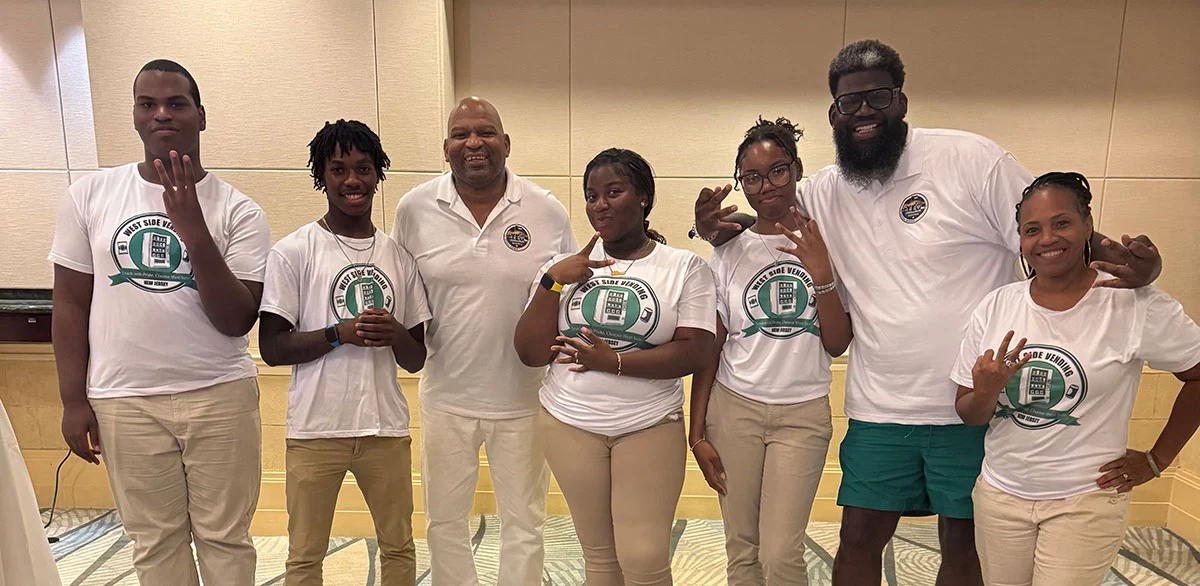
NEWARK, N.J. – The landscape of American business education is shifting, and if the latest results from the Young Entrepreneurz Solutions (YES) National Business Plan Challenge are any indication, the future of the industry is being forged in the classrooms of Newark.
In a display of strategic acumen and poise, a team of four seniors from West Side High School has clinched the first-place title at the prestigious national competition. Representing their student-led enterprise, “West Side Vending,” teammates Hassan Reed, Kazmir Cray, Nia Jack, and Brailynn George outperformed peers from across the United States, proving that the distance between a high school classroom and a successful business venture is shorter than many might imagine.
The Winning Formula: West Side Vending
At its core, West Side Vending is more than just a convenience service; it is a pedagogical experiment in supply chain management, customer relations, and financial literacy. The business model involves the strategic leasing of vending machines, providing the student team with a real-world sandbox to apply theoretical concepts learned within the halls of the school’s Business and Finance Academy.
By managing inventory, analyzing consumer demand, and navigating the complexities of school-based retail, these students have turned a standard service operation into a sophisticated case study on economic development. The victory at the YES competition was not merely for the idea itself, but for the depth of the business plan and the professionalism with which the team presented their operations to a panel of expert judges.
Chronology of the YES National Business Plan Challenge
The journey to the top of the national podium took place over two high-stakes days in late September.
September 25: The Pitch
The event kicked off with a grueling schedule of presentations. Teams from various states arrived with business plans that spanned sectors from sustainable technology to retail and social services. The West Side High School cohort presented their model for West Side Vending, emphasizing scalability, student accessibility, and fiscal responsibility. The presentation required the team to field intense questioning from industry professionals, defending their revenue models and logistics strategies.
September 26: The Verdict
Following a rigorous deliberation process, the judges gathered to announce the winners. The atmosphere, described by attendees as electric, culminated in the announcement of the West Side team as the first-place winners. The ceremony served as a formal validation of the students’ hard work, awarding them accolades that mark a significant milestone in their pre-professional careers.
Supporting Data and the YES Ecosystem
The YES National Business Plan Challenge is not merely a contest; it is a critical component of a broader educational mission. Founded by Ernest Ruffin Jr., an entrepreneur and former adjunct professor at Rutgers University, the organization aims to demystify the mechanics of commerce for students in grades 6 through 12.
The YES curriculum focuses on the bedrock of economic development: identifying market needs, conducting feasibility studies, and navigating the legal and operational hurdles of starting a business. For West Side High School—a school that houses the district’s specialized Business and Finance Academy—the partnership with YES has been transformative.
This year’s victory is particularly significant as it cements a legacy of excellence for the Newark school. It follows the 2023 triumph of West Side seniors Hapsatou Fatty, Alyssa Lopez, and Shamar Richards, who won the same competition with their venture, "Rider Heat Hot Sauce." That project, bolstered by a strategic partnership with the Newark Beth Israel Farmers Market, served as a blueprint for the current team. By effectively winning back-to-back national titles, West Side High School has effectively positioned itself as a powerhouse of youth entrepreneurship in the Northeast.
Official Responses: Cultivating a Culture of Leadership
The triumph of the West Side Vending team has drawn praise from the highest levels of the Newark Public Schools administration, highlighting the institutional commitment to career-readiness.
Superintendent León emphasized the synergy between the classroom and the real world in his remarks following the win:
“Our students are learning how to turn ideas into opportunities through planning, teamwork, and the confidence to present their work on a national stage. West Side Vending demonstrates the power of connecting classroom instruction with practical experience. We are proud of these students and the educators who are preparing them to become business leaders.”
This sentiment was echoed by Board of Education President Hasani K. Council, who noted the psychological and developmental benefits of the competition.
“These experiences help students see themselves as creators, problem-solvers, and leaders,” Council stated. “We congratulate the West Side Vending team for representing Newark and putting their business knowledge into action.”
West Side High School Principal Akbar Cook, who has been instrumental in fostering an environment where students feel empowered to take ownership of their education, underscored the long-term implications of the experience.
“Our students have taken ownership of West Side Vending, and this competition gave them an opportunity to share their work with a national audience,” Principal Cook said. “The experience of building a business and presenting it to others helps them develop skills they can carry into college, careers, and ventures of their own.”
Implications for Future Business Education
The success of West Side High School raises an important question for educators across the country: What is the most effective way to prepare students for a rapidly changing economy?
Bridging the Gap
For decades, high school business education was largely relegated to basic accounting or introductory economics. However, the success of the West Side model—which emphasizes active, student-led ventures—suggests that the "learning-by-doing" approach is far more effective. By managing actual vending machines, the students are forced to confront real-world variables: supply chain disruptions, changing student preferences, and the necessity of profit margins.
Building Resilience and Soft Skills
Beyond the hard skills of finance and marketing, the YES competition forces students to develop "soft skills" that are often difficult to teach in a traditional lecture format. These include:
- Public Speaking and Persuasion: The ability to communicate complex financial data to a panel of judges in a clear, compelling manner.
- Collaboration: Working within a team to navigate interpersonal dynamics and distribute responsibilities efficiently.
- Adaptive Problem Solving: When a vending machine goes out of service or inventory arrives late, students must pivot—a skill essential for any successful career path.
Scaling the Model
The success of West Side Vending, following the previous success of Rider Heat Hot Sauce, suggests that Newark’s model of entrepreneurship education is not a fluke but a replicable system. By leveraging community partnerships—such as the one with the Newark Beth Israel Farmers Market—schools can provide students with the resources and mentors necessary to move their ideas from the whiteboard to the marketplace.
Conclusion: A New Standard for Newark
As the four seniors—Hassan Reed, Kazmir Cray, Nia Jack, and Brailynn George—prepare to graduate and move into the next phase of their lives, they do so with a unique credential: they are national champions.
Their victory is a testament to the fact that when students are given the agency to manage real businesses, they do not just learn about the economy; they become active participants in it. For the Newark school district, the victory serves as a blueprint for the future. By continuing to prioritize programs like the Business and Finance Academy and fostering partnerships with organizations like YES, Newark is not just educating its youth—it is grooming the next generation of CEOs, founders, and innovators.
The trophy won in September will eventually sit on a shelf in West Side High School, but the real prize is the shift in perspective for the students involved. They have proven that they are not just students of business; they are business leaders in their own right, ready to tackle the challenges of the modern economy with the same grit and innovation that brought them to the national stage.
