

By Nick Butler
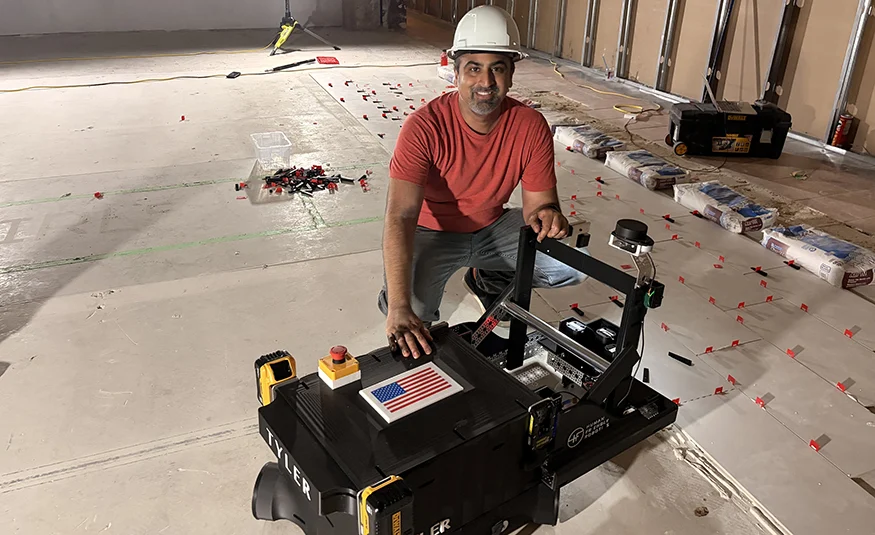
In a significant leap forward for construction technology, Morganville-based startup Human Friendly Robotics (HFR) has officially announced a multi-million-dollar partnership that promises to reshape the landscape of the flooring industry. On October 6, the company revealed a $4 million contract with Flooring Concepts of NJ, a strategic alliance that will deploy HFR’s flagship autonomous tiling robot, "Tyler," across major construction projects in New Jersey, Pennsylvania, and New York.
The three-year agreement represents more than just a business transaction; it serves as a proof-of-concept for the integration of robotics into labor-intensive trades. As the construction industry grapples with a persistent labor shortage and the physical toll of demanding manual work, HFR’s technology offers a glimpse into a future where robots and skilled craftsmen work in tandem to increase output and longevity.
The Core Partnership: Scaling Automation in Construction
The contract between Human Friendly Robotics and Flooring Concepts of NJ is substantial in scope. According to HFR, the deal accounts for between 15% and 40% of Flooring Concepts’ total luxury vinyl tiling work over the next three years. By embedding Tyler into their daily workflows, Flooring Concepts aims to bridge the gap between their current project volume and their capacity to fulfill it.
Shamoon Siddiqui, the founder and CEO of Human Friendly Robotics, views the partnership as a catalyst for growth within the trades. "Our customers have more work than their crews can fulfill," Siddiqui stated. "We give skilled professionals a tool to complete their work eight times faster, and without tiring. Ultimately, we’re reducing physical strain and helping tile setters build longer careers in the trade."
Chronology: From Concept to Commercial Deployment
The rise of Human Friendly Robotics has been marked by rapid iteration and a focus on practical application. While many robotics firms struggle to move their prototypes out of the laboratory, HFR has taken a field-first approach.
- Early Development: HFR focused on identifying the most physically taxing aspects of construction. The company recognized that the flooring industry, specifically tiling, required repetitive, high-precision, and physically debilitating labor that led to high turnover and early retirement for skilled workers.
- The Birth of Tyler: The development of Tyler focused on autonomy that remains "human-friendly." Unlike systems that attempt to replace workers entirely, Tyler was designed to augment the human experience.
- Field Testing: Before the recent contract announcement, HFR successfully deployed Tyler in various real-world environments, including sites in Puerto Rico. These trials were essential in proving that the robot could handle diverse site conditions and deliver consistent quality.
- The Flooring Concepts Deal (October 2026): This landmark contract marks the transition of HFR from a pilot-stage startup to a commercial service provider. The three-year rollout across the Tri-State area positions the company to become a major player in the regional construction technology sector.
Supporting Data: Why Efficiency Matters
The construction industry is currently facing a "silver tsunami"—an aging workforce that is leaving the industry faster than it can be replaced. In this context, the efficiency metrics provided by Human Friendly Robotics are compelling.
HFR reports that Tyler can lay tile up to eight times faster than a human installer. Crucially, the robot is designed to be managed by a single operator. This shift allows a single project manager to oversee a significantly higher square footage of installation, effectively multiplying the firm’s labor output without needing to hire additional, hard-to-find laborers.
Beyond speed, the impact on worker health is a primary driver of the technology. By automating the most taxing aspects of the job—constant kneeling, bending, and the repetitive lifting of heavy materials—Tyler significantly lowers the risk of musculoskeletal disorders. This is not just a benefit for the workers; it is a massive economic advantage for companies, which face high costs related to worker’s compensation, lost time, and the loss of institutional knowledge when experienced tradespeople are forced to leave the field due to injury.
Official Responses and Operational Philosophy
A central concern with the introduction of robotics in the workplace is the fear of displacement. However, the operational philosophy at Human Friendly Robotics is explicitly "human-centric."
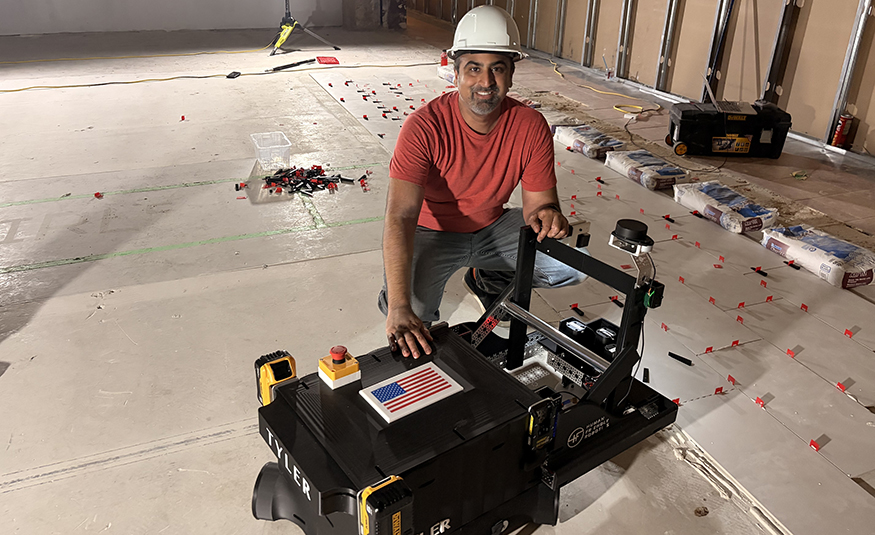
Siddiqui emphasizes that the robot is not an autonomous entity that operates in a vacuum. Instead, it is a tool that requires the expertise of a skilled human. Setters remain responsible for the high-level aspects of the job: making precise cuts, managing complex edges, ensuring aesthetic quality, and conducting final quality control.
"Tyler is trainable," the company notes, highlighting that it does not require a robotics degree to operate. A standard tile setter can learn to pilot the machine, meaning the technology enhances the professional standing of the worker rather than making them obsolete. The machine handles the "drudge work"—the repetitive laying of large swaths of flooring—while the human handles the "artistry" of the installation.
Implications for the Future of Construction
The successful integration of Tyler into Flooring Concepts’ business model has wide-reaching implications for the construction sector at large.
1. The Multiplier Effect
By increasing the speed of installation eight-fold, companies can bid on larger projects with shorter timelines. This could lead to a fundamental change in how construction contracts are negotiated and how project deadlines are set. If one crew can perform the work of four, the total cost of labor—and potentially the total cost of construction—could become more competitive, helping to ease the pressure of rising building costs.
2. Beyond Flooring: The HFR Roadmap
HFR is already looking beyond the tiling industry. The company is actively diversifying its portfolio to address other bottlenecks in the construction and data center infrastructure space.
- Watson: Currently in the demonstration phase, Watson is an autonomous robot specifically designed for wire pulling in data centers.
- Trey: A wire-setting robot designed to expedite the installation of electrical infrastructure in high-density data centers.
These projects suggest that HFR is positioning itself to be a comprehensive automation partner for the "build-out" phase of large-scale infrastructure. As data centers continue to be a primary driver of construction investment in the U.S., HFR’s entry into this market is strategically timed.
3. Industry Cultural Shift
The move toward robotics is often met with skepticism by labor unions and traditionalists. However, the emphasis on "human-friendly" technology—tools that keep workers in the game longer—may prove to be a more effective model for adoption than "lights-out" automation. By branding itself as an ally to the tradesperson, HFR is navigating the delicate political landscape of construction automation with a focus on retention rather than replacement.
Conclusion
The $4 million contract between Human Friendly Robotics and Flooring Concepts of NJ is a milestone that marks the maturation of construction robotics. As the industry moves forward, the success of "Tyler" will be closely watched by developers, general contractors, and labor unions alike.
If the technology continues to deliver on its promise of increased efficiency, reduced physical strain, and ease of use, it is likely to become a standard tool in the professional flooring contractor’s arsenal. For Shamoon Siddiqui and his team in Morganville, this is only the beginning. With plans for further automation in data center construction, Human Friendly Robotics is setting a new pace for an industry that has historically been resistant to rapid technological change.
In the coming months, as Tyler begins its deployment across the Tri-State area, the construction industry will have a front-row seat to the future of work: a place where the precision of a robot and the expertise of a craftsman aren’t in competition, but are instead building a more efficient, safer, and more sustainable future together.
