

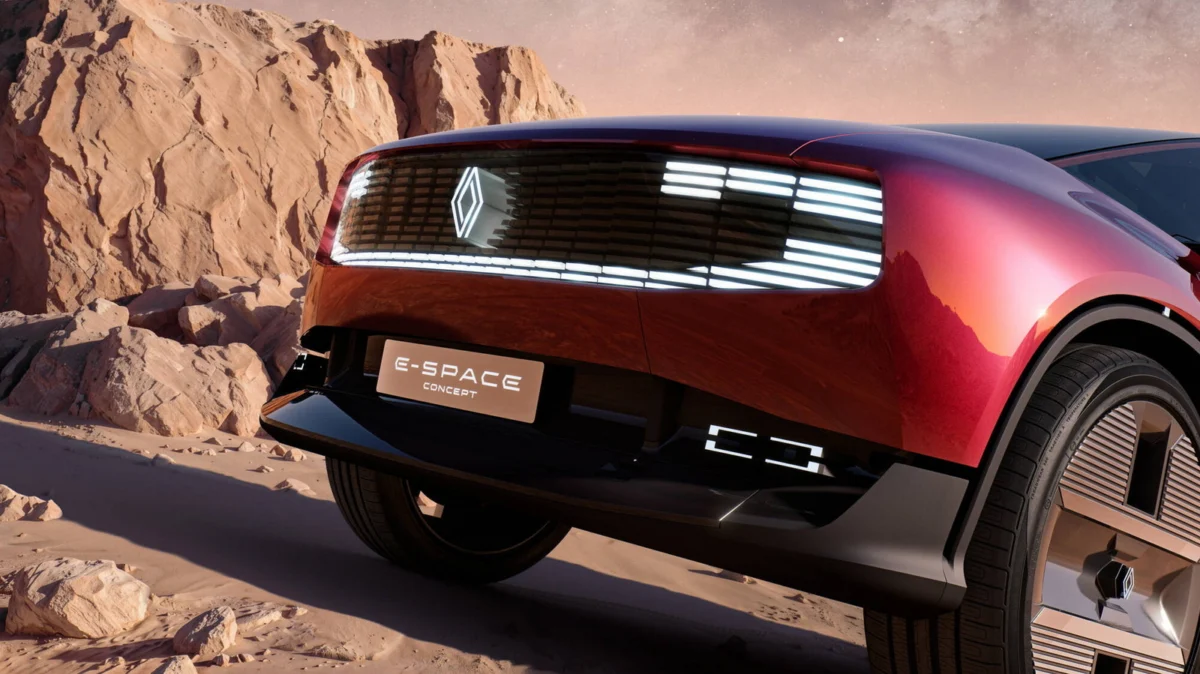
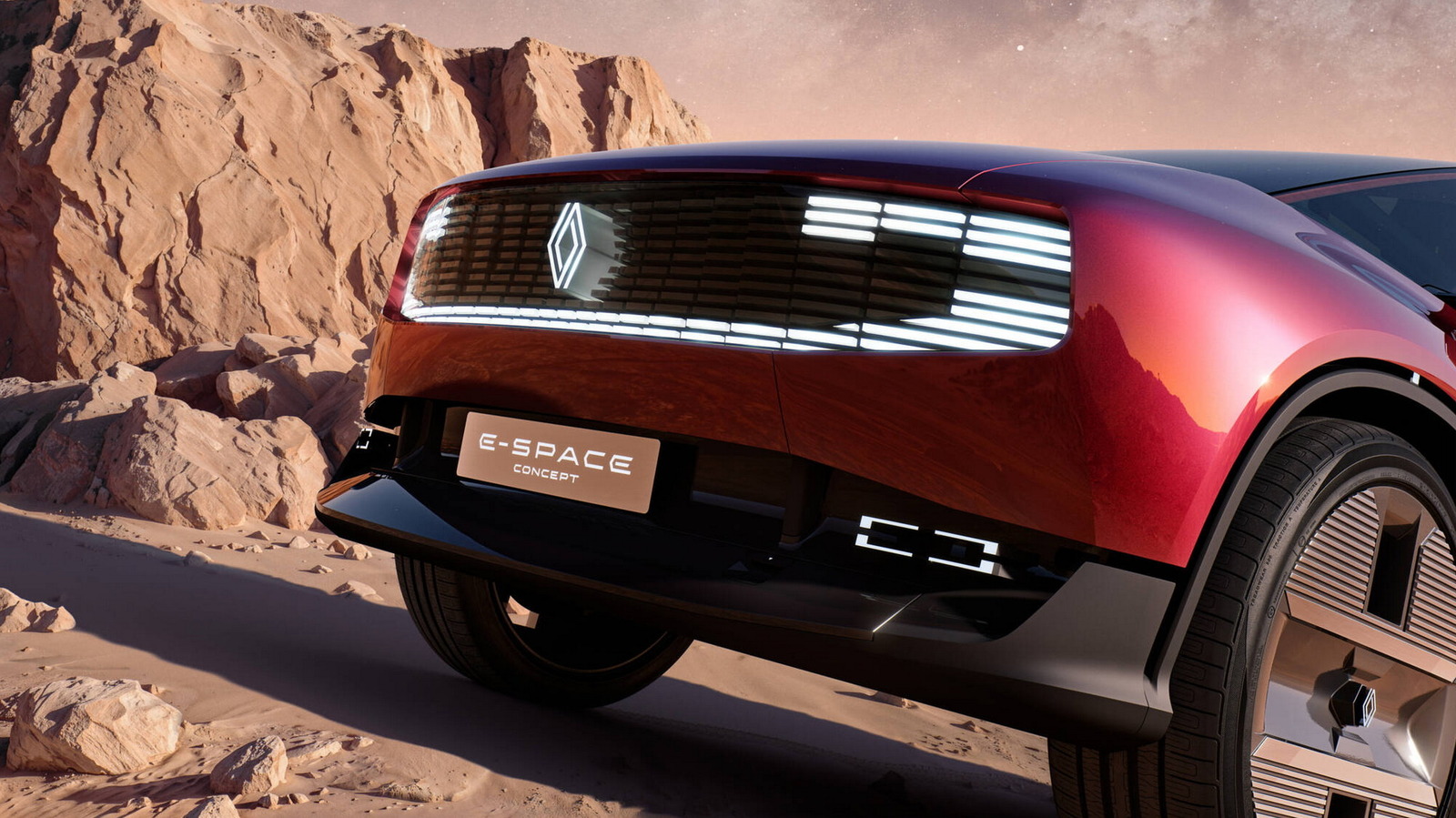
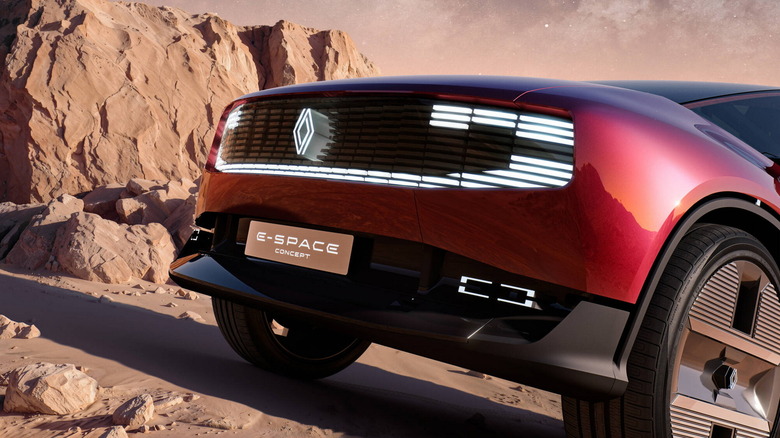
At the recent Paris Motor Show, Renault captivated attendees by pulling the veil off its latest vision for the future of mobility: the E-Space Concept. While the automotive industry is currently obsessed with the transition to electrification, Renault has opted to look beyond the powertrain, focusing instead on the radical reimagining of the human-machine interface. The E-Space Concept is a bold, six-seat study that blends nostalgia with avant-garde technology, and most importantly, it signals a shift in design philosophy that is already headed for production.
The Evolution of an Icon: From MPV Pioneer to Electric Visionary
To understand the E-Space Concept, one must first appreciate the legacy it represents. Over four decades ago, the original Renault Espace redefined the family vehicle segment in Europe, essentially inventing the modern MPV. Throughout its long life, the nameplate has been a canvas for Renault’s engineers, appearing in iterations that pushed boundaries, such as the legendary F1-engined Espace—a mid-engine, V10-powered beast that remains a cult icon today.
The new E-Space Concept pays homage to this storied lineage while stripping away the internal combustion engines of the past. It is a full electric vehicle (EV), designed for a world where space, light, and digital integration take precedence over mechanical complexity. By removing the traditional engine bay and transmission tunnels, Renault’s designers were able to push the boundaries of cabin architecture, resulting in a vehicle that feels more like a mobile lounge than a traditional car.
The OpenR Panorama: A Dashboard Like No Other
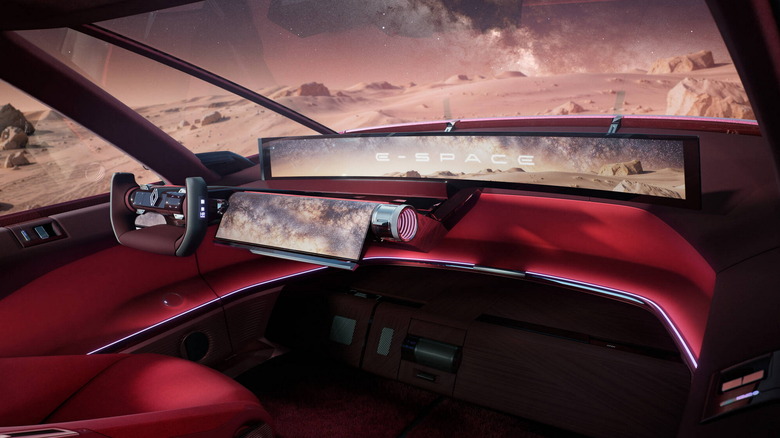
The centerpiece of the E-Space Concept is undeniably its dashboard—or rather, the absence of one. Renault has introduced the "OpenR Panorama," a display system that challenges the current industry trend of slapping oversized touchscreens onto every surface.
Measuring an impressive 44.5 inches (1,130 mm) in width but standing just 4.3 inches (110 mm) tall, the curved screen spans the entire width of the dashboard. Unlike the infotainment systems found in competitors like Tesla or Mercedes-Benz, the OpenR Panorama is not a touchscreen. Renault argues that touchscreens in the driver’s line of sight can be distracting and prone to unsightly fingerprint buildup.
Instead, the system is controlled via two smaller, flexible touch-sensitive displays mounted near the steering column. These units can swivel, allowing the driver and front passenger to dictate how much information—be it navigation, media, or vehicle telemetry—is displayed on the main panoramic screen.
This setup is paired with a steering wheel featuring a fixed hub and advanced steer-by-wire technology. By eliminating the mechanical connection between the wheel and the tires, the vehicle can employ variable steering ratios, providing a nimble feel at low speeds and increased stability on the highway. While the automaker has not yet committed to the widespread use of steer-by-wire in its commercial lineup, the screen technology itself is confirmed to migrate into the next-generation Renault Scenic and the Rafale.
Structural Innovation: Breaking the Mold
Beyond the dashboard, the E-Space Concept introduces architectural shifts that prioritize passenger access and interior versatility. The vehicle features rear-hinged "coach" doors and completely lacks a traditional B-pillar. This design choice, which echoes the structural approach seen in luxury vehicles like the upcoming Genesis GV90, creates an expansive opening that makes ingress and egress effortless for all passengers.
Inside, the cabin serves as a testament to modular design. The second-row seats are capable of rotating 180 degrees to face the third row, transforming the interior into a social hub. Taking the concept a step further, the second-row seats can also fold flat to form a table, turning the vehicle into a temporary workspace or a dining area.
Renault has also integrated a sliding center console that acts as a Swiss Army knife for modern travelers. It is engineered to accommodate a variety of lifestyle accessories, including a compact refrigerator, a high-efficiency air purifier, dedicated storage for video game controllers, and even a physical Connect 4 game board—a nod to the importance of analog interaction in a digital age.
Materiality and Sustainability
In keeping with modern sustainability trends, the cabin of the E-Space Concept moves away from traditional leather and plastics. The interior is a sensory experience, utilizing textures that prioritize comfort and environmental responsibility.
The floor is covered in thick, 1.2-inch (30 mm) wool carpeting that provides a residential feel, while the seating surfaces feature rich red upholstery contrasted with dyed straw—a surprising material choice that adds both aesthetic warmth and natural texture. These materials highlight Renault’s commitment to exploring "circular luxury," where high-end comfort is achieved through renewable and recycled sources.
Official Stance and Production Outlook
Renault has been clear in its communication regarding the E-Space Concept: while the vehicle as a whole is a design study intended to showcase potential, the technology housed within is not purely theoretical.
"We are using the E-Space Concept as a testing ground for the user experience of the next decade," a spokesperson for Renault noted during the Paris reveal. "The OpenR Panorama is the most significant leap forward for our cabin design, and we have already integrated this technology into our development roadmap for the upcoming production versions of the Scenic and the Rafale."
The uncertainty remains regarding the swiveling control units and the advanced steer-by-wire system. While these features have garnered positive feedback from journalists and industry analysts, they represent a significant regulatory and manufacturing hurdle. Renault is currently evaluating the "usability-to-cost" ratio of these components before deciding if they will make the jump from concept to the showroom floor.
Implications for the Automotive Industry
The introduction of the E-Space Concept reflects a broader shift in the automotive industry. As vehicles become more autonomous and electrification becomes standard, the "value add" of a car is shifting from the engine performance to the cabin experience.
- The Death of the "Tablet-on-a-Dash" Trend: By moving away from massive, central touchscreens, Renault is positioning itself as a leader in ergonomic design. If the OpenR Panorama succeeds, it may force other manufacturers to reconsider their reliance on distractingly large touch interfaces.
- The "Third Space" Concept: Renault is banking on the idea that the car will eventually become a "third space"—an environment between home and work where passengers can conduct business, play games, or relax. The inclusion of a refrigerator and gaming consoles suggests that Renault is looking to capture the attention of younger, tech-savvy demographics who prioritize connectivity over horsepower.
- Modular Flexibility: The use of rear-hinged doors and rotating seats highlights an industry-wide interest in flexible cabin configurations. As mobility-as-a-service (MaaS) grows, the ability to reconfigure a vehicle’s interior in seconds will become a key selling point for fleet operators and families alike.
Conclusion: A Balanced Path Forward
The Renault E-Space Concept is a fascinating juxtaposition of the past and the future. By referencing the iconic designs of the original Espace and marrying them to a vision of the future that is both digital and tactile, Renault has crafted a vehicle that feels grounded in reality while still pushing the envelope of imagination.
While the majority of consumers will likely never drive a vehicle with dyed-straw upholstery or a rear-hinged door system, the technological advancements—specifically the OpenR Panorama screen—will soon be a part of their daily commute. Renault has successfully balanced the "wild" nature of a concept car with the pragmatic realities of a mass-market manufacturer, ensuring that even if the car itself remains a dream, the best of its ideas will soon become a reality on public roads.
