

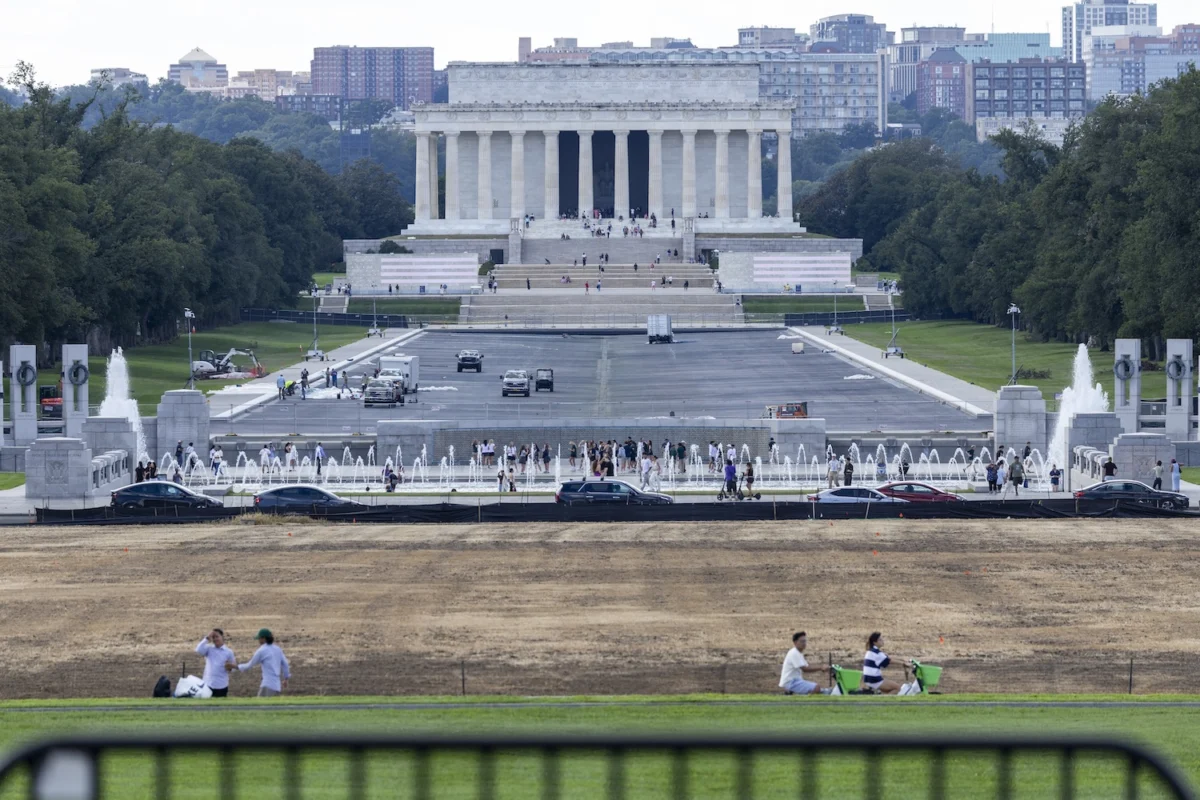
The Lincoln Memorial Reflecting Pool, one of the most iconic and recognizable landmarks in the United States, stands as a symbol of American history and civic reverence. Yet, in recent months, the shallow expanse of water that mirrors the monument to Abraham Lincoln has become a focal point of bureaucratic incompetence and structural decay. A damning new investigative report has brought to light that the recent $14.7 million restoration project—intended to rectify decades of maintenance issues—has devolved into a cascade of preventable failures, far more extensive than previously acknowledged by federal officials.
The Anatomy of a Failure: An Internal Exposé
The revelations, detailed in a 75-page "failure analysis" commissioned by Atlantic Industrial Coatings (AIC) and obtained by The Washington Post, paint a stark picture of professional negligence. The report, dated August 6, serves as a post-mortem for a restoration project that was meant to be a crowning achievement of infrastructure renewal but instead became an embarrassment for the National Park Service (NPS) and the Department of the Interior.
The inspection report documents scores of deficiencies in the pool’s new liner, ranging from structural cracking to systemic peeling and chemical blistering. Perhaps most damning is the report’s refutation of political narratives previously spun by the Trump administration. During the summer of the restoration’s collapse, officials frequently cited "vandalism" as the primary driver behind the pool’s degraded state. The internal report, however, makes no mention of such illicit activity. Instead, it points to a culture of corner-cutting and a disregard for basic engineering protocols.
A Chronology of Disrepair
The saga of the Reflecting Pool is a long-standing narrative of decay, but the recent $14.7 million no-bid contract awarded to AIC was supposed to signal a new chapter.
The Lead-up to Disaster
For years, the pool had suffered from leaks, staining, and aging infrastructure. When the contract was finalized, the timeline for completion was aggressive. By late spring, the project moved into its final stages.
The June Refilling
On June 4, the pool was refilled with water, marking the supposed completion of the project. The result was instantaneous failure. Within days, the water turned a murky, unnatural green, fueled by a massive algal bloom that suggested the pool’s filtration and chemical systems were not functioning as intended. Shortly thereafter, the surface of the water was littered with flakes of blue paint, a visual testament to the failure of the newly applied coating.
The Inspection
As the public outcry grew, AIC commissioned an independent inspection by Atlantic Coating Inspection. The resulting document, finalized in early August, dissected the physical failures of the project. The findings confirmed that the integrity of the liner had been compromised from the start.
The Technical Deficiencies: Why the Pool Failed
The "failure analysis" provides granular detail regarding the mechanical and chemical errors committed during the restoration process. The issues identified were not the result of bad luck or external environmental factors, but rather fundamental failures in execution.
The "Curing" Crisis
One of the most egregious findings involves the application of the pool’s specialized coating. According to the report, the material required a strict 72-hour "cure" time to dry and bond properly to the concrete basin. However, inspection logs indicate that workers were applying the coating as late as June 3—the day before the pool was refilled.
By submerging the still-wet material into the water, the contractor effectively prevented the chemical bonding process. This rushed timeline directly caused the "peeling" that visitors noticed within days of the reopening.
Structural Blistering and Cracking
Beyond the paint, the report details significant blistering across the pool floor. Blistering occurs when moisture or air is trapped beneath the surface coating, causing it to bubble and eventually rupture. This indicates improper surface preparation—likely moisture in the concrete substrate that was not adequately addressed before the coating was applied. The cracks, meanwhile, suggest that the structural integrity of the base was not properly reinforced before the finishing layers were added.
Official Responses and Accountability
The federal government’s response to the disaster has been characterized by a combination of defensive posturing and a reliance on contractual obligations. Following the release of the Washington Post report, a spokesperson for the U.S. Interior Department issued a statement on Tuesday.
"Atlantic Industrial Coatings is contractually obligated to fix the Reflecting Pool," the spokesperson stated, adding that the company is "well on its way to doing so."
This statement highlights the bureaucratic reality of the situation: the government is currently relying on the very entity that oversaw the failed project to rectify its own mistakes. Critics argue that the "no-bid" nature of the original $14.7 million contract shielded the contractor from the rigorous vetting process that typically accompanies projects of such national significance.
The silence from the Department regarding why the project was rushed—and why the curing times were ignored—remains deafening. There has been no public announcement regarding whether the contractor will face financial penalties or if the cost of the re-repairs will be borne by the American taxpayer.
Implications for Public Infrastructure
The Lincoln Memorial Reflecting Pool debacle serves as a case study in the risks of fast-tracking public works. When political optics take precedence over engineering best practices, the result is rarely cost-effective.
The Cost of Expediency
The $14.7 million price tag was already considered high for what is essentially a basin restoration. Now, with the need for extensive remediation, the total cost to the taxpayer is likely to balloon. Beyond the monetary loss, there is the issue of "opportunity cost"—the time and resources that could have been directed toward other crumbling infrastructure within the National Mall, such as the aging stone walls of the Tidal Basin or the drainage systems of the Washington Monument.
Accountability and Oversight
The use of no-bid contracts for high-profile public projects is increasingly being scrutinized. The argument for such contracts is often centered on the need for speed; however, as the Reflecting Pool incident demonstrates, speed without precision leads to long-term failure.
The public trust is also at stake. The Lincoln Memorial is a site of international significance. When the physical state of the memorial reflects neglect or incompetence, it undermines the gravitas of the site itself. Tourists from around the world come to see the reflection of the monument in the water; seeing a green, peeling, and decaying pool disrupts the solemn experience that the memorial is designed to facilitate.
Looking Forward: Can the Pool be Saved?
As the Department of the Interior insists that AIC is "well on its way" to fixing the pool, observers remain skeptical. A fundamental question remains: Can a contractor that failed so significantly in the initial application be trusted to execute a complex, high-stakes repair?
The next phase of the project will likely involve stripping the current failed coating—an expensive and time-consuming process—and starting from the concrete base. Given the documented failures in surface preparation and chemical application, the National Park Service would be well-advised to implement a third-party oversight committee to ensure that this time, the "curing" process is given the time it requires.
For now, the pool remains a symbol, but perhaps not the one it was intended to be. Instead of reflecting the enduring strength of the nation, the green and peeling waters of the Reflecting Pool stand as a reminder of the fragility of public infrastructure when oversight is absent and corners are cut. The road to recovery for the pool will be long, and the path to restoring public confidence in the stewardship of our national landmarks may be longer still.
