

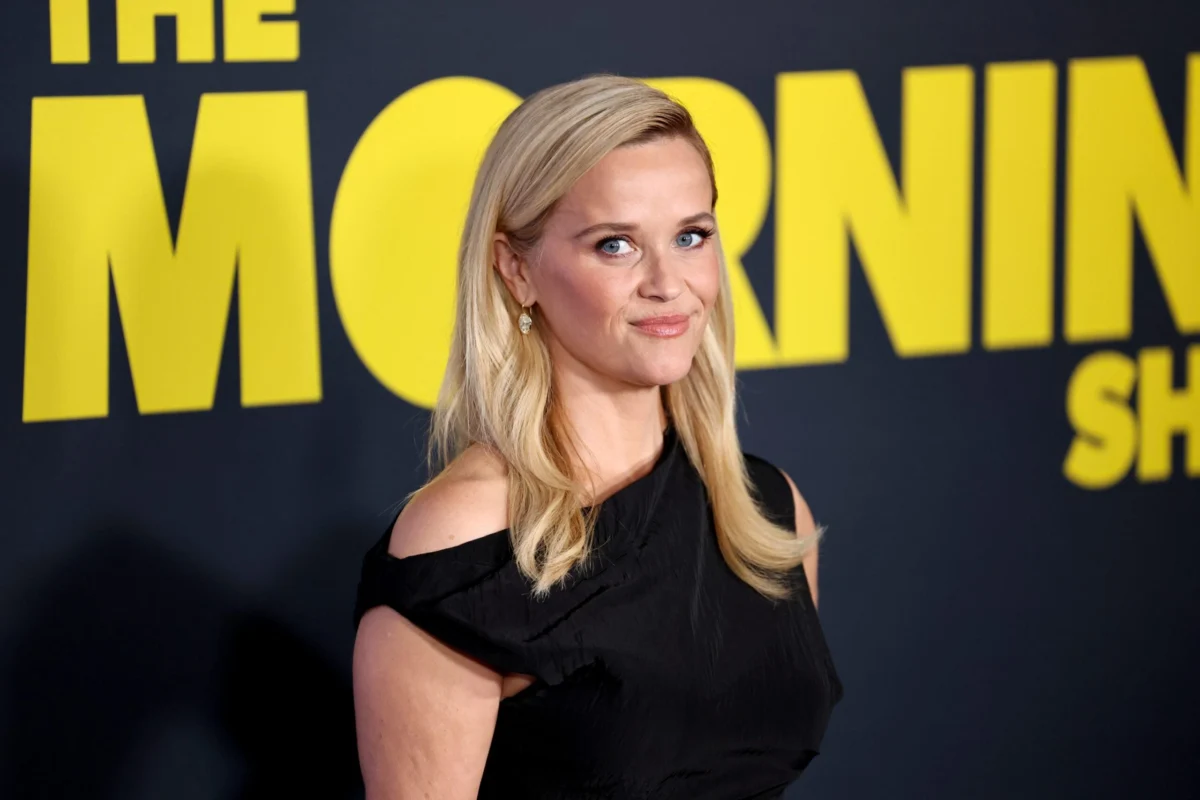
When Reese Witherspoon famously delivered the line, "What, like it’s hard?" in the 2001 cultural phenomenon Legally Blonde, she wasn’t just playing a character; she was manifesting a career philosophy that would eventually dismantle the structural barriers of the entertainment industry. Decades later, the actress-turned-media-mogul has proven that her grit is far more than a movie script. Having ideated, founded, and successfully navigated the sale and subsequent reclamation of a near-billion-dollar media empire, Witherspoon stands as a titan of industry who didn’t just break the glass ceiling—she built an entirely new structure.
This week, in a move that signals a bold new chapter for her production banner, Hello Sunshine, Witherspoon finalized a deal to buy back her company, cementing her status as one of the most astute business minds in Hollywood.
The Catalyst: A "Listening Tour" Against the Status Quo
The genesis of Witherspoon’s entrepreneurial journey began not in a boardroom, but in the frustration of a stifled artist. By 2011, at the age of 34, Witherspoon had spent two decades as a staple of the film industry. Yet, the scripts crossing her desk were, in her own estimation, "abysmal" and "really demeaning."
One particular project, which featured a male protagonist surrounded by women merely vying for his affection, served as a breaking point. The narrative, rife with what she described as "gross jokes and scatological humor," prompted her to take a stand. When she informed her agent that she refused to audition, she was met with the sobering reality of the industry: every major actress in town was fighting for those roles because, quite simply, there was nothing else available.
Refusing to accept this as the industry standard, Witherspoon embarked on a self-described "listening tour." She met with the executives of the seven major Hollywood studios, posing a singular, disruptive question: "How many movies are you developing right now with a female lead?"
The response was chillingly uniform: almost none. One executive famously dismissed her concerns by noting that the studio had already met its "quota" by producing one female-led film that year, implying that a second was unnecessary. "First I got mad, and then I was like, ‘Wait—this is a huge white space,’" she later shared on Harvard Business School’s Founder Mindset podcast. That "white space" became the blueprint for Hello Sunshine, a multimedia company dedicated to placing women at the center of film, television, podcasts, and literature.
The Crucible: A Financial Mindset Forged in Youth
To understand Witherspoon’s tenacity, one must look to her formative years. Her approach to business is rooted in a childhood defined by financial volatility. Her family’s economic instability, exacerbated by her father’s struggles with money management, necessitated that she take on adult responsibilities as a teenager.
"I always had this idea that no one’s coming to save me," Witherspoon reflected. "I didn’t have a financial safety net… I knew I was going to have to do it on my own."
This perspective was the primary driver behind her decision to leave Stanford University after only a year. While the public often frames her departure as the narrative of a "wunderkind" seeking to build a business empire, the reality was far more pragmatic: she simply could not afford the $33,000 annual tuition. She chose the volatility of acting work over the debt of academia, carrying with her the lesson that if she didn’t secure her own future, no one else would. This survivalist ethos became the cornerstone of her professional life; when the studio system refused to change, she realized she had to build the alternative herself.
Chronology of an Empire
The path from a small production partnership to a multi-hyphenate media powerhouse was marked by strategic pivots and hard-learned lessons.
1. The Pacific Standard Era (2012–2016)
Witherspoon’s first formal attempt to rectify Hollywood’s gender imbalance was Pacific Standard, a production company co-founded with Australian producer Bruna Papandrea. The duo focused on high-quality book adaptations, a strategy that proved remarkably prescient. By securing the rights to Cheryl Strayed’s Wild and Gillian Flynn’s Gone Girl, they hit back-to-back No. 1 New York Times bestsellers. Their efforts resulted in three Oscar nominations and over $600 million in global box office returns. However, Witherspoon soon realized that while the projects were cultural successes, the economic model was unsustainable. "I was only working for producer fees," she admitted. "The overhead was eating me alive. That’s not a real business."
2. The Birth of Hello Sunshine (2016–2021)
In 2016, Witherspoon partnered with Seth Rodsky of Strand Equity to launch Hello Sunshine. Initially a joint venture with AT&T’s Otter Media, the company was built with a clear, mission-driven focus: "made by and for the next generation of women." The company quickly dominated the cultural landscape with hits like Big Little Lies, Little Fires Everywhere, and The Morning Show, alongside the wildly influential Reese’s Book Club.
3. The Blackstone Exit (2021)
In August 2021, Hello Sunshine achieved a landmark valuation of $900 million when a majority stake was sold to a Blackstone-backed media venture led by former Disney executives Kevin Mayer and Tom Staggs. Witherspoon and CEO Sarah Harden retained significant equity and board seats, ensuring that the company’s mission remained intact even under new ownership.
4. The Homecoming (2026)
In a move that caught industry analysts by surprise, Witherspoon announced on October 13, 2026, that she and the European media giant Mediawan would acquire Candle Media’s majority stake in Hello Sunshine. By bringing the company into a portfolio that includes prestigious firms like Chernin Entertainment and Plan B, Witherspoon effectively reclaimed control of her vision. While financial terms were not officially disclosed, industry reports suggest the price tag was a fraction of the 2021 valuation, positioning this as a brilliant strategic acquisition.
Data and Industry Impact
The success of Hello Sunshine is not merely anecdotal; it is backed by a shift in industry metrics. Before Hello Sunshine, the "female-led" genre was treated as a niche, high-risk investment. Witherspoon’s data-driven approach—utilizing book club metrics to identify pre-existing audiences—de-risked projects that were previously dismissed by studio heads.
- Content Diversification: By moving beyond film into podcasts and books, Hello Sunshine captured the "female-centric" market across all hours of a consumer’s day.
- Economic Viability: The $900 million valuation in 2021 served as a definitive proof of concept for the "women-first" business model, forcing legacy studios to re-evaluate their acquisition and development pipelines.
- The "Reese Effect": Projects endorsed by Reese’s Book Club often see an immediate 200–500% spike in sales, proving that she has built one of the most powerful marketing engines in the modern media landscape.
Official Responses and Strategic Outlook
In a public statement regarding the acquisition, Witherspoon described the move as a "homecoming." She specifically credited Peter Chernin and Jesse Jacobs, whose Chernin Group were early believers in the Hello Sunshine mission during its 2016 inception. "The best is still ahead," she noted, signaling that the company is far from finished.
Mediawan’s involvement is seen as a strategic play to expand Hello Sunshine’s footprint in the European market, while Witherspoon’s continued leadership ensures that the brand’s core mission—elevating female narratives—remains the top priority. Seth Rodsky will rejoin the board, reuniting the original architects of the brand to oversee this new, independent-minded phase.
The Implications: What It Means for Hollywood
The implications of Witherspoon’s "buy-back" go beyond personal triumph. It sends a powerful message to the next generation of female founders: the studio system is no longer the sole gatekeeper of success.
By proving that a mission-driven, female-led company can be both culturally essential and financially lucrative, Witherspoon has effectively forced a market correction. The industry has shifted from a state where female stories were considered "niche" to a landscape where they are recognized as the primary engine for audience growth.
"I hope that people out here… will think, ‘I’m going to have the next Hello Sunshine,’" Witherspoon said. "Because it is possible."
In an industry often defined by fleeting fame, Reese Witherspoon has constructed something durable. She has transitioned from being an actor who reads lines to an architect who writes the rules. Her journey, from the girl who couldn’t afford tuition to the mogul who reclaimed her empire, is the ultimate testament to the mantra she popularized so many years ago: Success isn’t hard when you have the grit to build the path yourself.
