


In an era defined by the pursuit of optimization—faster internet, automated chores, and temperature-controlled environments—a startling counter-narrative has emerged: our relentless drive for convenience is eroding our physical and mental health. This "Comfort Crisis," a term popularized by author Michael Easter, suggests that the very things we strive for to make life easier are, paradoxically, the architects of our dissatisfaction.
For those familiar with the FIRE (Financial Independence, Retire Early) movement, this concept is not entirely new. However, recent discourse, ignited by a deep-dive analysis from financial commentator and blogger Mr. Money Mustache, has brought this physiological and psychological dilemma to the forefront of the personal development conversation. By examining the intersection of evolutionary biology and modern lifestyle, we can begin to understand why the "easy life" might be our greatest liability.

The Evolutionary Mismatch: Why We Hunt for Problems
The human brain evolved in an environment of scarcity and acute danger. For our ancestors, constant vigilance was the price of survival. Today, however, we live in a landscape of unprecedented safety. According to studies highlighted in The Comfort Crisis, when human beings are placed in an environment where they are no longer required to hunt for threats, they do not simply relax and enjoy their security. Instead, the brain continues to scan for problems.
Research indicates that as actual, life-threatening problems diminish, our threshold for what we define as a "problem" drops significantly. This explains the modern phenomenon of "insubstantial grievances"—why suburbanites might find themselves enraged by the height of a neighbor’s grass or minor social slights on digital platforms. When the environment is devoid of genuine adversity, the brain manufactures it to fulfill its evolutionary mandate.

This psychological adaptation has profound implications for society. It feeds the polarization of political discourse, as individuals seek out "wedge issues" to satisfy a biological drive for conflict that no longer finds a natural outlet. We are, quite literally, designed to be unhappy when life is too easy.
Chronology of a "Comfort Reset"
To test these theories, Mr. Money Mustache (the persona of Pete Adeney) recently embarked on a self-imposed period of "purposeful hardship." His experience serves as a case study for the principles found in Easter’s research.
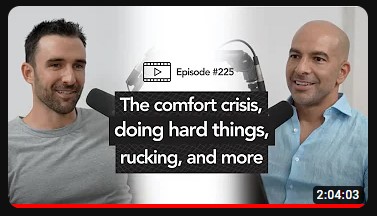
- Phase 1: The Departure: Adeney set out from his home, shedding the comforts of a suburban lifestyle to engage in "Carpentourism"—a solo trip to the mountains of Southwestern Colorado to perform intensive manual labor on a mini-resort and a cabin project.
- Phase 2: The Initial Friction: The journey began with a series of setbacks: a torrential rainstorm, a traffic fine, and a cracked windshield. In a normal, comfort-addicted state, these events would be categorized as "ruined days." However, applying the lens of The Comfort Crisis, Adeney framed these not as burdens, but as necessary challenges to reset his perspective.
- Phase 3: The Immersion: Working in a high-desert environment during the peak of summer, Adeney faced extreme heat, pollen, and a lack of modern plumbing. He slept in his vehicle, subsisting on simple rations.
- Phase 4: The Peak Experience: During a paddleboarding excursion at a remote reservoir, Adeney and a companion faced strong headwinds and daunting physical exertion. Rather than turning back, they embraced the struggle. Upon reaching a remote meadow, the lack of digital distraction allowed for a deeper, sensory-based memory of the event—a stark contrast to the hollow satisfaction of digital consumption.
- Phase 5: The Return to Baseline: The experiment concluded with a return to normalcy, underscored by a profound appreciation for a simple, hearty meal. This illustrated the principle that hunger, when properly managed, serves as a mechanism to restore the value of sustenance.
Supporting Data: The Biological Imperative of Hardship
The scientific data supporting the necessity of discomfort is compelling. Studies on "tree therapy" and exposure to nature have demonstrated that even minor interactions with natural environments significantly lower cortisol levels and improve recovery times in clinical settings.
Furthermore, the "effort-reward" ratio is hardwired into our biology. The more difficult a task is, the greater the dopamine release upon its completion. Conversely, our modern reliance on escalators over stairs—a practice followed by 98% of the population—is a symptom of a deeper malaise. When we consistently choose the path of least resistance, we bypass the very activities that have been proven to prevent chronic disease and maintain metabolic health.

The contrast between the resilient mindset of individuals in high-adversity environments (such as war-torn regions) and the fragile, complain-prone mindset of residents in wealthy, secure nations provides further evidence. It suggests that immigrants who build significant wealth often do so because they retain the "adaptation" to hardship—they see the United States as a land of opportunity precisely because they have experienced the alternative. Their offspring, born into the comfort of the destination, often lose this drive, leading to the "shirtsleeves to shirtsleeves in three generations" phenomenon.
Official Perspectives and Expert Insight
Michael Easter, whose work serves as the foundation for this discussion, argues that we must reintegrate "levers of survival" into our daily lives. These include:

- Maximum Outdoor Time: Reconnecting with natural environments to reset the nervous system.
- Physical Exertion: Incorporating heavy load-bearing and intense movement that mimics the demands of our evolutionary past.
- Dietary Discipline: Moving away from the constant, low-effort consumption of sugar and alcohol to restore our biological hunger signals.
Critics of this "hardship" philosophy often point to the privileges of the wealthy, noting that it is easy to advocate for "purposeful suffering" when one has the financial safety net to escape it. However, the counter-argument, championed by figures like Ramit Sethi and Mr. Money Mustache, is that the goal is not to live in poverty, but to distinguish between investing in life-improving assets and consuming comforts that atrophy our capabilities.
Implications for Modern Living
The core takeaway for the individual is clear: we must be intentional about where we seek comfort. If we automate every aspect of our lives—from our groceries to our exercise—we are essentially paying to become physically and mentally weaker.

Strategic Recommendations:
- The "Hardship" Audit: Identify areas of your life where convenience has replaced efficacy. Are you using a leaf blower when a rake would suffice? Are you driving to a gym to walk on a treadmill instead of walking in a park?
- Buy Tools, Not Chairs: As we grow wealthier, the instinct is to buy "softer" items—luxury seating, climate control, and entertainment. Instead, redirect that capital toward tools that facilitate growth: high-quality hiking gear, woodworking tools, or experiences that require physical and mental engagement.
- Reclaim the Threshold: Understand that the brain will always look for something to complain about. When you find yourself fixating on trivial issues, recognize it as a symptom of a "too-comfortable" environment and pivot toward a physical challenge.
The "Comfort Crisis" is not a call to reject modern civilization, but a plea to balance our technological gains with our biological needs. By leaning into the challenges that we are evolutionarily designed to overcome, we can move beyond the hollow, persistent dissatisfaction of the modern age and find a more profound, grounded sense of purpose.
As Adeney concludes, the most important lesson is simple: "The stuff that is hard and uncomfortable is very likely to be the stuff that improves your life the most." In a world that sells us ease at every turn, choosing the difficult path is the ultimate act of rebellion—and the ultimate investment in oneself.
