

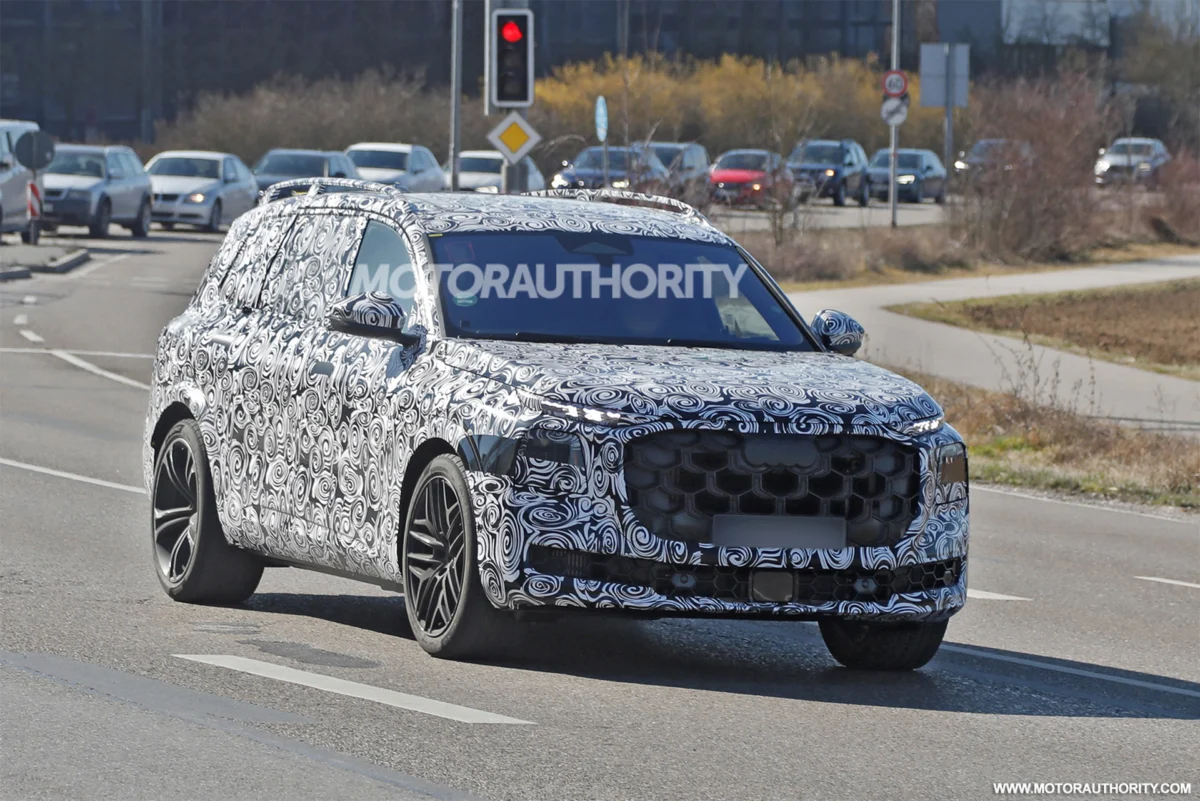
After years of speculation, trademark filings, and quiet whispers from dealership networks, Audi appears finally ready to challenge the established titans of the full-size luxury SUV segment. Recent spy photography has captured a heavily camouflaged prototype undergoing rigorous testing, providing the strongest evidence yet that an Audi Q9 is not only in the works but rapidly approaching production.
As the German automaker navigates the complex transition toward an electrified future, this flagship SUV represents a critical strategic pivot—a return to internal combustion dominance for the premium family hauler market. By positioning the Q9 to compete directly against the BMW X7, Mercedes-Benz GLS-Class, and the Cadillac Escalade, Audi is aiming to capture a lucrative demographic that has long remained underserved by the brand’s current lineup.
Main Facts: A Flagship Emerges from the Shadows
The prototype recently spotted in testing offers a tantalizing look at what will likely become the pinnacle of Audi’s "Q" SUV family. While the camouflage is dense, the vehicle’s proportions are unmistakable. It features a significantly elongated wheelbase and a rear overhang that stretches well beyond what is seen on the current Audi Q7. This design architecture is specifically engineered to solve the primary criticism of Audi’s previous SUVs: the lack of true, adult-usable third-row space.
The Emergence of the SQ9
Perhaps the most exciting detail captured in the spy imagery is the presence of four distinct, round exhaust tips. In the lexicon of Audi design, this configuration is a signature hallmark of the "S" performance division. Industry analysts are confident that this specific test mule is an early iteration of the SQ9.
An SQ9 variant would be expected to feature more than just aggressive styling. It will likely incorporate:
- Performance-tuned air suspension: To manage the heft of a vehicle this size while maintaining Audi’s signature "bank vault" ride quality.
- Adaptive damping: Providing a bridge between comfort-focused touring and high-speed cornering stability.
- Potent Powertrain: While official specs remain under wraps, expectations are high for a high-output V-8 engine—likely a twin-turbocharged unit—capable of propelling this leviathan with the agility of a much smaller vehicle.
Chronology: The Decade-Long Road to the Q9
The journey to the Q9 has been a slow-burn saga. The concept of a three-row Audi flagship has been the subject of automotive rumor mills for over a decade.
- 2013-2015: The Initial Whispers: As the luxury SUV market began its explosive growth, rumors began circulating that Audi was looking to extend its reach beyond the Q7. At the time, the Q7 was the brand’s largest offering, but it was frequently outperformed in interior volume by American and domestic German rivals.
- 2018-2020: The Trademark Strategy: Audi took a significant step in formalizing its intentions by filing trademark applications for the "Q9" moniker in various global markets. These filings are often the first objective sign that a vehicle has moved from the "conceptual" phase to the "development" phase.
- 2023: The Dealer Confirmation: Reports surfaced that Audi’s leadership had finally briefed its North American dealer network regarding a "three-row, full-size SUV." This was a pivotal moment, as dealers serve as the frontline for market demand. They had been clamoring for a product to stem the tide of customers moving to Cadillac or Land Rover.
- 2024-2025: The Spy Shot Breakthrough: With prototypes now being spotted on public roads, the timeline has solidified. Industry consensus suggests an official debut in early 2026, marking the vehicle as a 2027 model-year arrival in the United States.
Supporting Data: Why Now?
The decision to launch the Q9 is not arbitrary; it is driven by cold, hard market data. The full-size luxury SUV segment is arguably the most profitable sector in the automotive industry.
The U.S. and China Influence
Audi’s two largest markets—the United States and China—share a distinct preference for "more is better." In the U.S., the popularity of vehicles like the Cadillac Escalade and the Lincoln Navigator demonstrates that buyers are willing to pay six-figure sums for road presence, interior space, and towing capability. In China, the prestige associated with a flagship SUV is a major driver of brand loyalty among ultra-high-net-worth individuals.
The "Q7" Relationship
Observing the prototype alongside mules for the next-generation Q7 reveals the strategic link between the two vehicles. While they share design DNA, the Q9 is clearly built on a larger scale. The stretched rear doors indicate a focus on "limousine-like" legroom for the second row, while the rear overhang suggests that even with the third row in use, the trunk will still offer significant utility—a failure point for many of the Q9’s competitors.

Official Responses and Corporate Strategy
Audi has been famously reticent to confirm the Q9 officially. In past interviews, Audi executives have spoken vaguely about "expanding the portfolio" and "listening to the needs of the customer," but they have stopped short of issuing a press release confirming the Q9’s development.
This silence is standard operating procedure for the Volkswagen Group. By withholding an official announcement, Audi maintains the ability to shift development priorities if the market changes, and it prevents the "Osborne Effect," where potential buyers stop purchasing the current Q7 in anticipation of the new model. However, the presence of the vehicle on public roads suggests that the "secret" phase of development is over, and an official reveal is likely just months away.
Implications: A New Hierarchy in Ingolstadt
The arrival of the Q9 will fundamentally shift the hierarchy of the Audi brand.
1. Reclaiming the Flagship Status
For years, the A8 sedan held the title of Audi’s flagship. However, as the market has shifted away from sedans, the Q9 will effectively take the mantle as the brand’s "halo vehicle." It will likely debut the most advanced interior technology, the most luxurious materials, and the most sophisticated autonomous driving aids available in the Audi ecosystem.
2. Challenging the Status Quo
The full-size segment is currently dominated by the Mercedes-Benz GLS and the BMW X7. These vehicles have carved out specific niches: the GLS as the "S-Class of SUVs" and the X7 as the "Ultimate Driving Machine" for families. The Q9 will need to find its own identity. Based on early reports, Audi is betting on a blend of "sporty elegance" and "uncompromised utility." If the SQ9 variant is indeed as potent as the exhaust pipes suggest, Audi could successfully position the Q9 as the most engaging vehicle in its class.
3. Navigating the EV Transition
One of the most intriguing aspects of the Q9 is its timing. As Audi aggressively pushes its e-tron electric vehicle lineup, the Q9 stands out as a "traditional" power-focused flagship. This suggests that Audi recognizes the transition to electric is not yet uniform across all demographics. There is still a significant, high-spending segment of the market that demands the range, towing capacity, and refueling convenience of a high-performance combustion engine. The Q9 may well be one of the last great internal-combustion flagships the brand ever produces.
4. Impact on Dealers
For North American dealers, the Q9 is the missing puzzle piece. Without a true, full-size three-row SUV, Audi has been forced to watch loyal customers migrate to competitors as their families grew. The Q9 will act as a retention tool, keeping customers within the Audi ecosystem from their first A3 lease through their final, family-hauling Q9 purchase.
Conclusion: The Final Piece of the Puzzle
The sight of a camouflaged Audi Q9 prototype is more than just a win for automotive photographers; it is a signal that Audi is ready to stop playing defense. By entering the full-size luxury SUV market, the brand is signaling that it intends to compete for the most discerning and well-funded buyers in the world.
While we wait for the official technical specifications—and the inevitable reveal of the interior’s digital architecture—the evidence is clear: the Q9 is coming. It promises to be a vehicle that combines the engineering precision of a German sports sedan with the sheer scale of a utility vehicle. Whether it will be enough to topple the entrenched dominance of the GLS and X7 remains to be seen, but one thing is certain: the luxury SUV war just got a lot more interesting.
