

The landscape of American muscle is littered with forgotten experiments and design trends that aged poorly. Yet, the second-generation Chevrolet Camaro—produced from 1970 to 1981—remains a polarizing but undeniable titan of automotive design. While the first-generation Camaro is often relegated to the status of a “safe” classic, and the third-generation cars are frequently tethered to the aesthetic baggage of the 1980s, the second-gen occupies a sweet spot. It is aggressive, wide-hipped, and undeniably “gnarly.”
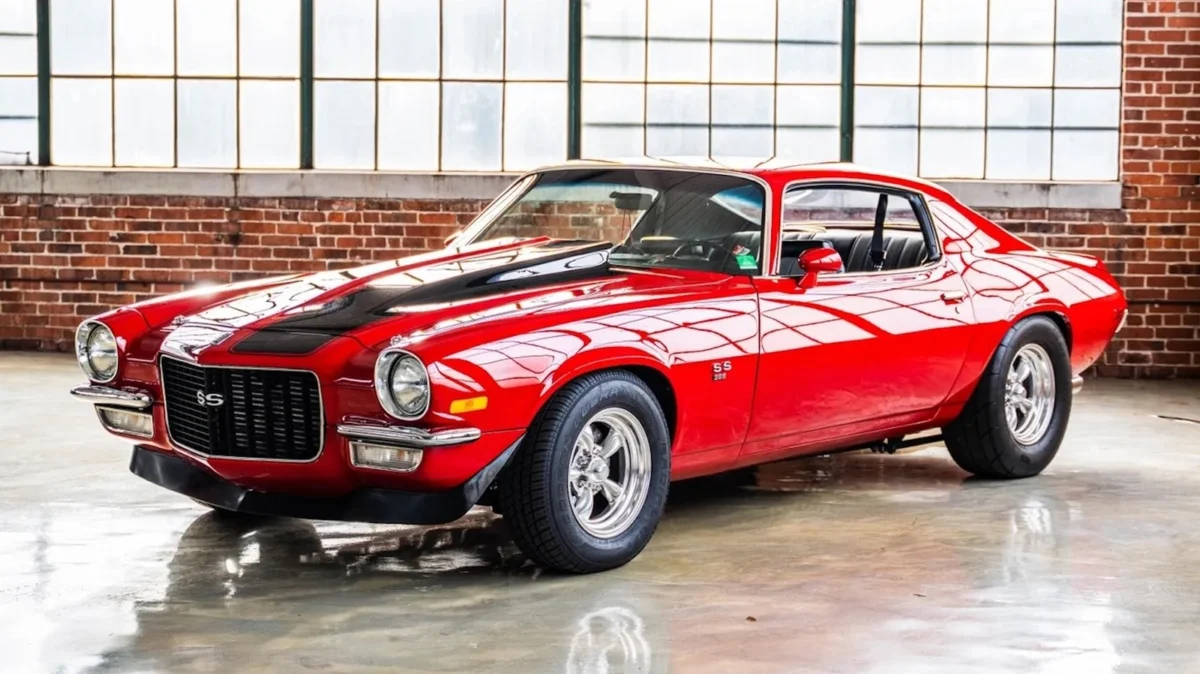
A pristine, heavily modified 1970 Chevrolet Camaro currently listed on Hemmings Classifieds by Red Line Restorations serves as a rolling testament to this design’s longevity. With a Vortech-supercharged 396 V8, a five-speed manual transmission, and a price tag of $77,000, this machine is not merely a car; it is a masterclass in the modern restomod philosophy.
The Anatomy of a Beast: Main Facts
The vehicle in question, located in Bridgeport, Connecticut, is a high-performance reimagining of the 1970 model year. At its core lies a 396-cubic-inch V8 engine, bolstered by a Vortech supercharger. This combination elevates the classic big-block architecture into modern territory, offering both the raw torque synonymous with 1970s Detroit and the reliable, high-RPM output demanded by contemporary enthusiasts.
The mechanical heart is paired with a Tremec five-speed manual transmission. This inclusion is critical for the restomod experience, as it allows for a more versatile driving profile. Unlike the original four-speed “Muncie” gearboxes that favored short-burst drag racing, the Tremec offers an overdrive gear, making this 90,000-mile veteran a viable candidate for long-distance highway cruising.
Aesthetically, the car is finished in a high-gloss red paint job that highlights the second-gen’s signature "snout" and sculpted fenders. The stance is punctuated by staggered 15-inch American Racing wheels, wrapped in Mickey Thompson rubber in the rear—essential for putting the supercharged power to the pavement—and Cooper Cobras up front.
A Chronological Perspective: The Second-Gen Camaro Legacy
To understand the significance of this $77,000 asking price, one must contextualize the second-generation Camaro’s history. Launched in early 1970, the second-gen was significantly different from its predecessor. It was wider, lower, and heavier, drawing heavy stylistic inspiration from European GT cars, particularly the Ferrari Lusso and various designs from the Ford Torino lineage.
- 1970-1973 (The Peak): The early second-gen cars are widely considered the most desirable. These years featured the iconic split-bumper configuration and high-compression big-block engines before the tightening emissions regulations of 1974 neutered the performance potential of the platform.
- 1974-1977 (The Transition): Design changes included the controversial “cowcatcher” bumpers to meet federal safety standards, leading to a shift in the car’s profile.
- 1978-1981 (The Final Act): The introduction of wrap-around taillights and plastic-heavy bumpers marked the end of an era. The car became a pop-culture staple, often associated with the gritty, high-octane films of the late 70s.
The 1970 model year—the first of the run—is the "holy grail" for purists and builders alike. It represents the last breath of the high-performance era before the “malaise” of the mid-70s set in.
Supporting Data: The Engineering Deep-Dive
A $77,000 price point requires more than just a nice paint job. Red Line Restorations has clearly invested heavily in the supporting hardware required to handle the supercharged 396’s output. The parts list is comprehensive, serving as a roadmap for what a high-end restomod requires to be considered "turn-key."
Fuel and Cooling Systems
The engine breathes through an Edelbrock throttle body and intake manifold, managed by an HVC ignition coil. To ensure the 396 remains fed, the car utilizes an Aeromotive fuel system paired with an upgraded fuel cell. Given the heat generated by a supercharged big-block, the inclusion of a Flex-a-lite aluminum radiator with dual electric fans is a necessity, complemented by oil and radiator catch cans to manage fluids during spirited driving.
Handling and Chassis Dynamics
The second-gen Camaro was never known for its precision handling in stock form. This build addresses those shortcomings through a systematic overhaul of the suspension geometry:
- CalTracs Traction System: This setup is legendary in the drag racing world for its ability to prevent wheel hop and ensure the rear leaf springs plant the tires effectively during hard acceleration.
- Structural Integrity: New lower control arms, fresh bushings, and a modern steering box have been installed to sharpen the car’s turn-in response and eliminate the "vague" feeling common to 50-year-old steering linkages.
- Exhaust: A MagnaFlow dual exhaust system with an X-pipe serves the dual purpose of increasing scavenging efficiency and providing a distinct, aggressive exhaust note.
Official Responses and Market Positioning
The market for high-end muscle cars is currently in a state of flux. With General Motors officially discontinuing the Camaro nameplate in 2024, the demand for classic, high-performance examples has seen a noticeable uptick.
When asked about the value proposition of a $77,000 restomod versus a modern performance vehicle, market analysts point to the "Street Presence" factor. For the same price, a consumer could purchase a 2024 Ford Mustang Dark Horse. While the Dark Horse offers a factory warranty, sophisticated magnetorheological dampers, and a state-of-the-art infotainment system, it lacks the visceral, analog soul of the 1970 Camaro.
The current owner of this specific Camaro seems to understand this distinction perfectly. By adorning the vehicle with a “BADSS” vanity plate, they are leaning into the counter-culture status of the vehicle. In a world of sterile, computer-aided performance, there is a tangible premium on the “gnarly” factor.
Implications for the Future of Restomods
What does this sale mean for the wider collector car market? It suggests that the definition of a "classic" is shifting. Collectors are no longer satisfied with numbers-matching, showroom-stock vehicles that spend their lives under covers. Instead, there is a growing appetite for "usable" classics—cars that have the aesthetic appeal of a 1970s icon but the mechanical reliability of a modern sports car.
The 1970 Camaro represents the perfect canvas for this movement. Its chassis is robust enough to handle the increased power, and its design is timeless enough to avoid the dated look of its successors. As we move further into an era of electrification and autonomous driving, the value of a supercharged, manual-transmission, steel-bodied machine will only continue to climb.
Conclusion: Is It Worth the Price?
Determining the value of a custom build is inherently subjective. However, when one tallies the cost of sourcing a 1970 Camaro body, rebuilding a 396 big-block, installing a Vortech supercharger, upgrading the suspension, and finishing the interior and exterior to a professional standard, the $77,000 figure begins to look like a bargain.
This Camaro is not merely a vehicle; it is a time capsule with a modern heart. For the buyer who values the aggressive, low-slung aesthetic of the 1970s but refuses to sacrifice the performance capabilities of the 21st century, this Bridgeport-based machine is a rare find. It is a reminder that while Chevy may have stopped building the Camaro, the spirit of the muscle car remains very much alive in the hands of those willing to keep the dream—and the superchargers—spinning.
