

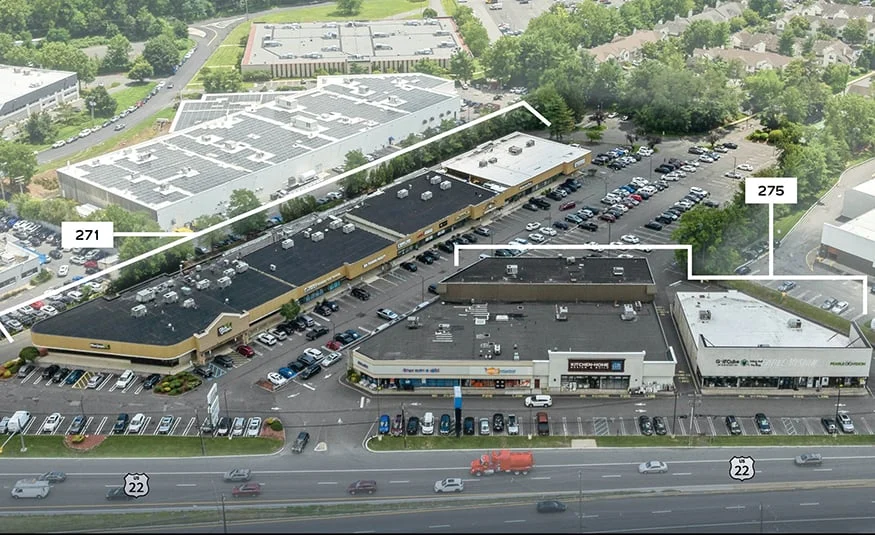
In a significant move that underscores the enduring resilience of New Jersey’s suburban retail market, the iconic Springfield Plaza has officially transitioned to new ownership. After forty years of consistent stewardship under the same ownership, the 72,120-square-foot retail destination located at 271-275 Route 22 in Union County has been acquired by the Westfield-based Adoni Property Group.
The $20.1 million transaction represents a rare liquidity event for a property that has long been considered a bedrock of the local community. The deal, brokered by Cushman & Wakefield and supported by a $14.1 million fixed-rate financing package arranged by JLL Capital Markets, serves as a bellwether for investor sentiment toward stabilized, necessity-based retail assets in high-traffic corridors.
Main Facts: A Staple of the Route 22 Corridor
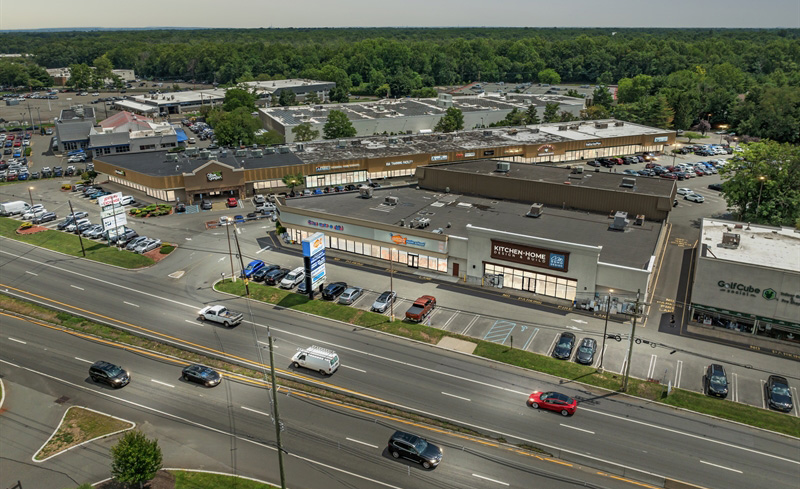
Springfield Plaza is far more than a simple retail strip; it is a three-building commercial hub that commands a strategic position along the heavily trafficked Route 22. The property currently boasts a 97% occupancy rate, a testament to both its prime location and the quality of its management over the last four decades.
The center hosts 17 distinct national and regional tenants, creating a diversified ecosystem that mitigates risk for the landlord while serving as a one-stop destination for local residents. The tenant roster is notable for its longevity; according to data provided by Adoni Property Group, the average tenure of businesses within the plaza exceeds 16 years. This stability is largely attributed to the previous ownership’s commitment to maintaining the property’s physical and operational integrity.
The site is anchored by high-traffic, necessity-driven tenants, including an Olive Garden, a New Jersey Motor Vehicle Commission office, and the popular Goldfish Swim School. With 313 surface parking spaces, the plaza is designed to accommodate the high volume of traffic typical of the Route 22 retail corridor, ensuring ease of access for customers and service providers alike.
Chronology: From Legacy Ownership to Strategic Acquisition
The journey of this transaction began long before the final ink dried in October 2026. For forty years, the property remained under stable, unified control—an anomaly in a commercial real estate market often characterized by high turnover and aggressive flipping of assets.
- 1986–2026: The property remained under the management of a single entity, building a reputation for reliability and consistent performance.
- Early 2026: Preparations for the transition began as the market for stabilized retail assets heated up. Cushman & Wakefield were engaged to market the property.
- October 13, 2026: The official announcement of the $20.1 million sale was made, confirming Adoni Property Group as the new owner.
- October 19, 2026: JLL Capital Markets announced the successful closing of a $14.1 million fixed-rate loan, provided by a regional bank, to facilitate the acquisition.
This acquisition fits into a broader pattern for Adoni Property Group, which has been highly active in the New Jersey market throughout the year. The group’s ability to move quickly on large-scale acquisitions, while simultaneously divesting from other assets, highlights a strategic pivot in their portfolio management.
Supporting Data: Why Investors Still Love Retail
The $20.1 million price point for a 72,120-square-foot facility reflects a valuation that remains robust despite broader economic uncertainties. The success of the financing process, led by JLL’s Senior Directors Max Custer and Gerard Quinn alongside Analyst Matthew McManus, demonstrates that lenders remain confident in assets with "durable cash flow."
The financing structure—a $14.1 million fixed-rate loan—indicates that the buyer secured favorable terms, likely contingent upon the long-term leases and the "necessity-based" nature of the tenants. In an era where e-commerce has challenged traditional retail, "necessity-based" businesses—such as government offices and service-oriented schools like Goldfish Swim School—provide a "brick-and-mortar" immunity that continues to attract institutional and private capital.
Furthermore, the 97% occupancy rate serves as a key performance indicator (KPI) that differentiates Springfield Plaza from lower-tier retail centers. When evaluating the asset, lenders prioritized the property’s historical performance, low vacancy risk, and the high-barrier-to-entry location on Route 22.
Official Perspectives and Professional Insight
The transition was orchestrated by a high-profile team at Cushman & Wakefield, including Managing Director Andrew Schwartz, Director Jordan Sobel, and Senior Associates André Balthazard and Dan Bottiglieri. Their dual role in representing the seller and procuring the buyer suggests a highly efficient, off-market or targeted sales process that minimized disruption to the tenants.
Sonny Adoni, founder and CEO of Adoni Property Group, provided a rare glimpse into the philosophy behind the purchase. In a recent statement, he underscored the importance of legacy in commercial real estate: "The previous owner took incredible care of the retail property, which is a big part of why it is as well-leased as it is today." Adoni’s strategy appears to be one of "buy and hold," leveraging the existing strong foundations rather than seeking immediate, disruptive changes.
From the financing side, Max Custer of JLL emphasized the "compelling opportunity" presented by the plaza. He noted that the "combination of necessity-based uses, experienced sponsorship, and a premier Route 22 location" served as a magnet for lender interest. In a tight credit market, the strength of the sponsor (Adoni) and the stability of the asset allowed the team to secure capital from a regional banking partner efficiently.
Implications: The Shifting Landscape of NJ Commercial Real Estate
The sale of Springfield Plaza is emblematic of a larger trend: the professionalization and consolidation of suburban retail ownership. As smaller, individual owners look to exit their long-term holdings, sophisticated regional groups like Adoni are stepping in to aggregate these assets.
The Adoni Strategy
Adoni Property Group’s activity this year serves as a case study for current market navigation. Earlier this month, the firm successfully divested from Veronica Plaza in Somerset for a figure exceeding $20 million. This tactical rotation—selling one asset to acquire another—suggests that firms are re-balancing their portfolios to focus on specific, high-yield corridors.
The firm’s recent history also includes the sale of The Franklin, a 52-unit multifamily property in Franklin Lakes, to Four Point Holdings LLC for $29 million. By cycling out of residential and specific retail assets into high-demand, necessity-based retail, Adoni is positioning itself to weather potential economic headwinds.
Market Outlook
The broader implication of the Springfield Plaza deal is that well-located, well-maintained retail space in New Jersey remains a highly sought-after commodity. Investors are moving away from speculative commercial projects and toward "boring" but profitable assets that serve the daily needs of suburban populations.
The "Route 22 factor" cannot be overstated. As a primary artery for Northern and Central New Jersey, properties with high visibility and accessibility along this corridor rarely stay on the market for long. The successful closing of this deal confirms that, despite the prevalence of digital retail, the physical space required for community-serving businesses remains a pillar of the suburban economy.
Conclusion
The acquisition of Springfield Plaza is a landmark event that signals the beginning of a new chapter for a cornerstone of the Union County retail landscape. By successfully bridging a forty-year legacy with a modern investment strategy, the deal reinforces the idea that in real estate, quality and location remain the ultimate arbiters of value. As Adoni Property Group takes the reins, the focus will undoubtedly remain on maintaining the high standards of tenancy and operational excellence that have defined the plaza for the last four decades. For the local community, the transition promises continuity; for the investment world, it serves as a powerful reminder of the enduring viability of the suburban retail strip.
