

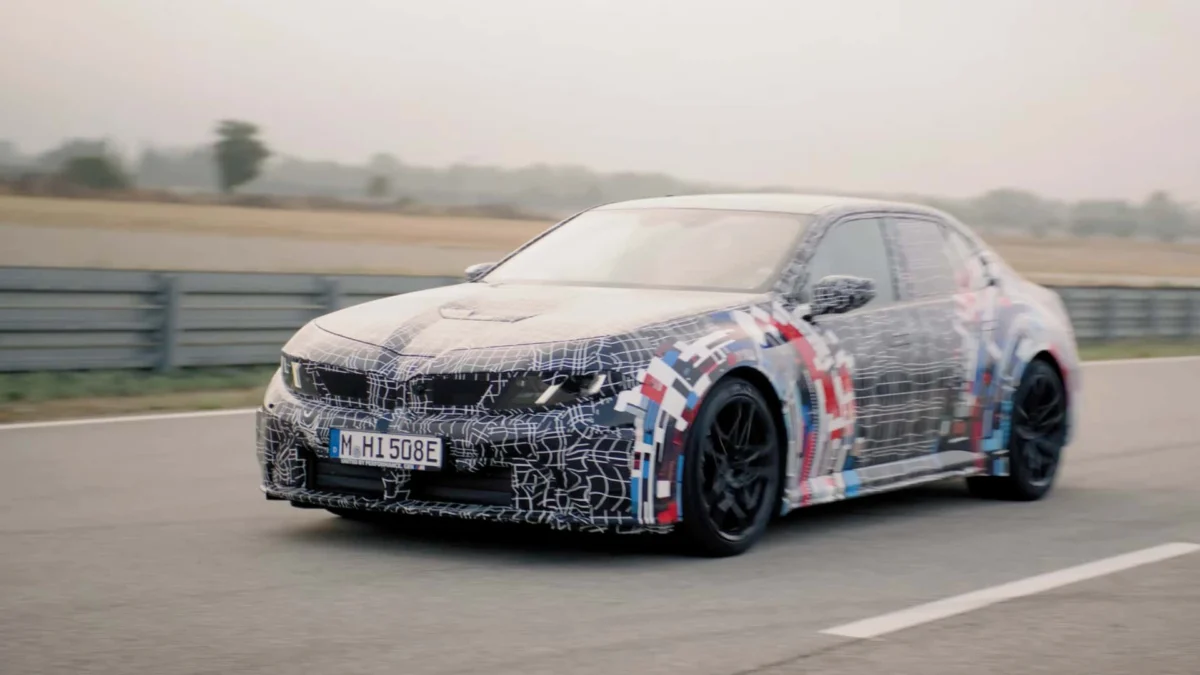
For decades, the BMW M3 has served as the benchmark for the compact sports sedan segment—a perfect alchemy of chassis balance, engine responsiveness, and driver engagement. Yet, as the automotive industry pivots toward electrification, the Bavarian automaker faces its most significant challenge yet: convincing the die-hard faithful that a battery-electric M3 can retain the "M" DNA that has defined the brand since the 1980s.
BMW’s latest development documentary provides a window into this high-stakes transition. It reveals that the company isn’t just courting the public; it is engaged in an internal "persuasion campaign" to ensure that the engineers and test drivers who live and breathe internal combustion are equally convinced that the future of M is electric.
The Human Element: Winning Over the Gatekeepers
At the heart of BMW’s engineering prowess is Jörg Weidinger, a veteran racing driver and M development engineer whose primary responsibility is to push M prototypes to their absolute limits at the Nürburgring. For the development team, winning over a skeptic like Weidinger is arguably a harder task than satisfying a boardroom of executives.
In the latest installment of their ongoing documentary series, BMW captures Weidinger’s first impressions of the near-production M3 EV at the Sachsenring circuit. His reaction—a mix of relief and genuine enthusiasm—serves as a pivotal moment in the car’s development narrative. "That’s impressive. A real leap forward. The experience is incredible," Weidinger remarked.
While critics might dismiss such comments as standard promotional polish, the significance lies in what Weidinger focuses on: confidence. For a driver who spends his life on the razor’s edge of grip and slip, the ability to "place" a car with surgical precision is paramount. If the electric M3 can deliver that level of intimacy between driver and machine, it has already cleared its first major hurdle.
Chronology of Development: From Concept to Circuit
The journey toward the electric M3 has been a multi-year effort, characterized by transparent, incremental updates from BMW’s M division.
- The Conceptual Phase: The roadmap began with the unveiling of the M Concept Neue Klasse, which provided the first tangible look at the design language for the next generation of BMW performance. It signaled a shift toward a wider, more aggressive stance, hinting that the electric M3 would prioritize aerodynamics and cooling efficiency as much as aesthetics.
- Engineering Focus (The "Feel"): Throughout 2024 and early 2025, BMW has emphasized that the M3 EV is not merely a high-output exercise in straight-line speed. The development team has been vocal about their work on steering feedback and brake modulation—areas where EVs often struggle due to regenerative braking systems.
- Soundscapes and Interaction: Recognizing that sound is a visceral part of the M experience, BMW explored how to synthesize an "acceleration sound" that provides real-time feedback to the driver. Unlike some competitors that mimic the exact frequency of a V8, BMW is experimenting with a unique auditory signature that helps drivers judge speed and power delivery, a lesson learned from years of high-performance combustion engine tuning.
- The Miramas Proving Ground: The most recent testing phase at BMW’s Miramas facility in France marks a transition from theory to reality. Here, the team focused on elevation changes and high-speed cornering, ensuring that the chassis remains composed and predictable even when the road surface is uneven or the suspension is under heavy load.
The Technical Architecture: The Four-Motor Advantage
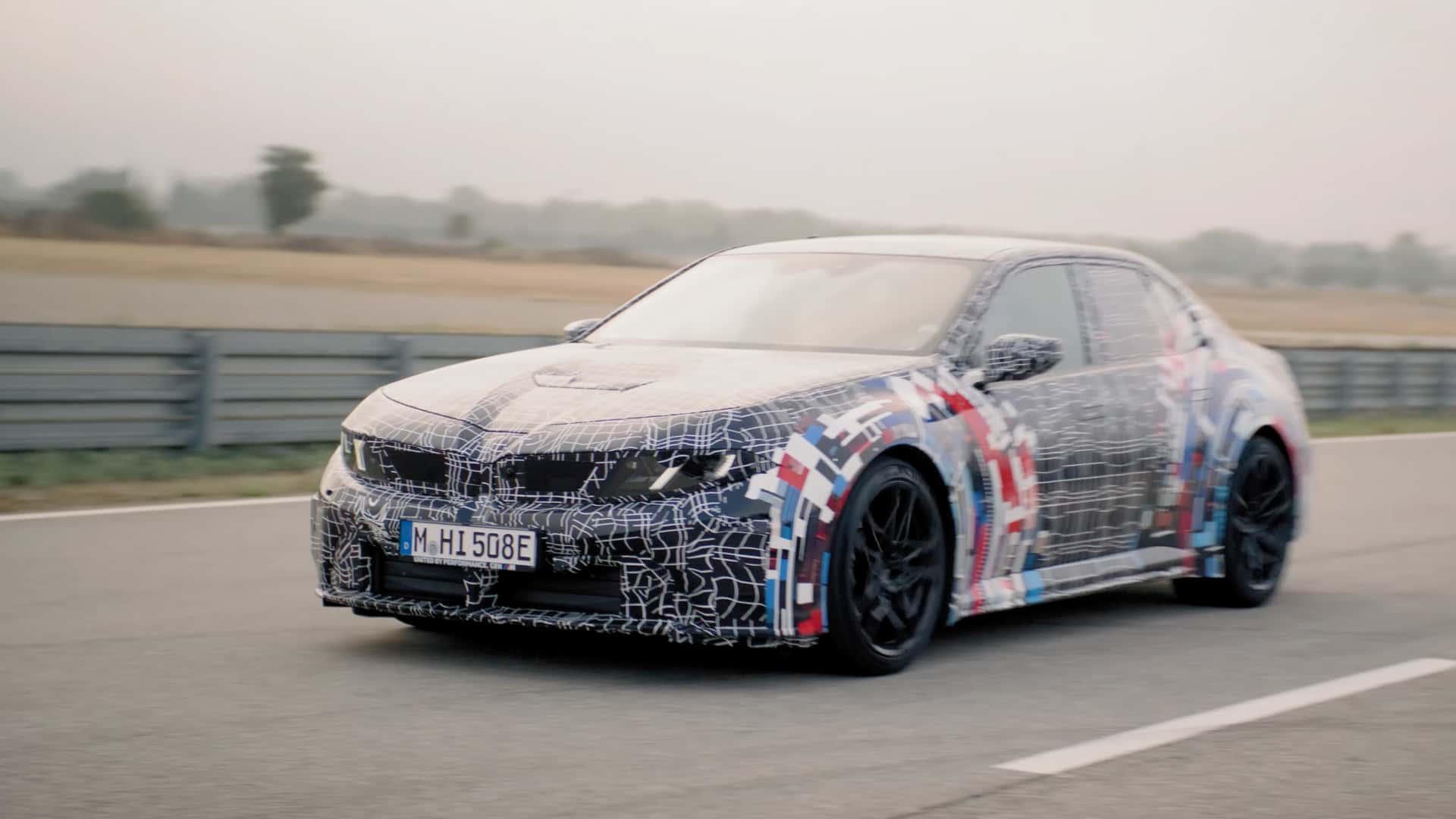
At the core of the upcoming M3 EV is a revolutionary quad-motor setup. Unlike traditional all-wheel-drive systems that rely on mechanical differentials, the electric M3 will utilize individual torque control for each wheel, managed by M-specific software.
This architecture offers a level of granular control that is physically impossible in a combustion-powered vehicle. By adjusting the torque vectoring at each corner millisecond-by-millisecond, the car can effectively "tighten" its line through a corner or stabilize itself during a high-speed exit.
Why This Matters:
- Precision: Four motors allow for near-instantaneous torque adjustment, meaning the car can rotate more naturally in tight hairpins.
- Stability: When the car hits an imperfection mid-corner, the software can compensate by shifting power delivery, keeping the chassis level and the tires in contact with the pavement.
- The "M" Feel: The goal is to provide a "natural" feeling that mimics the best rear-wheel-drive characteristics, even while power is distributed to all four wheels.
Competitive Positioning: The i3 M60 vs. The M3
It is crucial to distinguish between the various tiers of BMW’s performance electrification. The company has already confirmed the upcoming i3 M60 xDrive, due in 2027. While that vehicle will undoubtedly be quick, it represents a "sportier" trim of a mainstream model.
The M3, conversely, is being built from the ground up as a dedicated high-performance platform. It will feature a significantly more robust battery architecture, bespoke suspension tuning, and a chassis engineered specifically for track durability. While the i3 M60 is designed for the fast commuter, the M3 is designed for the track-day enthusiast—a distinction that BMW hopes will justify the premium price point and the M badge.
Implications for the Market and the Enthusiast
Perhaps the most surprising detail in BMW’s recent disclosures is the company’s intent to offer both electric and gas-powered M3s concurrently. By pricing them in the same "ballpark," BMW is effectively creating a controlled experiment in consumer behavior. They are essentially asking the market to choose: do you want the future, or do you want the legacy?
The Challenge of Choice
The existence of a combustion-powered alternative is a double-edged sword. On one hand, it provides a safety net for those not yet ready to transition to battery power. On the other, it sets an incredibly high bar for the EV version. If the electric M3 does not significantly outperform the gas version in terms of engagement, the enthusiast community may view it as a compromise rather than an evolution.
BMW’s strategy is to position the electric M3 not as a replacement for the combustion model, but as a different kind of performance machine. The documentary explicitly suggests that the ideal garage for a true enthusiast might include one of each.
Conclusion: A High-Stakes Bet
BMW is playing a long game. By involving their most skeptical testers and sharing the granular details of their chassis and software development, they are attempting to build credibility in an era where skepticism toward EVs remains high among performance purists.
The electric M3 will succeed or fail based on one metric: the "grin factor." If the car can provide the same visceral thrill, the same sense of triumph when nailing a perfect lap, and the same confidence-inspiring feedback as its predecessors, the badge will remain untarnished. The early feedback from Jörg Weidinger is a promising start, but as BMW moves toward a 2027 launch, the real test will come when the first customer takes the wheel on their favorite winding road.
For now, the message is clear: BMW isn’t just trying to build a fast electric car; they are trying to build an M car that happens to be electric. Whether that distinction is enough to win over the hearts of the purists remains the industry’s most anticipated reveal.
