

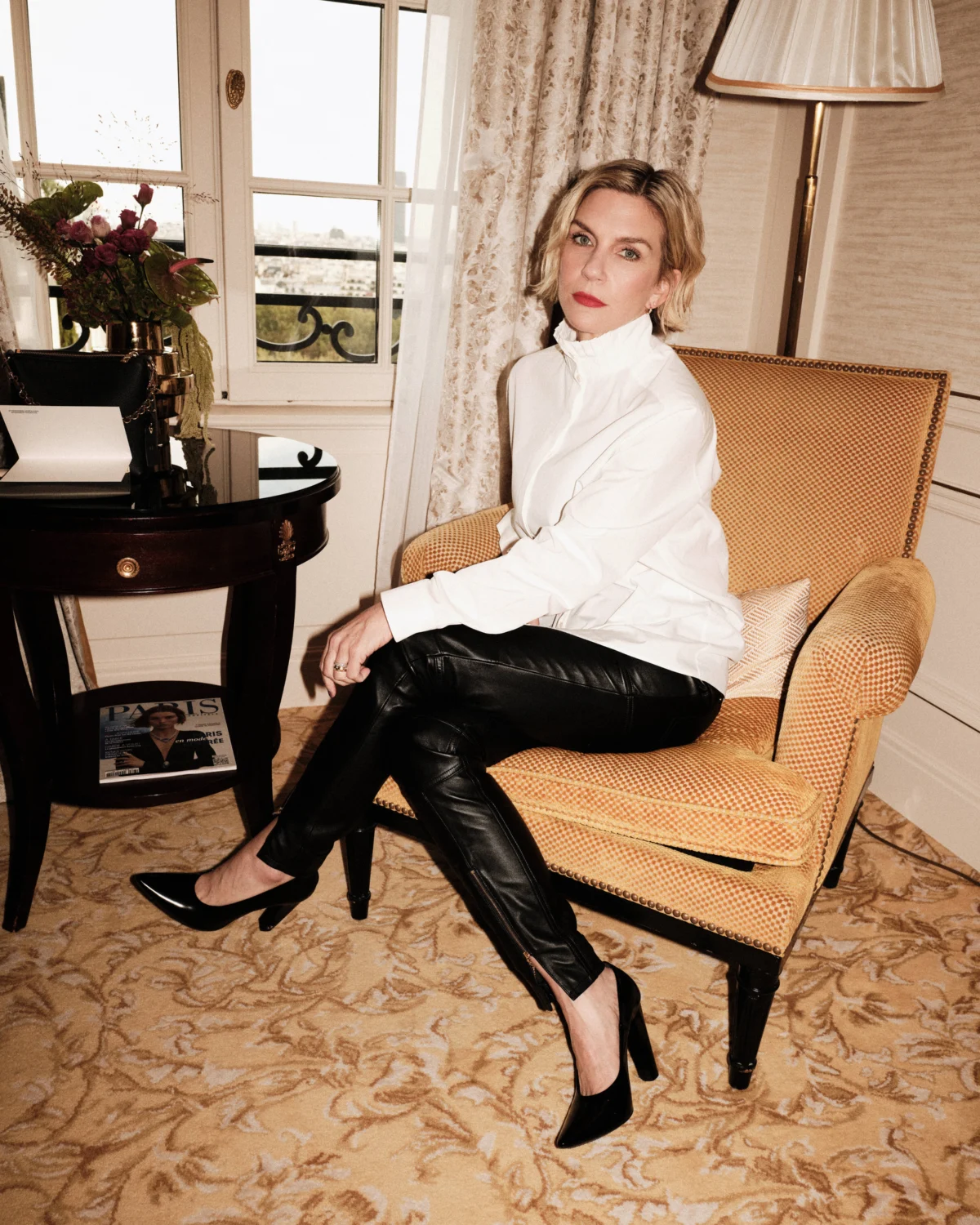
For an actor whose career is defined by the meticulous, grounded performances of "Pluribus," stepping into the surreal, high-octane world of Parisian fashion is a profound shift in scenery. Yet, for Rhea Seehorn, the recent Louis Vuitton Spring 2027 ready-to-wear show proved that the craft of storytelling—whether on screen or on the runway—shares a common DNA of artistic obsession. As the sun dipped below the horizon, casting the Louvre in a golden, twilight glow, Seehorn marked a milestone: her first-ever appearance as a front-row guest at a major fashion house.
Main Facts: The Intersection of Art and Architecture
The Louis Vuitton Spring 2027 collection, helmed by the visionary Nicolas Ghesquière, served as the centerpiece for Seehorn’s Paris debut. The event was not merely a display of garments, but an exercise in atmospheric world-building. For Seehorn, who had previously collaborated with the Maison—most notably wearing a custom red draped gown during her triumphant Emmy win last month—the transition from observer to participant was seamless.
The consensus among attendees was that Ghesquière had once again pushed the boundaries of the "LV" aesthetic, moving away from pure trend-chasing to create a cohesive, art-forward presentation. For Seehorn, the experience was visceral. "The whole thing was just so beautiful," she reflected while en route to a post-show dinner. "The amount of art and consideration he puts into the entire presentation—the direction, the soundscape, the architecture—it’s staggering. I’ve watched clips online, but being there in person is an entirely different frequency of experience."
Chronology: A Day in the Life of a First-Timer
The journey to the Louvre was a curated process of preparation and discovery. For Seehorn, the morning began with the high-stakes ritual of wardrobe selection. She cycled through two distinct silhouettes, weighing the merits of contemporary knit separates against a more structured, classic approach.

The decision was swift once she stepped into a pair of sharp, tailored leather trousers paired with a pristine, high-collared white blouse. The ensemble, according to Seehorn, felt like a manifesto of understated power. "The cut and the tailoring were stand-alone special," she noted. "Interestingly, the team was delighted with my recent haircut trim; it turns out it was the perfect length for the collar. It was one of those moments where everything just clicked."
Following the show, the momentum did not cease. The transition from the runway to the sidewalk outside the venue became a serendipitous reunion. Seehorn was seated alongside Wunmi Mosaku, the actor known for "Sinners," with whom she had bonded during the previous year’s award season circuit. The two were seen laughing and debriefing as they exited the venue, only to be joined by an impromptu encounter with Zendaya. The moment was quintessentially Parisian—a chance meeting that culminated in a warm exchange of professional respect, with Zendaya stopping to offer congratulations on Seehorn’s recent Emmy success.
Supporting Data: The Ghesquière Philosophy
Central to the narrative of the Louis Vuitton Spring 2027 show is the creative dialogue fostered by Nicolas Ghesquière. Seehorn, who has spent time with the designer, expressed genuine admiration for his ability to remain "plugged in" to the global cultural zeitgeist.
"When I was congratulating Nicolas on the art direction of the show, he immediately pivoted to the art direction of Pluribus," Seehorn recounted. "He’s so kind and generous. He is a true consumer of other people’s art. You see that reflected in his clothes and his willingness to break traditional molds. It doesn’t feel like he’s designing from an ivory tower; it feels like he is in constant, fluent conversation with the world."

This "conversational" approach to design is a hallmark of Ghesquière’s tenure at Louis Vuitton, where he consistently integrates historical references with futuristic silhouettes. For Seehorn, this intellectual engagement is what elevates fashion from a commercial endeavor to a legitimate artistic medium.
Official Responses and Personal Reflection
Beyond the glitter of the front row, Seehorn’s trip to Paris was a rare, stolen moment of respite. In a candid admission, she described her time in the city as a period of personal exploration, defined by small pleasures. She confessed to an indulgence in "10,000 croissants" and spent significant time scouring the city for unique treasures, including a lengthy visit to a shop dedicated entirely to miniatures.
"In case anybody’s reading this and wants to make sure that I’m still a nerd, I am," she joked. This groundedness is perhaps what makes her an ideal muse for the brand; she possesses the gravitas of a seasoned performer combined with an infectious, childlike curiosity.
Regarding the industry itself, Seehorn admitted to one minor grievance: the brevity of the spectacle. "It makes me so sad," she laughed. "I was sitting there thinking, ‘Wait, what do you mean it’s only 10 minutes long?’ You spend so much time building this incredible world, and then it flashes by in a blink."

Implications: The Future of Celebrity-Fashion Synergy
The presence of actors like Rhea Seehorn at the heart of Louis Vuitton’s creative ecosystem suggests a shift in the way fashion houses engage with talent. It is no longer about simple brand ambassadorship; it is about cross-pollination. When a designer like Ghesquière takes the time to analyze the aesthetics of a television series like Pluribus, and an actor like Seehorn deeply studies the structural nuances of a couture gown, the result is a more holistic form of celebrity branding.
The implications for the industry are clear: the "front row" is evolving. It is no longer just a space for visibility, but a space for intellectual exchange. As Seehorn’s experience highlights, the modern star is looking for authenticity. They want to be associated with creators who challenge them and with platforms that allow for artistic dialogue.
Furthermore, the logistical success of the Spring 2027 show reinforces Louis Vuitton’s status as the apex of fashion theater. By consistently choosing the Louvre as a backdrop, the brand is asserting its place within the historical canon of art. It is a bold statement, one that aligns the transient nature of seasonal ready-to-wear with the permanent legacy of classical art.
As Rhea Seehorn concluded her trip, the takeaway was not just the memory of a beautiful show or a perfectly tailored white shirt. It was the realization that in the world of high fashion, as in the world of television, the magic lies in the details—the length of a collar, the timing of a transition, and the willingness to remain a "nerd" for the craft. For Seehorn, this was not merely a fashion week trip; it was a masterclass in creative vision, and if her enthusiasm is any indicator, it is a relationship with the house of Louis Vuitton that is only just beginning.
Summary of Key Takeaways:
- The Atmosphere: Ghesquière’s Spring 2027 show was marked by a heavy emphasis on art direction and immersive sound design.
- The Collaboration: Seehorn’s relationship with the brand is built on mutual respect for each other’s creative fields.
- The Aesthetic: The standout look was a masterclass in tailoring—a sharp white blouse and leather pants that perfectly suited the actor’s personal style.
- The Human Connection: The event highlighted the "social" aspect of the industry, underscored by moments of genuine connection between high-profile talent.
- The Perspective: Seehorn’s "nerdy" approach to her downtime in Paris mirrors her analytical approach to acting, signaling a bridge between fashion and character-driven performance.
