

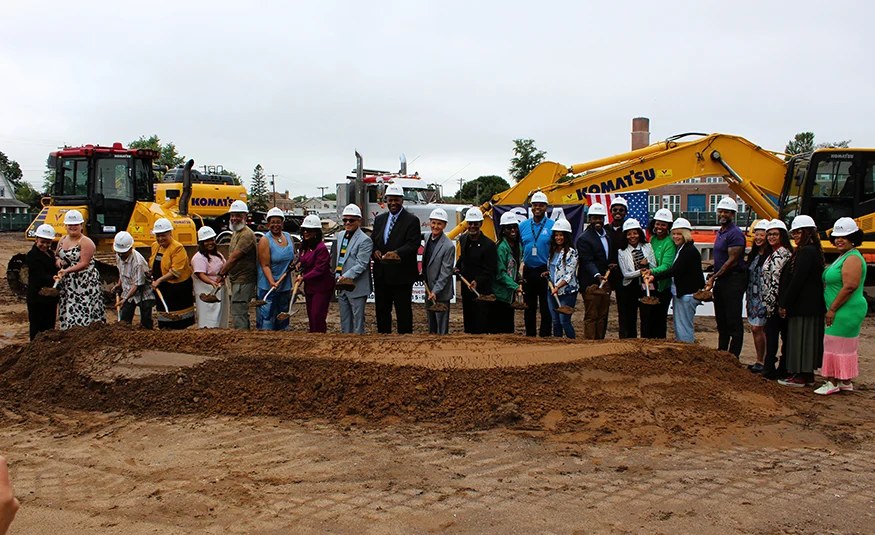
TRENTON, N.J. – On July 7, the city of Trenton reached a significant milestone in its ongoing effort to revitalize public education infrastructure. Officials gathered under a clear summer sky to break ground on a dual-purpose educational complex that promises to transform the local learning landscape: the Betty V. Coles Elementary School and the Miguel A. Hernandez Intermediate School.
The $89.4 million project, spearheaded by the New Jersey Schools Development Authority (SDA), represents far more than just bricks and mortar; it serves as a cornerstone of the state’s commitment to providing modern, equitable, and sustainable learning environments for the capital city’s youth.
The Scope of the Project: Two Schools, One Vision
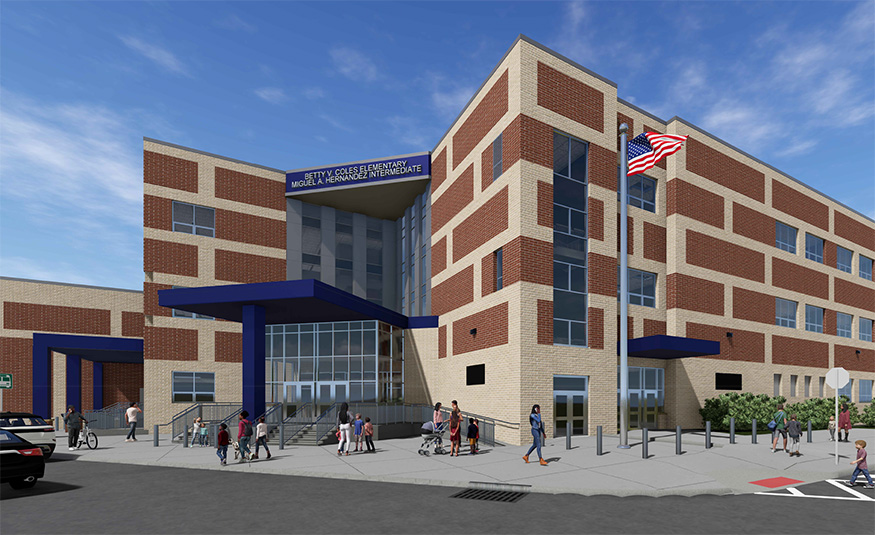
The planned 124,000-square-foot facility is an architectural feat designed to maximize efficiency and community engagement. By consolidating two distinct educational levels under one roof, the project aims to streamline the transition for students as they move from their formative elementary years into more specialized intermediate instruction.
The facility is specifically engineered to serve 837 students. The structural breakdown is as follows:
- Betty V. Coles Elementary School: Serving students from Kindergarten through third grade.
- Miguel A. Hernandez Intermediate School: Serving students in fourth through sixth grades.
By housing both schools in a single, unified campus, the district anticipates improved resource sharing, including communal spaces such as libraries, cafeterias, and specialized art and science laboratories. The design-build approach—a project delivery method that combines design and construction services under a single contract—has been instrumental in keeping this massive undertaking on schedule and within its budgetary framework.
A Legacy of Investment: The SDA’s Role in Trenton
The groundbreaking of the Coles-Hernandez complex is the 10th capital project completed or initiated by the New Jersey Schools Development Authority (SDA) in Trenton since the inception of the statewide school construction program.
The SDA has long viewed Trenton as a critical area of focus. Prior to this latest investment, the authority had already poured more than $380 million into the city’s educational infrastructure. These previous projects have ranged from seismic retrofits and classroom expansions to the construction of entirely new, state-of-the-art schools.
Chronology of Progress
The journey to this groundbreaking was not an overnight success but rather the result of years of planning, site selection, and budgetary negotiation.
- Early Planning Phase: The SDA identified the need for increased capacity in the Trenton district, noting that many existing facilities were aging and struggling to keep pace with modern technological and pedagogical requirements.
- Design-Build Selection: Following the initial approval of funds, the project moved into the design-build phase. The SDA selected Ernest Brock & Sons Inc. as the primary contractor.
- Collaborative Design: To ensure the building met the unique needs of the community, the contractor partnered with the SSP Architectural Group Inc. for design aesthetics and functionality.
- Project Oversight: Joseph Jingoli & Son Inc. was brought on board to provide the rigorous project management necessary to oversee a development of this scale, ensuring safety and fiscal responsibility throughout the construction lifecycle.
- July 7 Groundbreaking: With permits secured and site preparation finalized, the ceremonial shovels hit the dirt, marking the official commencement of the vertical construction phase.
Sustainability and Innovation: Building for the Future
In an era where environmental stewardship is increasingly prioritized in public works, the Coles-Hernandez project is setting a high bar. The facility is being constructed with the explicit goal of achieving LEED (Leadership in Energy and Environmental Design) certification.
Achieving LEED status is no small feat for a project of this magnitude. It requires adherence to strict criteria, including:
- Energy Efficiency: Utilizing high-performance building envelopes, LED lighting, and advanced HVAC systems to reduce the school’s carbon footprint.
- Water Conservation: Implementing low-flow plumbing and drought-resistant landscaping to minimize utility demand.
- Sustainable Materials: Sourcing locally where possible and prioritizing recycled or rapidly renewable building materials.
- Indoor Environmental Quality: Enhancing air circulation and maximizing natural light, both of which have been proven to correlate with improved student test scores and overall health.
Official Responses: "An Investment in Our Stakeholders"
The groundbreaking ceremony was characterized by a sense of optimism and shared purpose. Officials from the SDA and the Trenton School District expressed that the building represents a tangible manifestation of their dedication to the city’s future.
Leadership Perspectives
SDA Chief Executive Officer Manuel Da Silva emphasized the emotional and social weight of the project during his keynote remarks.
"Today, we break ground on more than a new school; we celebrate an investment in our state’s most valuable stakeholders—its students," Da Silva stated. "Together, alongside our school district, state, local, and construction partners, our shared vision and purpose will result in a new school that will unlock countless opportunities for Trenton’s young learners."
Trenton Superintendent James Earle echoed this sentiment, highlighting the broader implications for the community at large. "We are so excited to have a new school constructed in the city of Trenton," Earle said. "This groundbreaking represents an investment in Trenton Public Schools, our students, our families, and our future. It provides our children with a physical space that matches the high quality of instruction they receive from our educators."
Implications: The Long-Term Impact on Trenton
The construction of the Betty V. Coles and Miguel A. Hernandez schools is expected to have a ripple effect across the Trenton community. Beyond the obvious benefit of modern classrooms, the project serves as an economic engine for the city.
Economic and Community Benefits
- Job Creation: The construction phase alone creates dozens of skilled labor positions, ranging from project management and engineering to trade-specific roles in carpentry, electrical, and plumbing.
- Property Values and Neighborhood Stability: High-quality public school infrastructure is historically linked to increased property values in surrounding neighborhoods. A new, well-maintained facility can serve as a catalyst for local revitalization.
- Educational Equity: By providing a top-tier learning environment in a central urban district, the SDA is working to bridge the gap in educational resources between different regions of the state. The inclusion of specialized spaces, such as updated technology hubs, ensures that Trenton students are not left behind in the digital age.
- Community Hub: Modern schools are increasingly designed to be "community schools," where facilities can be utilized for evening adult education, town hall meetings, and community programming. This integration helps foster a stronger relationship between the school district and the parents it serves.
Looking Ahead: The Path to Completion
While the groundbreaking marks a moment of celebration, the hard work of construction is just beginning. Over the coming months, the residents of Trenton will witness the site transform from a clearing into a structural frame.
The project management team, led by Joseph Jingoli & Son Inc., faces the standard challenges of any large-scale urban development, including site logistics, material procurement, and weather-related delays. However, the use of the design-build model is expected to mitigate many of these risks by fostering close collaboration between the designers and the builders.
For the students of Trenton, this project is a promise kept. It is a sign that their education is a priority and that the state is willing to invest in the infrastructure necessary for them to succeed. As the facility rises, it will stand as a beacon of progress—a tangible testament to what happens when government, education, and private industry align for the common good.
In the coming years, when the doors of the Betty V. Coles Elementary and Miguel A. Hernandez Intermediate schools finally swing open, the city of Trenton will have gained more than just a building; it will have gained a vibrant, sustainable, and forward-thinking environment where the next generation of leaders, innovators, and citizens can thrive.
