

For decades, the standard New York City wedding has been a high-stakes, high-cost, and high-stress marathon. Between navigating the labyrinthine bureaucracy of the City Clerk’s office, securing a venue that doesn’t require a down payment the size of a mortgage, and managing the sprawling expectations of extended families, the act of "tying the knot" in the five boroughs has often felt more like an endurance test than a celebration.
However, a new contender has arrived on the Lower East Side, offering a sharp, neon-drenched alternative. Sure Thing, a chapel concept imported directly from the wedding capital of the world, Las Vegas, has set up shop at 122 Allen Street. With its flamingo-pink façade, disco-ball-inspired interiors, and a mission statement that explicitly rejects "millennial gray," the venue is redefining the concept of the urban elopement.
The Aesthetic of the Anti-Traditional
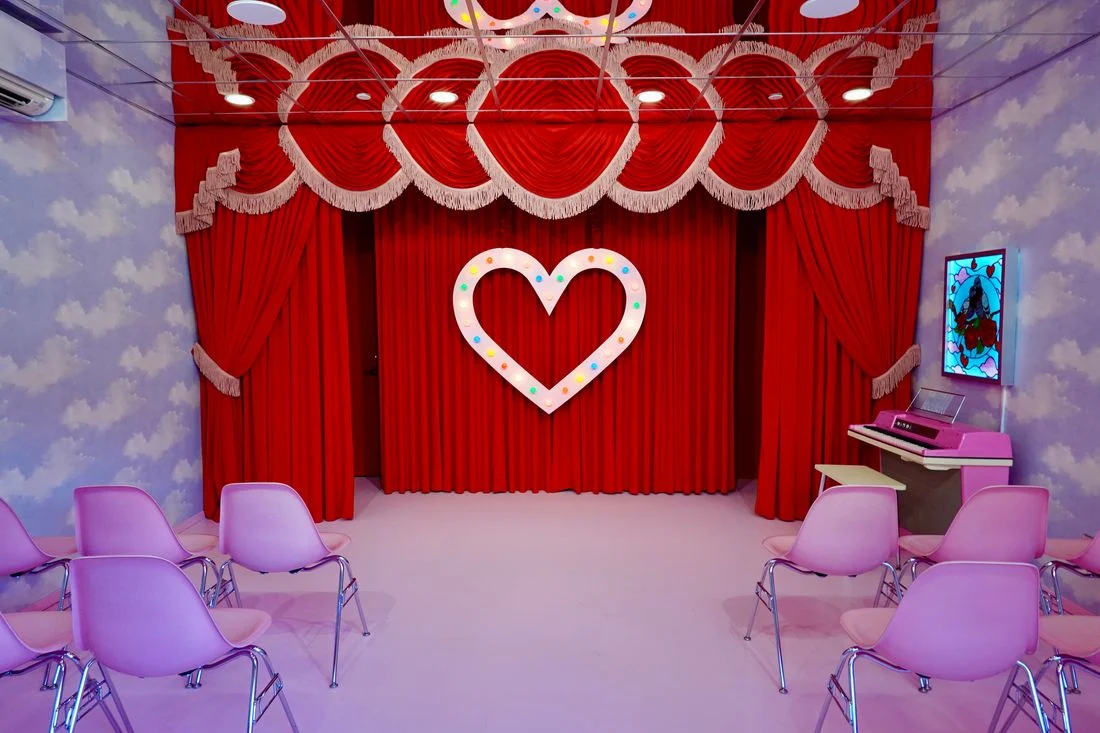
The space itself—a mere 400 square feet tucked between a gritty, graffiti-laden apartment entrance and a polished menswear boutique—feels less like a traditional place of worship and more like a curated, maximalist fever dream. Upon entering, visitors are greeted by a cacophony of textures and colors: red velvet drapery, pink fiberglass chairs, and wallpaper depicting drifting clouds.
Perhaps the most striking feature is the ceiling, designed to catch and scatter light from a rotating mobile of mirrored pigeons—a nod to the quirky, camp-heavy aesthetic that the founders, Victoria Hogan and Amy Lee, have spent years cultivating. The design philosophy is clear: this is a space for the modern couple who views a wedding not as a somber religious obligation, but as a performance art piece.
"I want everything to feel gaudy and over-the-top," says co-founder Victoria Hogan. "Anything but millennial gray."
A Chronology of the ‘Sure Thing’ Rise
The journey to Allen Street began far from the concrete canyons of Manhattan. Hogan, an art school graduate, first cut her teeth in the wedding industry by officiating ceremonies from a humble teardrop trailer in the desert. It was there she met Amy Lee, who was then working as a photographer. The two found a shared rhythm, recognizing a gap in the market for couples who wanted a legally binding ceremony without the performative baggage of traditional weddings.
In 2019, they launched their first chapel in Las Vegas, featuring a signature pink velvet curtain backdrop. The venture was an immediate success. Hogan quickly realized that while many couples requested the classic "Elvis" treatment, they often found the standard impersonators to be "borderline creepy." In response, she donned the jumpsuit herself, creating the persona of "Lady Elvis."
By 2024, the brand had expanded to a second Las Vegas location. Last year alone, the company facilitated 2,500 weddings. The business model—fast, affordable, and visually arresting—proved to be a sanctuary for marginalized couples, particularly within the LGBTQ+ community, who often felt alienated by the conventional religious institutions that dominated the wedding landscape.
The Evolution of the Vegas Chapel
To understand why Sure Thing is resonating in New York, one must look at the history of the Las Vegas chapel itself. The "Vegas Wedding" phenomenon exploded in the 1940s, evolving alongside the city’s transformation into a resort destination. As Reno solidified its status as the "divorce capital of America," Las Vegas positioned itself as the opposite: a place where the knot could be tied with equal speed and minimal paperwork.
For post-war Americans, these chapels offered a streamlined, factory-like efficiency that aligned with a new, pragmatic view of marriage. By the 1960s, the trend was cemented by celebrity endorsements—most notably when Elvis Presley wed Priscilla at the Aladdin Hotel. Over the ensuing decades, the chapel industry leaned into the inherent campiness of the concept, leading to the rise of drive-thru ceremonies, themed weddings, and pop-culture-infused kitsch, such as the Taco Bell-sponsored wedding chapel.
Design Details and Operational Realities
Sure Thing’s New York location is a deliberate, smaller-scale evolution of its Nevada counterparts. Every detail is calibrated for the digital age, specifically for the social media-savvy couple. The lighting is meticulously engineered to flatter faces while avoiding the sterile, "morgue-like" quality of traditional venues.
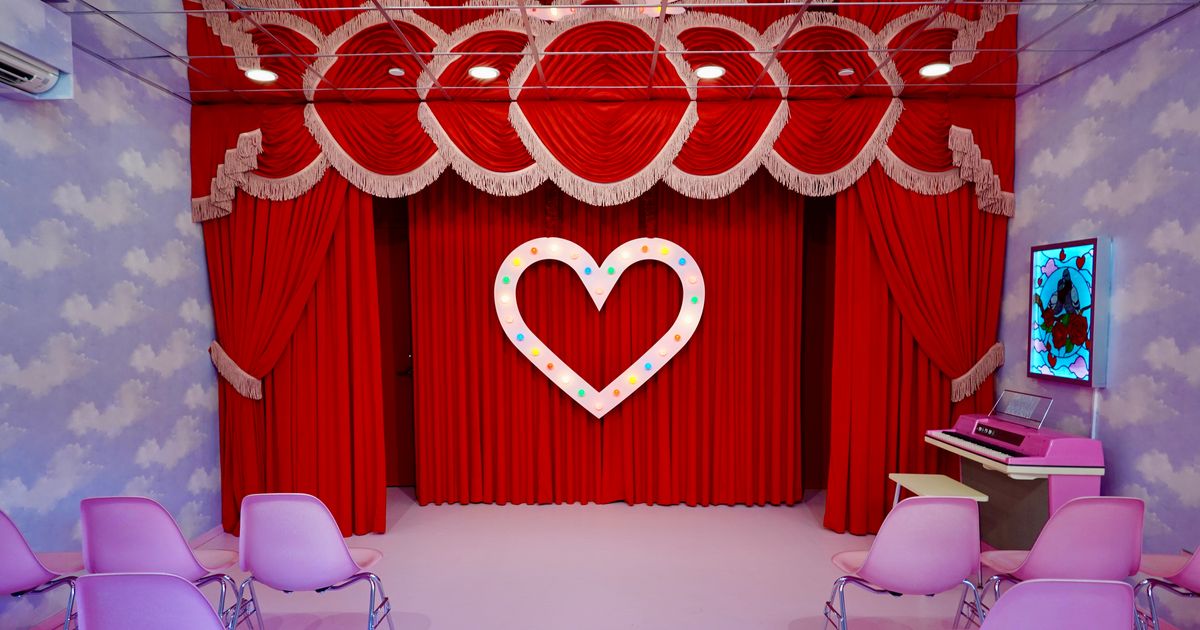
The interior design draws from a eclectic list of influences: the baroque wallpaper of I Dream of Jeannie, the deep red textures of David Lynch’s cinematic worlds, and the disco-era glam of Studio 54. Even the bathroom is a tribute to the vibrant, stylized color palette of the film Amélie, featuring mint-green fixtures against burgundy penny tile.
Operationally, the space is built for high turnover. The flooring is specifically chosen to allow for the rapid sweeping of glitter and debris between bookings. Couples can reserve the space for 30-minute blocks for $666, with options to extend the time or hire an organist for an additional fee. Officiants range from the "goth-edged" comedic performer known as Hellvis to a genderless clown named Tillie, ensuring the ceremony feels tailored to the couple’s specific brand of subversion.
The Economic Implications for New Yorkers
For many New Yorkers, the appeal of Sure Thing is as much economic as it is aesthetic. The traditional wedding industry in New York is notoriously expensive; a basic venue rental can often cost more than a year’s rent in a luxury apartment.
Take the case of Josh Bodley and Tegan Barr, Londoners who held the very first ceremony at the Allen Street location in late August. After getting engaged at the Empire State Building, they researched London venues only to find that even a local pub was charging £9,000 for a wedding package. "It didn’t feel very us," Barr noted. "We thought, ‘Let’s skip those traditions and do the fun bits.’"
By choosing Sure Thing, the couple managed to cover their outfits, hotel stays, flights, and a honeymoon in Nashville for a total of roughly $4,000. For them, the wedding wasn’t about impressing relatives or adhering to archaic customs; it was about creating a moment that felt authentic to their personalities. Following the ceremony, the couple and their guests celebrated at a nearby Bowery bar, where the casual, spontaneous atmosphere even led to strangers buying them rounds of tequila.
Implications for the Local Wedding Industry
The arrival of Sure Thing signals a broader shift in the wedding industry—a move away from the "big white wedding" towards what might be called the "boutique elopement." As the cost of living in major cities continues to rise, and as younger generations become increasingly disillusioned with the bloated, high-pressure wedding industrial complex, the demand for "micro-weddings" is expected to grow.
Real estate developers and boutique event space operators are taking note. The success of Sure Thing suggests that there is a viable, profitable path for small-footprint venues that prioritize experience and social-media-friendly design over sheer capacity.
However, the venue also highlights a tension in urban planning. By occupying a small, high-traffic retail space in the Lower East Side, Sure Thing is competing for the same real estate as cafes, art galleries, and small businesses. Its success depends entirely on its ability to maintain a high volume of bookings, turning the storefront into a revolving door of celebration.
Conclusion
Sure Thing is more than just a place to get a marriage license signed; it is a manifestation of a cultural desire to reclaim the wedding from the crushing weight of tradition and debt. By embracing the kitsch of the Vegas past and the digital-first requirements of the New York present, Hogan and Lee have created something that feels both ironic and deeply sincere.
Whether this becomes the new standard for the urban couple remains to be seen, but the initial demand—with 20 couples signing up before the venue was even professionally photographed—suggests that New Yorkers are more than ready to trade the stuffy church aisle for a pink-lit room on Allen Street, complete with a disco ball and a sense of humor. In a city that often demands its residents be serious, efficient, and perpetually busy, Sure Thing offers a brief, glittery reprieve—a place where the commitment is real, but the pretension is left at the door.
