

At a time when the global technology sector is grappling with widening skills gaps and persistent disparities in representation, Montclair State University is undertaking a bold, structural, and pedagogical experiment. The university has reorganized its disparate technology-focused departments into a unified School of Computing, an ambitious consolidation designed to dismantle the barriers that have historically hindered student retention and diversity in STEM.
Under the strategic leadership of Director Liaquat Hossain, the newly formed School of Computing is not merely changing its administrative structure; it is rethinking the very philosophy of how computer science and related disciplines are taught. By centralizing computer science, software engineering, cybersecurity, data science, and applied mathematics under one roof, the school aims to create a cohesive, supportive, and inclusive ecosystem that prepares students for the realities of the modern workforce.
The Structural Consolidation: Unifying the Disciplines
For years, the various components of computing at Montclair State were siloed across different schools, leading to fragmented curricula and inconsistent student experiences. This separation often created artificial boundaries between disciplines that are, in practice, deeply intertwined.
"We’re doing something very exciting, maybe the most innovative in the country or in the world," says Liaquat Hossain. The decision to integrate these programs is the cornerstone of a broader mission to foster interdisciplinary collaboration. By housing these fields under a single administrative umbrella, the school can now synchronize its approach to programming, mathematics, and statistics, ensuring that students receive a consistent and logically connected education.
The integration allows for a "systems-thinking" approach to curriculum design. Instead of forcing students to navigate disparate requirements in different departments, the school is currently in the process of completely overhauling its foundational course offerings. The goal is to create a seamless pathway from introductory mathematics and statistics to high-level programming and software architecture.
Addressing the STEM Retention Crisis
The primary catalyst for this reorganization is the persistent issue of student attrition in STEM disciplines. Historically, computing programs have seen high rates of students dropping or withdrawing (the "DW" or "DFW" rates) during their freshman and sophomore years, particularly in gatekeeper courses like calculus, discrete mathematics, and fundamental programming.
"There are a lot of retention problems in STEM disciplines," Hossain explains. "If we think about women, minorities, and first-generation students, these challenges persist globally."
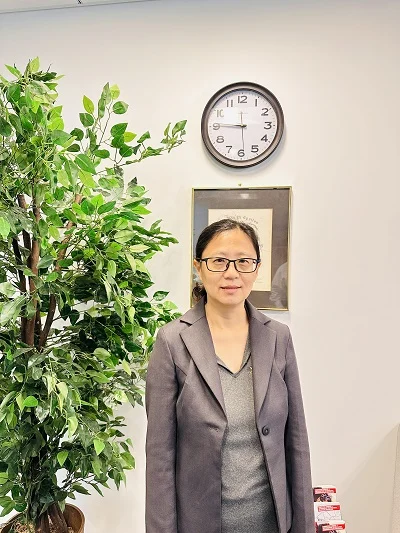
Montclair State’s mission is distinct: the university serves a demographic that is not traditionally defined by "elite" backgrounds. By embracing this mission, the school has committed itself to a student-centered model of education. Professor Michelle Zhu, a core architect of the school’s pedagogical shifts, notes that the faculty is actively studying pedagogical strategies that have proven successful at other elite institutions to reduce these attrition rates.
The Recitation Model and Data-Driven Intervention
One of the most significant changes implemented over the past year is the mandatory "recitation session" for foundational courses. These hour-long sessions act as a critical bridge between lectures and application. By providing students with additional guided exercises and personalized attention from instructor specialists, the school is working to ensure that no student falls through the cracks during their most vulnerable academic periods.
"We recognize that computing is a hard major," says Zhu. "But we don’t want to give up on any student." The school is currently analyzing DFW data to identify exactly where the curriculum is most challenging, using these insights to provide targeted support and, where necessary, adjusting course materials to better align with the pedagogical needs of a diverse student body.

Cultivating a Culture of Inclusion and Diversity
While the tech industry remains historically male-dominated, Montclair State is setting aggressive goals to shift this narrative. The leadership team has set a target of 40 percent female enrollment in the coming years, a goal they intend to reach through a combination of community outreach, mentorship, and structural support for both students and faculty.
Empowering Women in Tech
The school has launched a variety of initiatives to foster a sense of belonging for women in computing. These include:
- Student Organizations: The establishment of women-oriented undergraduate clubs focused on cybersecurity and technology/innovation.
- Graduate Mentorship: A new initiative spearheaded by female faculty members to create a dedicated support network for women in the graduate program.
- High School Outreach: Engaging with local high schools to introduce young women to computing through social-problem-solving frameworks, showing that technology is a tool for community betterment rather than an isolated, technical pursuit.
Supporting Female Faculty
Diversity is not just a student-focused initiative; it is an organizational imperative. Professor Zhu emphasizes that the school is committed to hiring and retaining more female faculty. Recognizing the unique challenges faced by women in academia—particularly those balancing research with family responsibilities—the school is actively providing opportunities for career growth and flexibility. This includes adjusting course loads and providing the support necessary to ensure that female professors can thrive as both researchers and mentors.
Research, Community Engagement, and the Future
Beyond the classroom, the school is positioning itself as a hub for community-engaged research. Under the guidance of an newly established advisory council of industry experts, the school is aligning its research goals with the pressing technological needs of New Jersey and the broader global community.
The Capstone for Community
Next year, the school will debut a series of capstone projects centered on systems development and prototyping for community-based solutions. This approach moves the focus away from abstract exercises and toward real-world impact. For instance, students might work on building digital resources for under-resourced public schools or developing prototypes for social good.
"We want to host town halls to talk about critical issues with regard to technology, social media, and mental health," says Hossain. "We believe technology has a lot of good things, but we also need to put some guardrails on that."
Implications for the Future of Computing Education
The transformation at Montclair State serves as a case study for how public universities can modernize in response to the changing landscape of higher education. By prioritizing retention, fostering a diverse faculty, and grounding education in community service, the School of Computing is creating a model that is both compassionate and rigorous.
With 36 faculty members—95 percent of whom hold Ph.D.s from top-tier institutions—the school is well-positioned to expand its offerings in AI, cybersecurity, and software engineering. However, the true measure of their success will be the caliber of students they graduate and the extent to which they succeed in diversifying the tech workforce.
As the school continues to iterate on its curriculum and expand its community ties, it remains focused on its primary objective: providing a transformative, inclusive education that democratizes access to the high-paying, high-impact careers of the future. By treating retention as a pedagogical responsibility rather than an inevitable outcome of "difficult" coursework, Montclair State is proving that the path to a robust technology workforce begins with a culture of support, inclusion, and intentional design.
