

By Rhea Nayyar
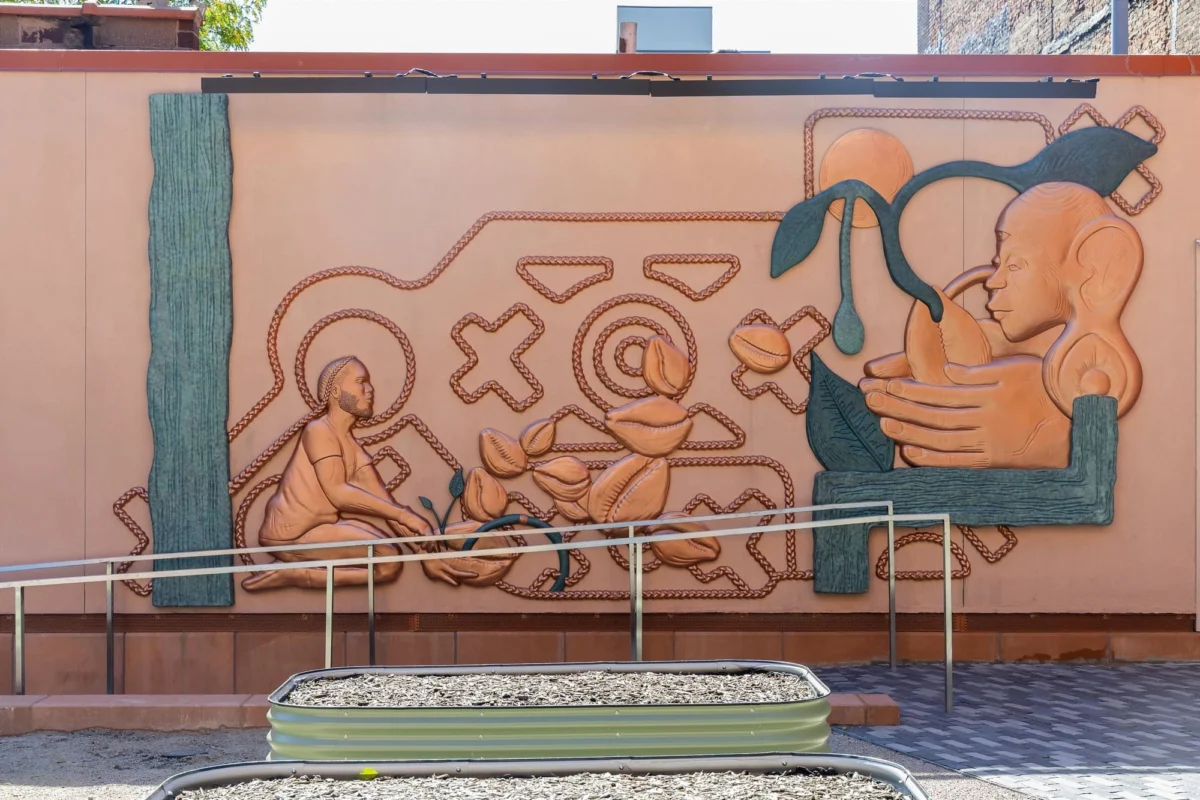
In the heart of Brooklyn’s Brownsville neighborhood, a monumental $128 million multi-service center has officially opened its doors, signaling a significant investment in civic infrastructure. Yet, beyond the sleek glass and state-of-the-art facilities, the building serves as a canvas for a profound social narrative. The Department of Cultural Affairs’ (DCLA) Percent for Art program has unveiled I Am Protected (2026), a four-part public art commission by East New York-raised artist and educator Jazmine Hayes.
The installation is more than mere ornamentation; it is a visual reclamation of space, designed to provide a sense of sanctuary, historical continuity, and psychological safety for the neighborhood’s youth. By weaving the cultural fabric of Brownsville into the building’s very architecture, Hayes has created a landmark that balances the weight of history with an aspirational vision for the future.
The Genesis of a Civic Landmark
The Brownsville Multi-Service Center is the result of a long-standing initiative to consolidate community resources, offering a centralized hub for social services, health, and youth engagement. Its completion represents a milestone for local stakeholders who have long advocated for a facility that reflects the resilience and vibrancy of the community.
For Jazmine Hayes, the commission was an opportunity to engage in a dialogue with the landscape of her own upbringing. Having been born and raised in the neighboring community of East New York, Hayes brings an intimate, lived perspective to her practice. She was not an outside observer; she was a member of the community she was tasked to represent.
“I genuinely want any child that walks through this door to be and feel protected,” Hayes told Hyperallergic during the unveiling. “I want them to have affirmations of care, support, and community.”
Chronology: From Concept to Concrete
The realization of I Am Protected did not happen in a vacuum. It was the result of a rigorous, multi-year process involving municipal agencies, community boards, and the artist’s own intensive research into the local heritage.
- 2024: The New York City Department of Cultural Affairs identifies the Brownsville Multi-Service Center as a candidate for the Percent for Art program.
- Early 2025: Hayes completes a significant public commission for the New York City Housing Authority’s (NYCHA) Brownsville Houses. This successful project—titled You Deserve Ease and Joy—serves as a precursor to her work on the Multi-Service Center, establishing her reputation for creating art that is both accessible and deeply resonant with local residents.
- Mid-2025: Hayes is selected by the DCLA to lead the public art component of the new $128 million facility.
- Late 2025 – Early 2026: Throughout the final phase of building construction, Hayes develops the four distinct motifs that would eventually constitute the I Am Protected series.
- October 2026: The center officially opens, with Hayes’s works permanently installed at the building’s primary entry points.
The continuity of her work—moving from the Brownsville Houses to the Multi-Service Center—underscores a commitment to what she calls "community-centered aesthetics," a practice where the art is not merely placed in a neighborhood but acts as a participant in its ongoing development.
Anatomy of the Work: I Am Protected
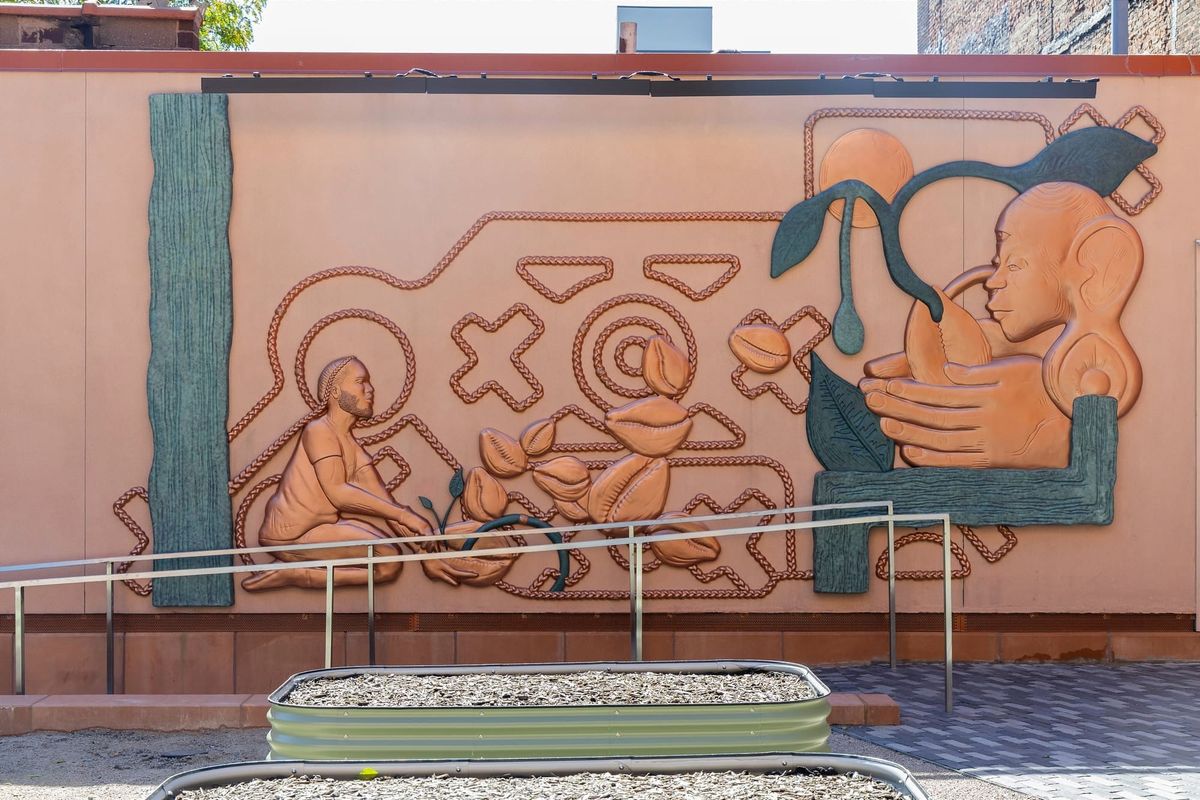
The installation comprises four distinct designs, each strategically placed at the building’s entryways. The placement is intentional: the entryway acts as a threshold between the chaotic pace of the city and the protective environment of the center.
The works utilize a visual language that incorporates organic forms, botanical motifs, and vibrant color palettes that evoke themes of growth and resilience. One of the standout pieces, In My Mother’s Garden, serves as a poignant homage to the maternal figures who hold the community together. Through these visual cues, Hayes creates a sense of "home" in a civic building—a space that, historically, may have felt cold or intimidating to residents.
By integrating these designs into the entryway, Hayes ensures that every visitor—regardless of their reason for entering—is greeted by a message of affirmation. The work functions as a psychological intervention, subtly shifting the tone from one of institutional bureaucracy to one of communal support.
Supporting Data: The Impact of Public Art on Civic Engagement
The Percent for Art program, which requires that one percent of the budget for eligible city-funded construction projects be spent on artwork, is based on the premise that public art is essential to the health and vitality of a city.
In neighborhoods like Brownsville, which have historically faced systemic underinvestment and social displacement, the presence of high-quality, culturally specific public art serves several critical functions:
- Placemaking: Public art anchors community identity. When residents see their own history, symbols, and artistic sensibilities reflected in public spaces, it fosters a sense of ownership and pride.
- Psychological Well-being: Studies have consistently shown that access to art-enriched environments reduces stress and increases feelings of belonging. For a multi-service center, where individuals may be accessing essential but stressful services, these environmental factors are significant.
- Youth Empowerment: By explicitly targeting the "child that walks through this door," Hayes acknowledges the youth as the primary audience. Public art that validates the experience of marginalized youth can have long-lasting effects on their self-perception and their relationship to their city.
Official Responses and Civic Integration
The unveiling was attended by representatives from the Department of Cultural Affairs and the Department of Design and Construction (DDC). For municipal leaders, the collaboration with Hayes represents a successful model for how the city can engage with local talent to solve complex urban challenges.
Diya Vij, DCLA Commissioner, and Sergio Pardo López, Director of the Percent for Art program, were present at the ribbon-cutting, emphasizing that the success of the center lies in the synergy between architecture and artistic vision. The DDC highlighted the project as a model of inter-agency cooperation, where artistic input was not an afterthought but integrated into the building’s design phase from the beginning.
"The art is an extension of the architecture," a DDC representative noted. "By bringing in artists like Jazmine Hayes early in the process, we ensure that the building is not just a structure, but a destination for the community."
Implications for Future Urban Development
The success of I Am Protected sets a precedent for how the City of New York approaches public art in underserved neighborhoods. As Brooklyn continues to grapple with the pressures of displacement and gentrification, the role of public art becomes increasingly vital.
When neighborhoods change, there is a risk of losing the cultural identity that defines them. Hayes’s work acts as a cultural anchor, asserting that Brownsville’s history and its youth have a permanent, protected place in the neighborhood’s future.
A Model for Community-Led Art
Hayes’s methodology—prioritizing community engagement and feedback during the conceptualization phase—could serve as a roadmap for future municipal commissions. By involving local voices, the city moves away from "parachuting" art into neighborhoods and toward a model of collaborative creation.
Furthermore, the project highlights the importance of consistency. By continuing her work from the Brownsville Houses to the Multi-Service Center, Hayes has developed a "visual footprint" in the area, creating a sense of narrative continuity that is rarely seen in public art programs.
Final Reflections
As the Brownsville Multi-Service Center begins its first full year of operations, I Am Protected will continue to greet hundreds of residents daily. The true success of the project will not be measured by the budget or the accolades it receives, but by the quiet impact it has on the individuals who pass beneath its designs.
In a world where urban spaces often feel designed to control or exclude, Jazmine Hayes has created something radical: a space that explicitly tells its visitors, through every symbol and color, that they are not just welcomed, but safe, supported, and valued. It is a testament to the power of art to transform a building into a sanctuary, and a city into a community.
