

What makes an image "iconic"? Is it the weight of art history, the frequency of its reproduction, or an inherent, inexplicable "aura" that commands our gaze even after we have seen it a thousand times? At the Museum Voorlinden in Wassenaar, a bold new exhibition, Celebrating the Icons of Art, attempts to answer these questions by stripping away the noise of contemporary saturation to restore the original, singular experience of the masterpiece.
The exhibition, which opened in late 2026, serves as a curatorial laboratory, bringing together a meticulously curated selection of 100 works. By juxtaposing heavy-hitting 20th-century classics with contemporary pieces from the museum’s own permanent collection, the show challenges the viewer to move beyond the terminal point of mere recognition—the "Oh, I’ve seen that before" syndrome—and return to the act of active, visceral seeing.
The Evolution of the Icon: From Byzantine Thresholds to Pop Culture
To understand the weight of an "icon," one must first look at its etymological roots. The term derives from the Greek eikōn, meaning "image" or "likeness." In the context of the Orthodox Church, an icon was never intended to be a piece of decorative art; it was a divine threshold. It was a conduit through which the faithful could reach the saint depicted.
This proximity between the representation and the represented was, historically, a source of profound societal anxiety. During the Byzantine Iconoclasm—two distinct periods spanning the 8th and 9th centuries—the empire was fractured by the question of whether such images were inherently idolatrous. Iconoclasts sought to destroy these figures, fearing that the populace would mistake the wood-and-paint representation for the sacred reality itself.
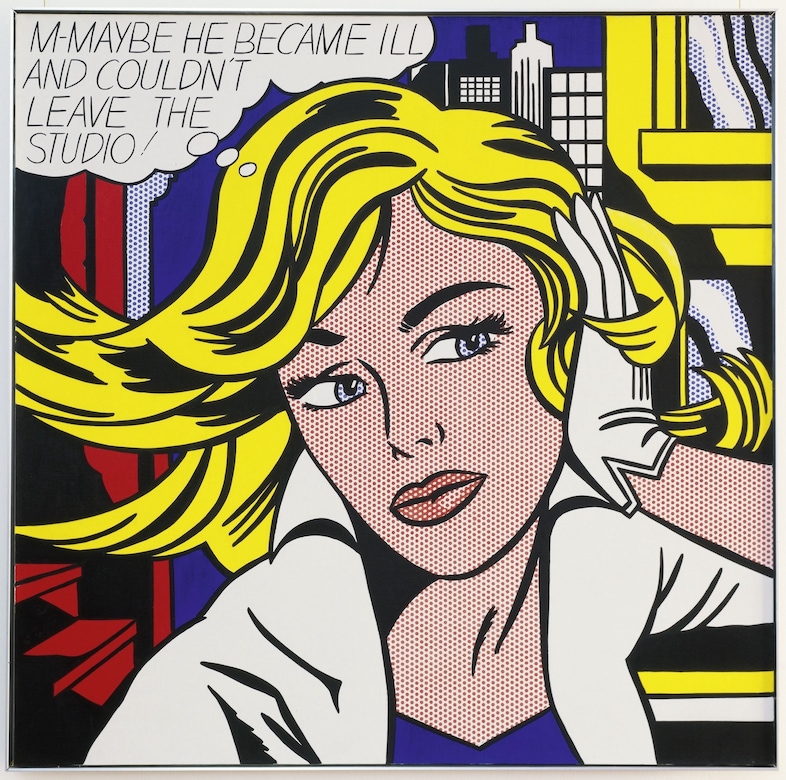
Today, the term "icon" has migrated from the sanctuary to the boardroom and the smartphone screen. We live in an era where iconography is defined by the ephemeral: Marilyn Monroe singing Happy Birthday to JFK in 1962, or the ubiquitous, mass-produced geometry of Andy Warhol’s Campbell’s soup cans. We have reached a point where images are so widely disseminated that they have become part of our collective visual shorthand.
The philosopher Walter Benjamin famously argued in his 1935 essay, The Work of Art in the Age of Mechanical Reproduction, that the mass proliferation of an image strips it of its "aura"—that unique, irreplaceable presence in time and space. Celebrating the Icons of Art posits that the danger today is not that we mistake an image for a god, as the iconoclasts feared, but that we become so accustomed to the image that we stop looking at it entirely.
A Chronology of the Seen and Unseen
The exhibition at Museum Voorlinden does not rely on a standard chronological narrative. Instead, it creates dialogues across eras, linking the history of art through thematic threads rather than a dry timeline.
- 1917–1920: The exhibition reaches back to the early 20th century with Claude Monet’s Blauweregen. These late-career works, depicting wisteria dissolving into ethereal reflections, serve as a foundational study in how artists have historically attempted to capture the fluidity of light and water.
- 1930s–1970s: The show includes works that defined mid-century angst, such as Francis Bacon’s In Memory of George Dyer (1971). Painted in the wake of his lover’s suicide, these works represent the shift from the representational to the raw, psychological distortion that became an icon of human suffering.
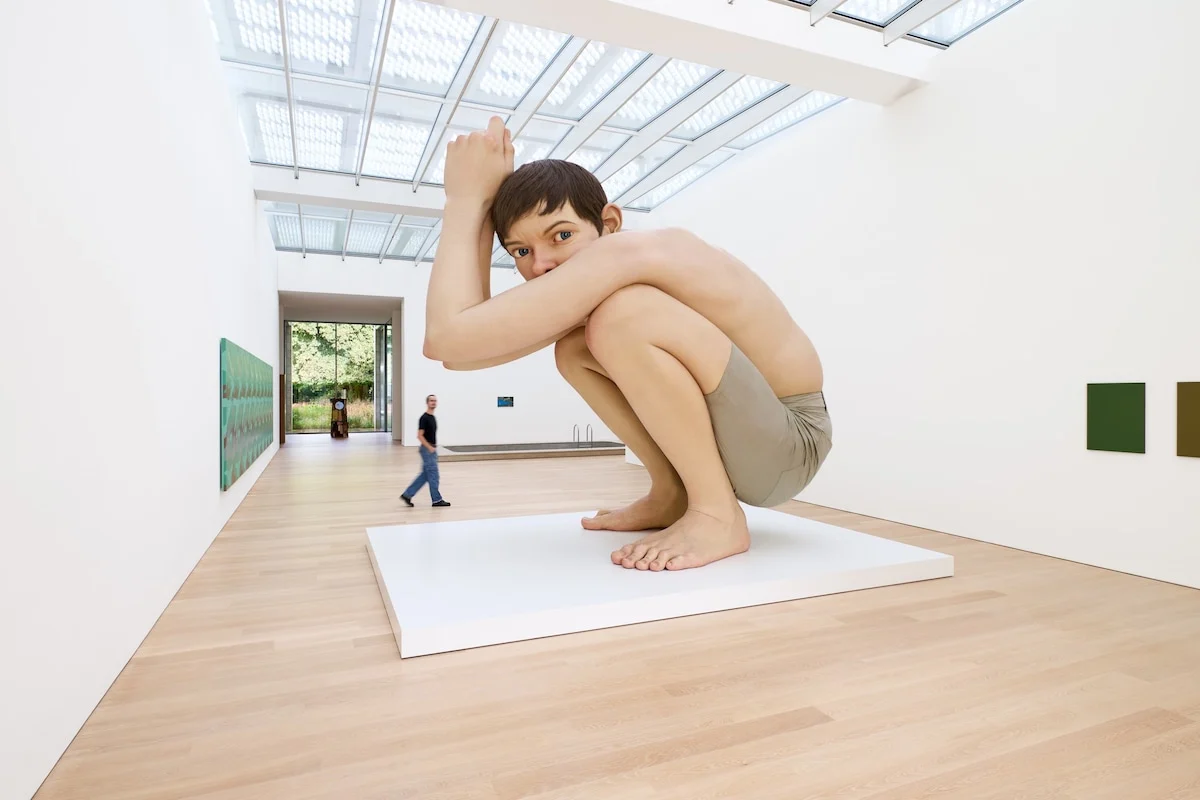
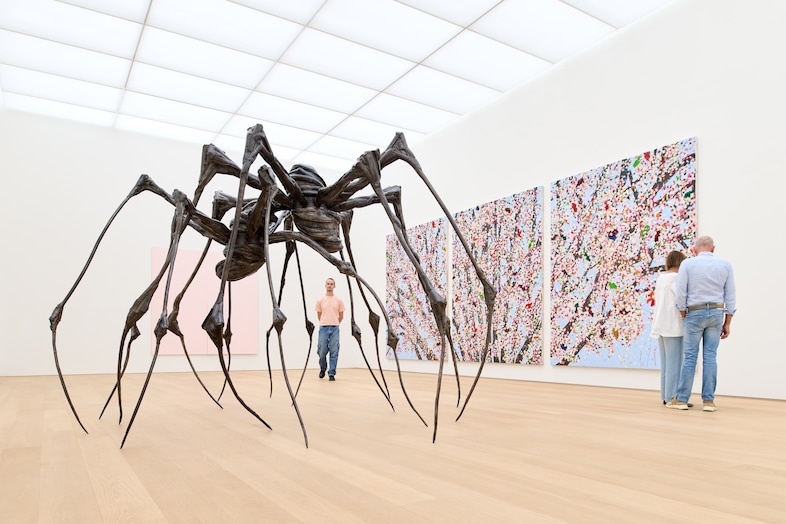
- 1999–2004: The exhibition anchors its contemporary segment with Ron Mueck’s Boy (1999) and Louise Bourgeois’s Spider Couple (2004). These works demonstrate the late-20th-century turn toward the monumental and the psychological, where scale is used to command the viewer’s physical space.
- 2018–2025: Bringing the conversation to the present day, pieces like Damien Hirst’s Hidden Secret Blossom (2019) and Howardena Pindell’s Oceanic Underwater (2025) represent the contemporary preoccupation with the "dot" as a building block of both nature and abstraction.
The Architecture of Perception: Supporting Data
The methodology behind Celebrating the Icons of Art is as much about what is excluded as what is included. Museum director Suzanne Swarts has taken a radical stance against the traditional museum experience. There are no wall texts. There are no long, explanatory plaques detailing the provenance or the historical context of each piece. The lighting is kept uniform and neutral, refusing to privilege one piece over another.
"For us, the most important thing is that you get to have one-on-one time with the artworks," Swarts explains.
The restriction to exactly 100 works is a deliberate psychological strategy. By limiting the scope, the museum aims to prevent "museum fatigue"—the phenomenon where, after three hours of walking, the brain ceases to process new information. The goal is to keep the visitor energized, ensuring that the final work in the exhibition receives the same level of focus as the first.
This focus is further enhanced by the use of a physical booklet, which visitors may consult if they wish to learn more about the works. By making information an "opt-in" experience, the museum forces the visitor to decide for themselves when they are ready to step out of the visual experience and into the intellectual one.
Official Perspectives: The Philosophy of Fluidity
In the galleries, the thematic pairings reveal the museum’s core thesis: that the best way to understand an icon is to see it in relation to its peers.
Perhaps the most striking example is the "Water Room," where Monet’s wisteria is flanked by Roni Horn’s Untitled (2012–13). Horn’s installation consists of five massive cast-glass cylinders, each weighing over four tonnes. The title references a quote from Edith Wharton’s The Age of Innocence describing the engulfing nature of an elderly woman’s flesh as a "flood of lava."
When asked about the intent behind such complex juxtapositions, Suzanne Swarts remarks: "They are all fascinated by how to visualize fluidity. An iconic artwork is something that is fixated in your lens and it doesn’t go away. You see something, you’re touched by it, you take it home, and after a day or maybe even a week, it’s still in your mind. It’s something you take with you over the years."
This sentiment is echoed in the exhibition’s handling of landscape. David Hockney’s Grand Canyon—a massive assembly of 60 individual canvases—is placed in a room with Bruce Nauman’s neon text sculptures. While one deals with the vastness of the physical world and the other with the breakdown of language, both explore the concept of multiple viewpoints. Swarts notes that Hockney himself is convinced that "there is no single point of view on reality."
Implications for the Future of Museums
The success of Celebrating the Icons of Art rests on a gamble: that the contemporary viewer is still capable of deep, slow looking. In an age dominated by the "scroll," where we consume thousands of images daily, the invitation to sit with a work by Bourgeois or Bacon for twenty minutes without the distraction of a smartphone or a wall text is a radical act of resistance.
The implications for the art world are significant. If this exhibition proves successful, it may signal a shift away from the "blockbuster" model—which often relies on crowds and spectacle—toward a model that prioritizes the quality of the encounter.
The exhibition also addresses the inherent danger of icons. When an image is printed on a tote bag or a postcard, it is effectively neutralized; it becomes a signifier of taste rather than a source of wonder. By stripping these works of their commercial context and placing them in a neutral, quiet environment, the Museum Voorlinden effectively "re-auratizes" them.
As we look toward the future of curation, the lesson from Wassenaar is clear: we do not need more images. We need the space to look at the ones we already have with fresh eyes. Whether it is a centuries-old painting or a contemporary sculpture, the power of an icon lies in its ability to surprise us—but only if we are willing to slow down enough to let it.
Celebrating the Icons of Art is not merely an exhibition of masterpieces; it is a challenge to the viewer to become a participant in the history of art, rather than a passive consumer of its most famous fragments. By the time one leaves the museum, the "icons" on display no longer feel like static museum pieces; they feel like living, breathing questions, waiting for the next generation to answer them.
