

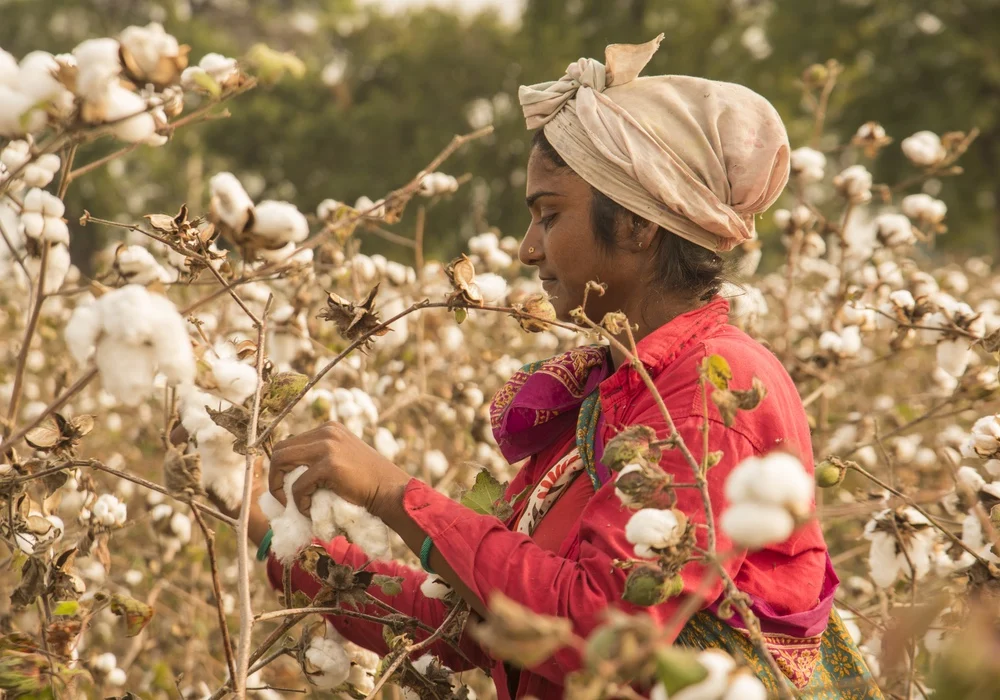
In a landmark shift for the global textile industry, the Better Cotton Initiative (BCI)—the world’s largest cotton sustainability organization—has officially transitioned into a regenerative standards system. This strategic pivot, announced this week, marks a departure from its historical role as a traditional multi-stakeholder nonprofit. By embedding regenerative agriculture at the core of its operations, BCI aims to harmonize the ambitious sustainability targets of global fashion brands with the complex, on-the-ground realities faced by farmers.
The announcement, which coincides with the Textile Exchange Conference in Vancouver, represents the culmination of two years of internal restructuring. It is a calculated move designed to foster a "triple win" for the industry: healthier soil ecosystems, increased climate resilience for farmers, and a more transparent, verifiable supply chain for retailers.
A Chronology of Change: From Better Cotton to Regenerative Standard
The evolution of BCI has not occurred in a vacuum. For years, the organization has navigated the tension between scaling sustainable production and maintaining rigorous, actionable standards.
- 2022–2023: BCI begins a quiet but comprehensive overhaul of its internal Principles and Criteria. The organization engages third-party consultants, including agricultural software firm SureHarvest, to benchmark its framework against emerging regenerative benchmarks like RegenAgri and REEL.
- April 2024: A period of intense public scrutiny follows an exposé by the watchdog group Earthsight. The report alleged that BCI-certified cotton was linked to illegal deforestation and human rights violations in Brazil’s Cerrado region. The crisis forces the organization to accelerate its due diligence reforms.
- April 2024: BCI implements version 3.2 of its standards, which formally integrates regenerative requirements.
- Late 2024–Early 2025: BCI acquires the "Co:Farm" technology platform from agritech firm Materra, signaling a move toward digital-first supply chain transparency.
- October 2024: The formal launch of the Regenerative Standards System at the Textile Exchange Conference.
Defining the New Paradigm: Regenerative vs. Organic
To understand the significance of this shift, one must differentiate between the common vernacular of sustainable fashion. While "organic" cotton is defined by the prohibition of synthetic inputs, "regenerative" agriculture is an outcome-based philosophy.
Proponents often describe regenerative farming as "organic plus," though experts caution that this is a simplification. Organic certification is input-focused, whereas the regenerative model championed by BCI prioritizes the restoration of natural capital: soil health, biodiversity, water retention, and carbon sequestration.
Critically, the BCI model recognizes the pragmatic necessity of flexibility. Because regenerative agriculture lacks a singular global legal definition, BCI allows for a transitional approach. Farmers can continue to utilize synthetic inputs while moving toward regenerative practices like no-till farming and cover cropping, provided they meet strict criteria for integrated pest management and demonstrate a clear phase-out of the most highly hazardous pesticides. This flexibility is intended to prevent the "exclusivity" trap of organic farming, which often leaves smallholder farmers behind.
Data-Driven Agriculture: The Co:Farm Acquisition
Central to BCI’s new strategy is the acquisition of the technology team behind Co:Farm. For years, BCI has faced criticism regarding the "last mile" of data collection—the difficulty of verifying exactly what happens on millions of individual smallholder farms.
By integrating Co:Farm’s digital infrastructure, BCI aims to replace manual reporting with a streamlined, tech-enabled data pipeline. This infrastructure is intended to reduce the administrative burden on farmers while providing brands with the "verifiable results" they require to satisfy tightening ESG (Environmental, Social, and Governance) reporting mandates.
"Very few organizations can take an innovation proven with 10,000 farmers and scale it across one of the world’s largest farmer networks," noted Alia Malik, Chief Commercial Officer at BCI. The goal is to move from anecdotal sustainability to a system where every bale of cotton carries a digital fingerprint of its regenerative impact.
Official Perspectives and the Quest for Credibility
The shift to a regenerative system is, in many ways, a defensive and offensive maneuver. The organization has had to grapple with the "Earthsight effect"—the realization that its certification is only as strong as its weakest link in the field.
Nick Weatherill, CEO of BCI, frames the transition as an economic necessity for the industry. "When nature thrives, farmers thrive," Weatherill stated. "When retailers and brands support those conditions through their sourcing and investment, they help build more resilient supply chains and future-proof the supply of cotton."
This sentiment is echoed by the industry’s need for "credible guidance." In the wake of the 2024 controversies, BCI has been forced to become more transparent. Alan McClay, former CEO of BCI, emphasized following the Earthsight incident that the organization "welcomes the scrutiny" of watchdogs, as it exposes the gaps between global policy and local regulatory oversight. By aligning with standards reviewed by SureHarvest, BCI is attempting to move its credibility from "trust-based" to "verification-based."
Implications for the Fashion Industry
The implications of this pivot are significant for the global fashion retail sector.
1. The Rise of "Impact Sourcing"
Brands can no longer simply buy a "Better Cotton" label and claim success. Under the new system, retailers will be expected to provide financial support and investment into the regenerative transition of their supply chains. The project in Gujarat, India—where 12,000 farmers are receiving incentive payments for regenerative practices—serves as the blueprint. This represents a move toward "impact sourcing," where the brand is directly linked to the environmental improvement of the farm.
2. Bridging the Compliance Gap
With the European Union and other jurisdictions implementing strict supply chain due diligence laws, the "mass balance" model that BCI historically relied upon is coming under fire. By tightening its standards and adopting regenerative criteria, BCI is attempting to insulate its member brands from the legal risks of greenwashing.
3. The Challenge of Scale
The primary hurdle for BCI remains the sheer scale of its network. Managing regenerative transitions for millions of farmers across vastly different climates requires more than just a software platform; it requires an overhaul of the entire incentive structure for growers. If the regenerative model is perceived as too expensive or technically demanding for the average smallholder, BCI risks creating a two-tier system where only the most prosperous farmers can participate.
Conclusion: A New Standard for a Fragile Industry
The transition of BCI into a regenerative standards system is a recognition that the "business as usual" model of sustainable cotton is no longer sufficient. Climate volatility, soil degradation, and increasing pressure for radical transparency have forced the organization to evolve.
Whether this shift will be enough to satisfy critics and effectively reverse the environmental damage associated with global cotton production remains to be seen. However, by formalizing its regenerative criteria, acquiring critical agritech infrastructure, and aligning with external benchmarks, BCI has set a new, higher bar for itself. The industry, watching from the halls of the Textile Exchange Conference, will now be looking for the only metric that truly matters: the measurable, year-over-year improvement of the soil itself.
