

The Frieze Masters fair in London has long maintained a reputation for a certain kind of refined, historical austerity. With its muted color palettes, carefully curated "period" booths, and a demographic that often leans toward the conservative tastes of high-end private collectors, the event is rarely associated with the raw, pulsating heart of sexual subversion. It is, to many, the older, wealthier, and more buttoned-up sibling of the Frieze London contemporary fair—an environment where one expects to find Old Masters, rare antiquities, and the hushed, reverent atmosphere of a private study.
However, the 2026 edition of the fair has defied this expectation through a transformative intervention: Queering Modernism: Visual Languages of the 20th Century. Curated by Anke Kempkes, this project has turned the fair into an unexpected landscape of hidden desires, coded identities, and the long-overlooked queer histories of the modernist canon. By weaving a trail of yellow gallery labels throughout the tent, Kempkes has invited visitors to embark on a "gay art-historical egg hunt," challenging the assumption that the market is inherently hostile to the radical histories of the queer experience.
The Architecture of Erasure and Recovery
To understand the weight of this intervention, one must consider the historical context. As Kempkes notes, the market often serves as a double-edged sword. While it has historically been a tool for the commodification of art, it also acts as a primary vehicle for survival. "The market is inevitably part of the framework," Kempkes explains. "Galleries bring specialist networks and the possibility to trace works that have disappeared from public view. In that sense, the market can become another mechanism of art-historical recovery."
The curatorial premise of the exhibition—and the broader selection of artists featured—is rooted in the work of historian Jonathan D. Katz, who famously described modernism and homosexuality as "fraternal twins." This is not merely an observation of chronological overlap, but a deeper structural inquiry into how both movements emerged as responses to the constraints of the 20th century. Both relied on the development of subcultures, the deployment of coded signals to bypass societal censorship, and a self-conscious rejection of the rigid conventions imposed by the dominant culture.
Chronology: A Trajectory of Queer Expression
The artists selected for this showcase provide a window into how queer identity has navigated the shifting tides of the 20th century, from the interwar period to the height of the AIDS crisis.
Glyn Philpot (1884–1937): The Art of Historical Drag
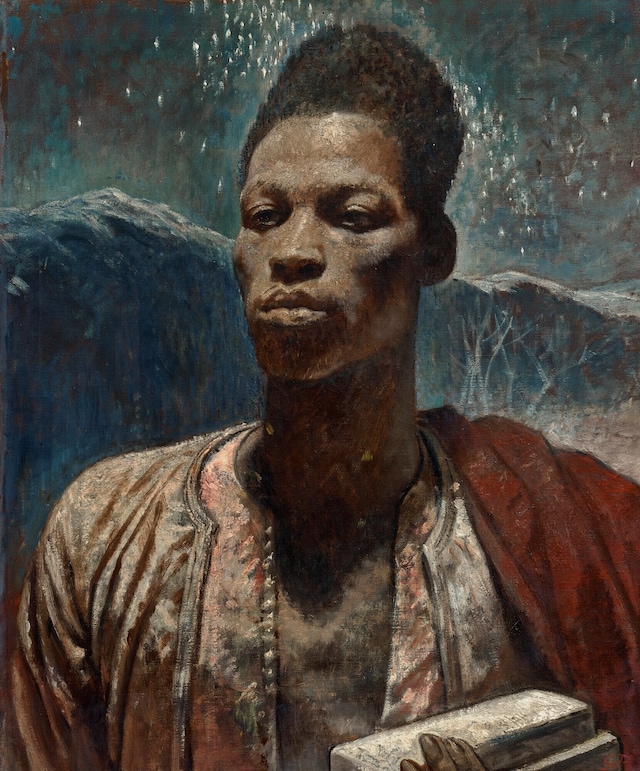
Philpot, an Edwardian portraitist of immense technical skill, is a primary example of how artists utilized canonical forms to mask dissident desire. At the Agnews booth, his 1929 portrait of Henry Thomas as King Balthazar serves as a cornerstone of the exhibition. Thomas, a Jamaican immigrant, was not only Philpot’s model but his romantic interest—a relationship that navigated the fraught colonial and social hierarchies of 1920s Britain. Meanwhile, at Jonathan Clark Fine Art, his 1923 work Penelope demonstrates how Philpot could infuse classical mythology with homoerotic tension. For Philpot, mythology was not an escape, but a suit of armor—a "historical drag" that allowed him to encode queer longing within the safe confines of tradition.
Claude Cahun (1894–1954): The Fluidity of the Self
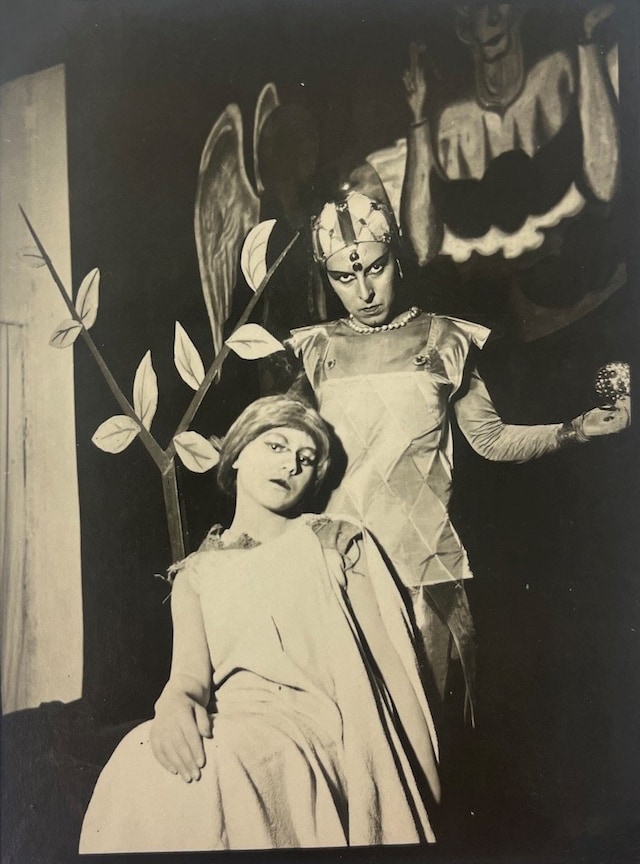
At the Alberta Pane Gallery, the focus shifts to the radical performativity of Claude Cahun. Born Lucy Schwob, Cahun’s work—often created in collaboration with their partner Marcel Moore—represents a total rejection of the "stable self." Through masquerade, costume, and the deliberate doubling of images, Cahun deconstructed the binary nature of gender long before it became a standard academic topic. Their work is presented in dialogue with Judy Chicago, highlighting the lineage of artists who utilized name changes and identity-shifting as acts of profound political autonomy.
Luis Fernando Zapata (1951–1994): Transcendence in the Face of Crisis
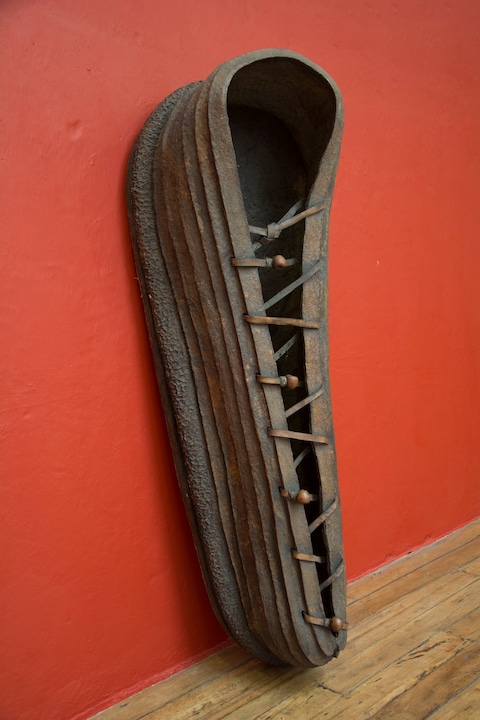
The inclusion of Luis Fernando Zapata serves as a stark reminder of the tragic fragility of queer legacies. Represented by both Alonso Garcés Galería and Elvira Moreno Gallery, Zapata’s work moved from ancient Mesoamerican influences toward a deeply personal visual language of mortality. Following his HIV diagnosis in the mid-1980s, his work—particularly his series of 12 sarcophagi—became a vessel for both grief and cosmic rebirth. Zapata’s death at 43 mirrors the systemic loss of an entire generation of queer artists, many of whom, living outside traditional family structures, left no heirs to guard their archives.
Ruth Bernhard (1905–2006): The Intimacy of the Gaze
Galerie Albrecht presents the work of Ruth Bernhard, whose photograph Moonrise (1962) challenges the traditional boundaries of the female nude. Bernhard, who integrated into New York’s lesbian subculture in the 1920s, utilized the modernist focus on form to create an intensely intimate, sensory dialogue. Her work demonstrates that the study of form need not be cold or detached; instead, it can be a conduit for the expression of female desire.
Alice Neel (1900–1984): The Chronicler of Communities
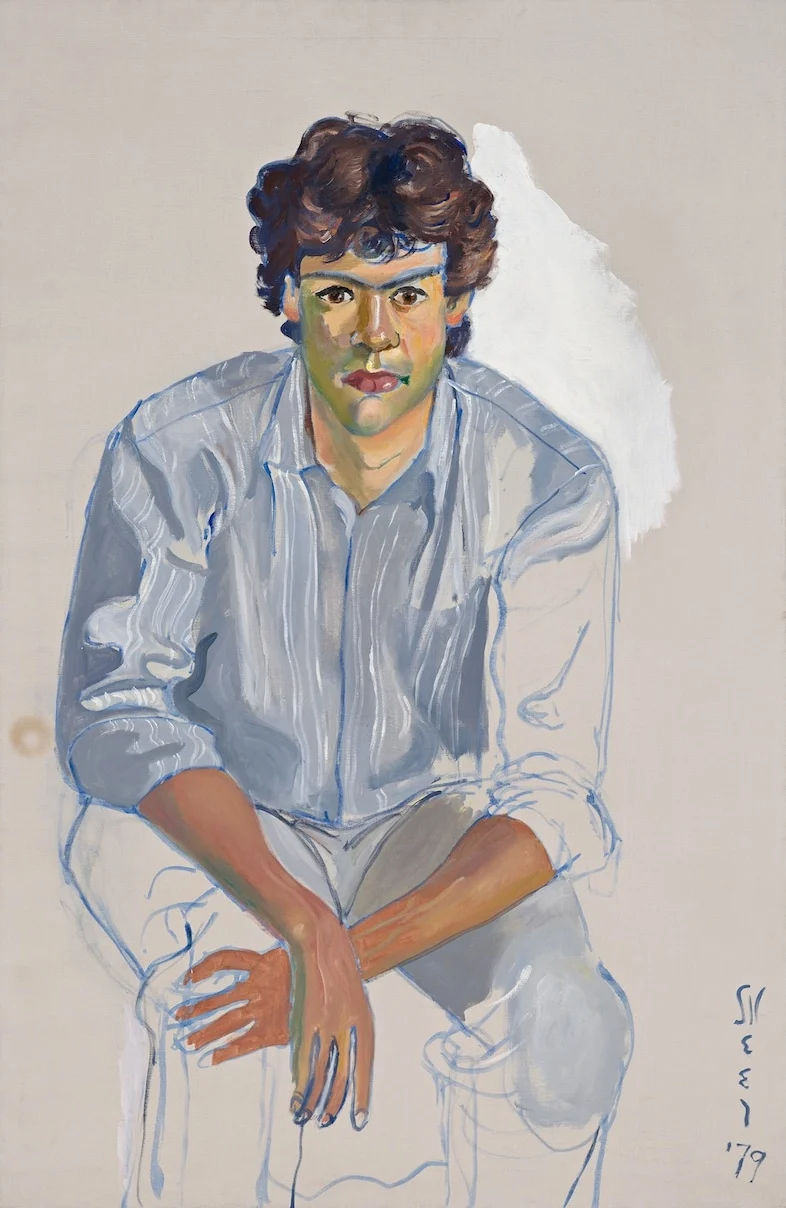
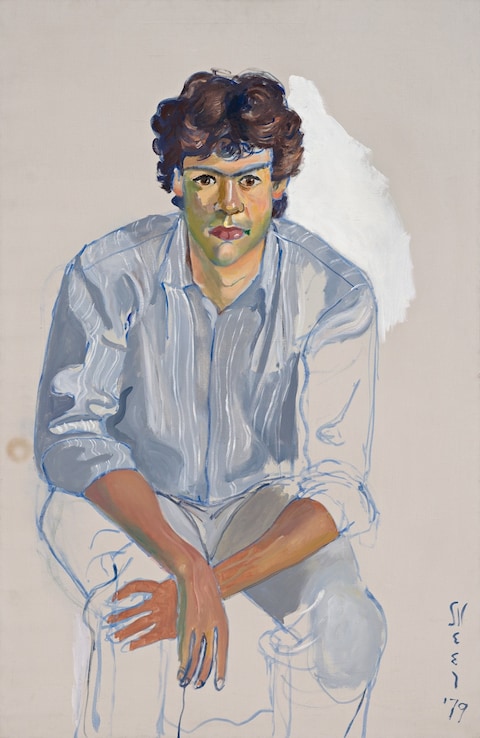
Finally, Alice Neel’s presence at the fair—via a joint presentation by Victoria Miro and David Zwirner—anchors the exhibition in the postwar New York scene. Neel’s portraits of figures like Allen Ginsberg and Jackie Curtis are celebrated not just for their aesthetic brilliance, but for their psychological directness. Neel’s ability to capture the specificity of the individual while documenting the queer communities that defined 20th-century intellectual life remains unmatched.
Implications for the Modern Art Market
The implications of Kempkes’ project extend far beyond the tent at Regent’s Park. By flagging these works, Frieze Masters has effectively forced a conversation about the "biographical footnote." When queerness is treated as an optional detail, the art-historical record becomes sanitized and incomplete. When it is treated as an "expansive analytical category," as Kempkes suggests, the entire history of modernism is suddenly illuminated with new, complex colors.
The economic reality is that this "queering" of the fair also impacts the market value and institutional interest in these artists. By bringing these works into the spotlight of a major fair, the project encourages collectors and institutions to treat queer provenance as a vital, rather than secondary, component of a work’s history.
Official Perspectives and Future Directions
The fair’s decision to support this initiative marks a shift in institutional strategy. While art fairs have traditionally focused on the "new" and the "now," the pivot toward historical recovery at Frieze Masters suggests a maturation of the market. There is a growing appetite among younger collectors and scholars to engage with the marginalized histories of the 20th century.
However, as Kempkes acknowledges, the work is far from finished. The challenge remains in finding the thousands of artists whose works have been dispersed, erased, or ignored due to the specific vulnerabilities of queer lives. The "archival loss" mentioned in relation to the AIDS crisis is not a closed chapter; it is an ongoing project of excavation.
Conclusion: Reading the Codes
Queering Modernism at Frieze Masters is a masterclass in reading between the lines. It teaches the viewer that the "beige" of modernism was never actually neutral. It was a space where artists were forced to hide in plain sight, using codes that were designed to signal belonging to those who knew how to look.
For the visitor wandering through the fair, the experience is transformative. The objects on display—a photograph by Bernhard, a portrait by Philpot, a sarcophagus by Zapata—are no longer just static artifacts. They are pieces of a puzzle, fragments of a history that refused to stay buried. In the process of uncovering these lives, the fair has done something rare: it has replaced the passive consumption of art with an active, urgent engagement with the past. As we leave the tent and head back into the park, the modernist canon feels less like a fixed, dusty monument and more like a living, breathing, and undeniably queer conversation.
