

Eight years after the global cultural phenomenon that was Burning (2018), the celebrated South Korean auteur Lee Chang-dong has returned to the cinematic fray. His latest work, Possible Love—which recently secured the Silver Lion Grand Jury Prize—is a searing, meticulous chamber piece that explores the intersections of class envy, corporate trauma, and the elusive nature of human connection in an age of late-stage capitalism. Premiering to critical acclaim and noted for its unexpected moments of dark, poignant humor, Possible Love reaffirms Lee’s position as a master of the human condition.
The Narrative Foundation: A Tale of Two Households
The film functions as a structural quartet, centering on the collision of two couples from disparate socioeconomic strata. The narrative is ignited by a seemingly trivial, yet psychologically weighted "meet-cute": Mi-ok (portrayed by the veteran Jeon Do-yeon), the wife of a recently laid-off factory worker, loses her wedding ring in a sterile car park. She is rescued by Sang-woo (Jo In-sung), a dashing, affluent business magnate.
"I would love for it to be in a romantic comedy," Jeon Do-yeon mused during the London Film Festival. "But you can really see in this scene the extreme degree of her anxiety and fear—not just of losing an object, but of what it means to lose her husband, her family, and her tether to stability."
This chance encounter acts as the catalyst for a treacherous entanglement. Co-written by Lee and his long-term collaborator Oh Jung-mi, the script draws loose inspiration from the 2009 labour strikes in South Korea, a period of profound civil unrest that has become a recurring thematic anchor in contemporary Korean cinema. Two years prior to the film’s opening, Mi-ok’s husband, Ho-seok (played by Sul Kyung-gu), was traumatically dismissed during a mass layoff preceding a corporate acquisition. The household is left in a state of suspended grief, with Mi-ok forced to assume the role of primary breadwinner.
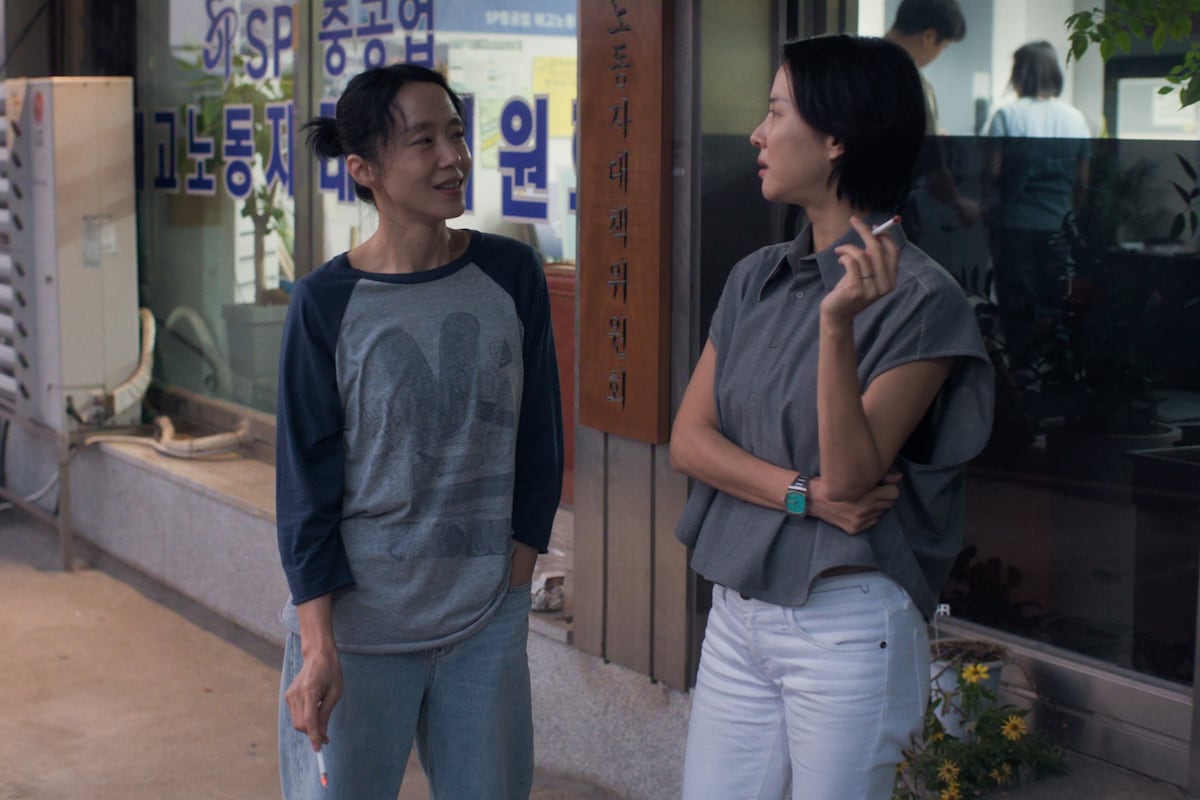
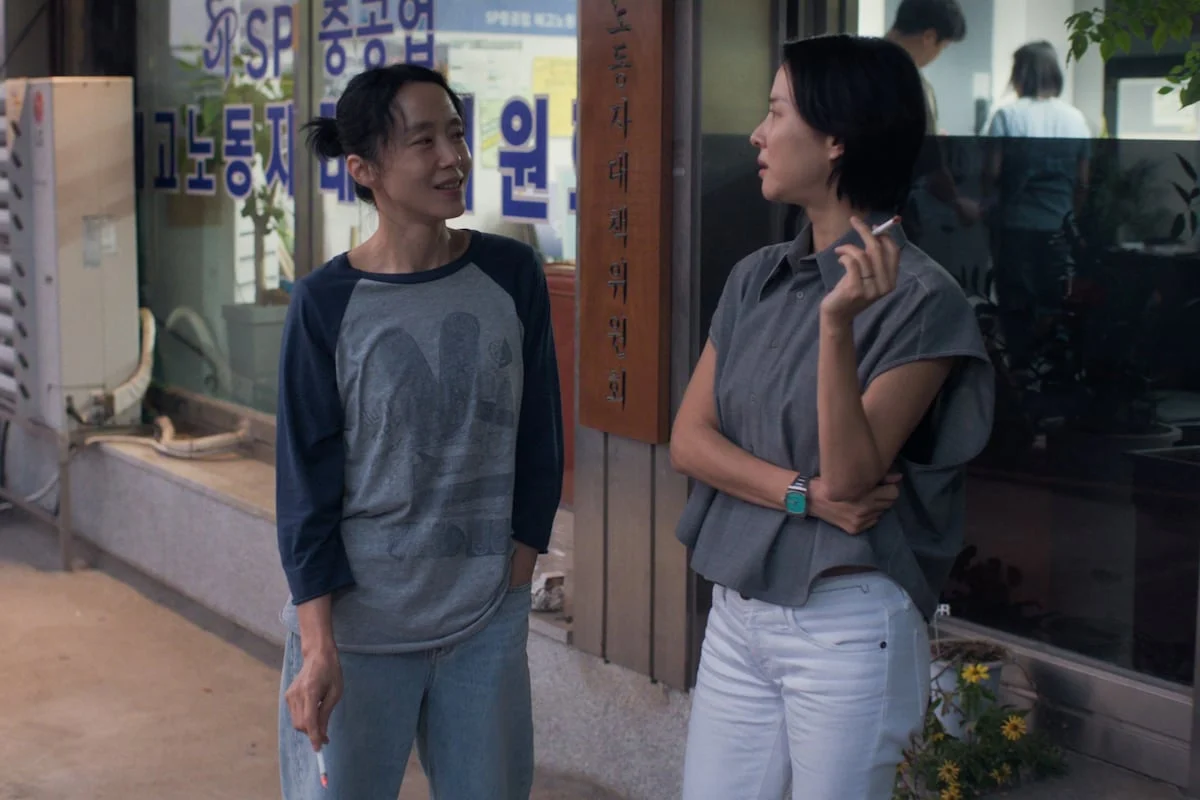
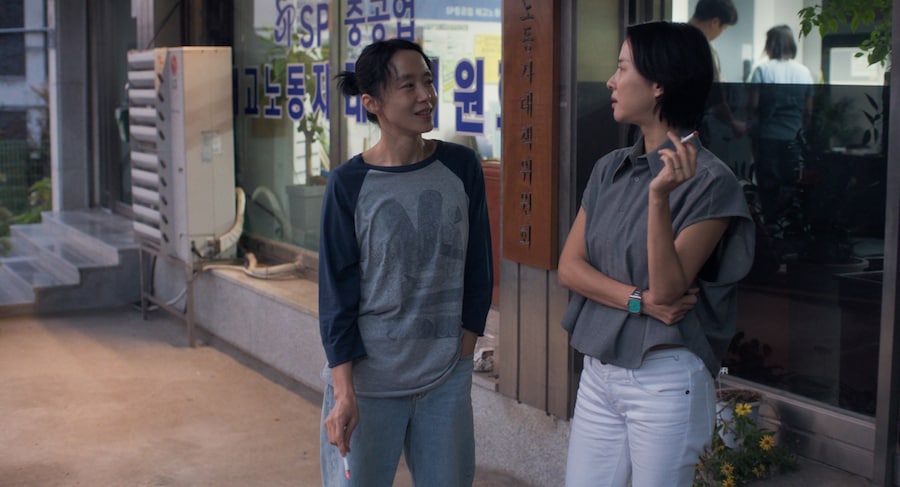
The dynamic shifts when Ye-ji (Cho Yeo-jeong), a documentary filmmaker and Sang-woo’s wife, approaches the couple with a request to feature them in her upcoming project concerning the rights of laborers. While Ho-seok remains deeply withdrawn and resistant, Mi-ok views the camera as a potential lifeline. "She is trying to borrow the strength of Ye-ji and the strength of the documentary in order to get some help for her husband," Jeon explains. It is a desperate act of agency, a bid for visibility in a system designed to render them invisible.
A Chronology of Artistic Intent
The trajectory of Possible Love has been a long, deliberate process. The film spent nearly two decades in development, with Lee initially harboring significant hesitation about his right to tell the story of individuals whose lived experiences were so far removed from his own.
The breakthrough came when co-writer Oh Jung-mi suggested the framing device of a documentary-within-a-film. This narrative layer allowed Lee to pivot from a traditional drama to a meta-commentary on the ethics of observation. For Cho Yeo-jeong, the experience of playing a filmmaker who is constantly documenting others was transformative. "I think it directly made me live in that character," she notes. "The camera became an extension of my own desire to understand, or perhaps to exploit, the pain of others."
The film was also deeply influenced by the cinematic legacy of Krzysztof Kieślowski. Initially conceived as a modern homage to Dekalog Ten, the film carries the weight of the Ten Commandments. Lee explains the choice: "’Thou shalt not covet’ is about human desire, whereas all the other nine commandments are about the human act. I thought it would be intriguing to think about what it means to not covet in the capitalist society that we live in today."
Supporting Data: Class, Corporate Trauma, and Symbolism
Possible Love is not merely a drama; it is a clinical dissection of class friction. Lee utilizes his characters as symbolic vessels for the anxieties of the era. Sang-woo, the suave businessman, is framed as "capitalism incarnate." Early in the film, Mi-ok compares him to Steve Jobs, the architect of the modern digital dream.
"The technological revolution, symbolized through someone like Jobs, feels like it’s going to solve all of your problems," Lee observes. "It is marketed as all-knowing and liberating. However, when the tech revolution is married with capital, the power it gains is immense. It changes our futures and our daily lives without us even being aware of it. Mi-ok continues to have that fantasy, but she is living in the shadow of the damage it has caused her husband."
The "old-world" counterpart to this digital-age titan is Ho-seok. Sul Kyung-gu’s portrayal is grounded in a stoic, traditional masculinity that is rapidly becoming obsolete in the face of modern corporate restructuring. "When I first encountered this story, I felt that Ho-seok was just like me—not as an actor, but just like a typical Korean male in East Asian society," Sul states. "Many have commented that Ho-seok is just like their dad, who worked really hard for his family. Regardless of your nationality, I think he resonates with men who feel they have been left behind."
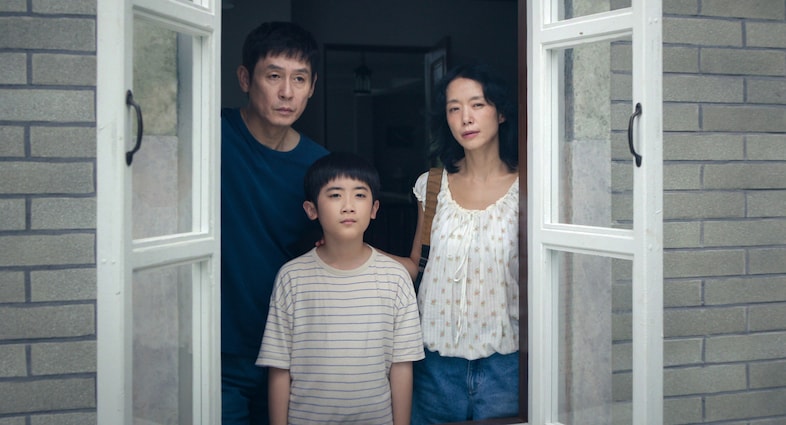
The trauma is further internalized by the next generation. Cheol, the couple’s ten-year-old son, acts as the film’s silent witness. His lack of facial expression throughout the narrative is a deliberate choice by Lee and Sul—a visual representation of the psychological stunting that occurs when children witness the slow erosion of their parents’ dignity.
Official Perspectives: The Director’s Dilemma
Lee Chang-dong’s perspective on his own work is one of profound humility, bordering on self-doubt. The director has frequently grappled with the ethics of storytelling, particularly when those stories involve the suffering of others.
"The character Ye-ji is closest to my own identity," Lee admits. "I always find myself trying to love the people whose story I am telling, and I always hope to be on their side. I constantly ask myself: is it possible to be on their side, and am I worthy of telling their story?"
This question—is love even possible?—is the film’s beating heart. Lee suggests that this is a question not only for filmmakers but for anyone who attempts to document, narrate, or engage with the lives of their fellow human beings. By framing the film as a story about the impossibility of full understanding, Lee manages to create a work that is both intimately personal and broadly sociopolitical.
The Implications: A Mirror to Contemporary Society
The implications of Possible Love extend well beyond the confines of the Korean film industry. By placing the "Tenth Commandment" at the center of his narrative, Lee asks the audience to look at their own relationship with desire.

The film’s reception at international festivals has been characterized by a surprising reaction: laughter. Despite the heavy subject matter, audiences are finding the absurdity of the characters’ situations to be a source of dark comedy. Lee finds this revelation significant: "Going through many film festivals recently, I realized that audiences tend to laugh a lot more than I expected—especially the bigger the screen. Perhaps that laughter is a defense mechanism against the realization of how incongruent our lives have become."
As the film prepares for its general release on October 23, it stands as a reminder of the power of cinema to act as a diagnostic tool. Possible Love does not offer easy solutions to the fractures of class or the toxicity of corporate greed. Instead, it offers a mirror. It asks us to consider whether our pursuit of the "possible" is, in fact, the very thing that prevents us from achieving the "human."
In the final assessment, Possible Love is a testament to Lee Chang-dong’s enduring legacy. He has once again crafted a film that is visually arresting, intellectually demanding, and emotionally devastating. It is a work that demands not just to be watched, but to be felt—a lingering, uncomfortable, and deeply necessary fable for the modern age.
