

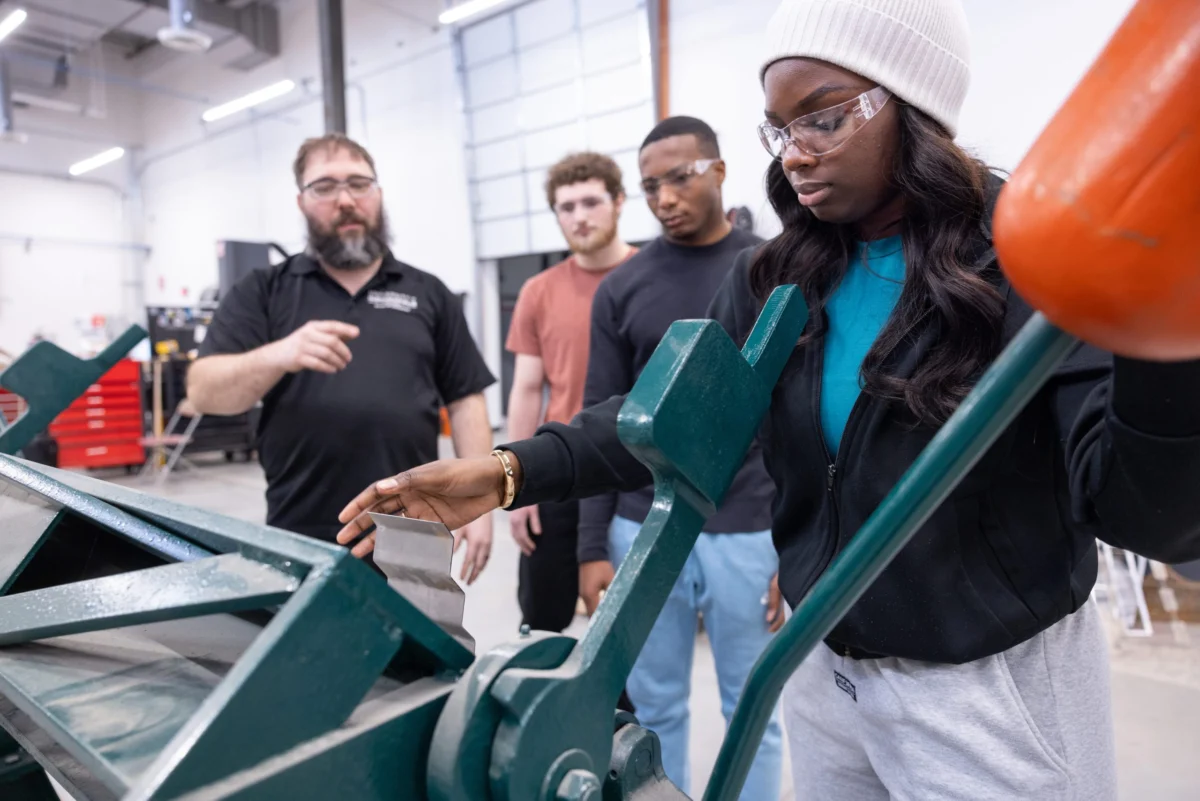
In the affluent, sun-drenched suburbs of Denver, Colorado, a quiet revolution is unfolding. In a district where median family incomes soar past $150,000 and the cultural expectation has long been a straight line from high school graduation to a four-year university, the unthinkable is happening: students are lining up, with their parents’ full support, for trade certifications and vocational training.
This shift marks a departure from the "college-for-all" mantra that has dominated American educational policy for over three decades. While that movement was rooted in the noble ambition of universal upward mobility, the reality of the modern economy has proven far more complex. As high schools across the country begin to pivot, the debate over the future of workforce preparation has moved from the fringes of educational theory to the center of the national dinner-table conversation.
The Cracks in the "College-for-All" Foundation
For generations, the American Dream was inextricably linked to the four-year degree. The prevailing logic was simple: a bachelor’s degree was the primary vehicle for career success, and any deviation from that path was viewed as a failure of ambition. However, the data reveals a systemic disconnect between academic output and economic outcomes.
While roughly 88 percent of college freshmen cite "getting a good job" as a primary motivation for enrollment, the labor market tells a more sobering story. According to recent reports from the Burning Glass Institute, more than half of all college graduates remain underemployed a year after commencement, occupying roles that do not require the degrees they spent four years and tens of thousands of dollars to obtain. Even more concerning is the long-term stagnation: a decade after graduation, 45 percent of those individuals are still working in positions that do not utilize their specialized education.
These statistics do not represent students who "gave up" or dropped out. They represent students who followed the prescribed path—they did everything right—and still found themselves unable to secure a foothold in their intended fields. The problem is not that college lacks inherent value, but that it has been weaponized as an expensive, open-ended "career exploration strategy" that provides no meaningful exit ramp or safety net for those who realize mid-stream that their chosen path is a mismatch.
Chronology of a Failed Consensus
To understand the current pivot, one must look at how the "college-for-all" consensus was forged and why it began to fracture.
- 1990s – Early 2000s: The "college-for-all" movement gained massive political and educational momentum. Fueled by the rise of the knowledge economy, policymakers prioritized degree attainment as the gold standard for global competitiveness.
- 2008 – 2012: The Great Recession acted as a catalyst for disillusionment. As even college graduates faced historic unemployment rates, the ROI (Return on Investment) of higher education came under intense public scrutiny.
- 2015 – 2020: Disparities in student loan debt began to dominate national political discourse. Simultaneously, a massive "skills gap" emerged; while graduates struggled to find work, employers in sectors like advanced manufacturing, healthcare, and logistics reported being unable to fill hundreds of thousands of open positions.
- 2021 – Present: The post-pandemic labor market accelerated the trend. With high inflation and shifting workplace needs, the practical, immediate utility of trade certifications and associate degrees gained renewed prestige.
Supporting Data: The Economic Reality of Alternatives
The narrative that a four-year degree is the only path to a middle-class existence is increasingly contradicted by economic reality. Georgetown University’s Center on Education and the Workforce has identified an annual shortage of nearly 712,000 workers with certificates and associate degrees in fields where non-degree holders can earn upwards of $55,000 annually.
The financial calculus, when viewed through the lens of ROI, is nuanced. Data shows that in the first ten years post-completion, associate degrees and industry-recognized certificates often deliver a significantly higher return on investment than bachelor’s degrees. While the bachelor’s degree typically regains the advantage at the 15-year mark and beyond, for students who need immediate economic traction, the shorter-term credential is often the more pragmatic, less risky first step.
The current economic landscape is defined by this binary: a surplus of underemployed degree holders and a crippling, record-breaking shortage of skilled workers. The jobs are present; the pathways to them, however, remain obstructed by outdated social stigmas.
The Denver Model: Innovation in Practice
In the Cherry Creek school district, the "college-for-all" dogma is being replaced by a "career-with-purpose" model. The Cherry Creek Innovation Campus (CCIC) allows high school students to split their time between core academic requirements and hands-on, industry-aligned training.
Students here have access to a diverse array of pathways: computer science, aviation, healthcare, and construction management. When visiting the campus, one sees students pursuing varied goals—some intend to use these certifications as a springboard for engineering degrees, while others plan to enter the workforce directly as specialized technicians or chefs. The common thread is not a rejection of college, but the rejection of aimlessness. By gaining real-world exposure, these students enter higher education with a defined trajectory rather than a vague hope.
The Human Cost: The "Lost Phase"
The consequences of failing to provide these pathways are best seen in the stories of students who fall through the cracks. Consider the case of a student from Oakland who pursued a bachelor of science in nursing, dreaming of a career in healthcare. Having never been exposed to the actual daily reality of clinical work, she spent two years in the program before realizing it was not her calling.
The result was a two-year "lost phase" involving a transfer to community college and a stint in the service industry—all while accumulating student loan debt. This was not a failure of intelligence or grit; it was a failure of the system to provide the necessary "pre-flight" experience that would have allowed her to course-correct before the financial and emotional toll had mounted.
Implications for the Future: A New Standard
The stigma surrounding "vocational training"—often unfairly associated with the underfunded "shop class" of the mid-20th century—is a vestige of a bygone era. Today’s training programs look radically different.
For instance, the maritime career exploration program in the San Francisco Bay Area provides students with hands-on training in ship engineering and port management, often leading to six-figure salaries in an AI-driven economy. Programs like this prove that technical training can be both academically rigorous and economically lucrative.
If we are to align our educational system with the demands of the 21st-century economy, we must adopt a new, ambitious standard: Every high school student should have the opportunity to graduate with a diploma and an industry-recognized credential or documented work experience.
The Road Ahead
- Breaking the Binary: We must stop treating "college" and "career" as separate tracks. The most successful students are those who see the synthesis between the two.
- Early Exposure: Career exploration should not begin in college; it should be integrated into the high school curriculum, allowing students to "test drive" professions before committing tens of thousands of dollars to a degree.
- Institutional Responsibility: Colleges and high schools must collaborate to create formal "on-ramps" where trade certifications earn students credit toward future degrees, ensuring that education remains cumulative rather than repetitive.
The goal is not to discourage college, but to honor the choice to skip it while giving those who do attend a greater sense of purpose. By providing students with clarity, skills, and tangible credentials, we can bridge the gap between education and the workforce. In doing so, we don’t just solve a labor shortage; we provide the next generation with the tools to navigate a volatile economy with confidence. Everyone wins when we stop measuring success by the piece of paper on the wall and start measuring it by the ability to thrive in a career.
