

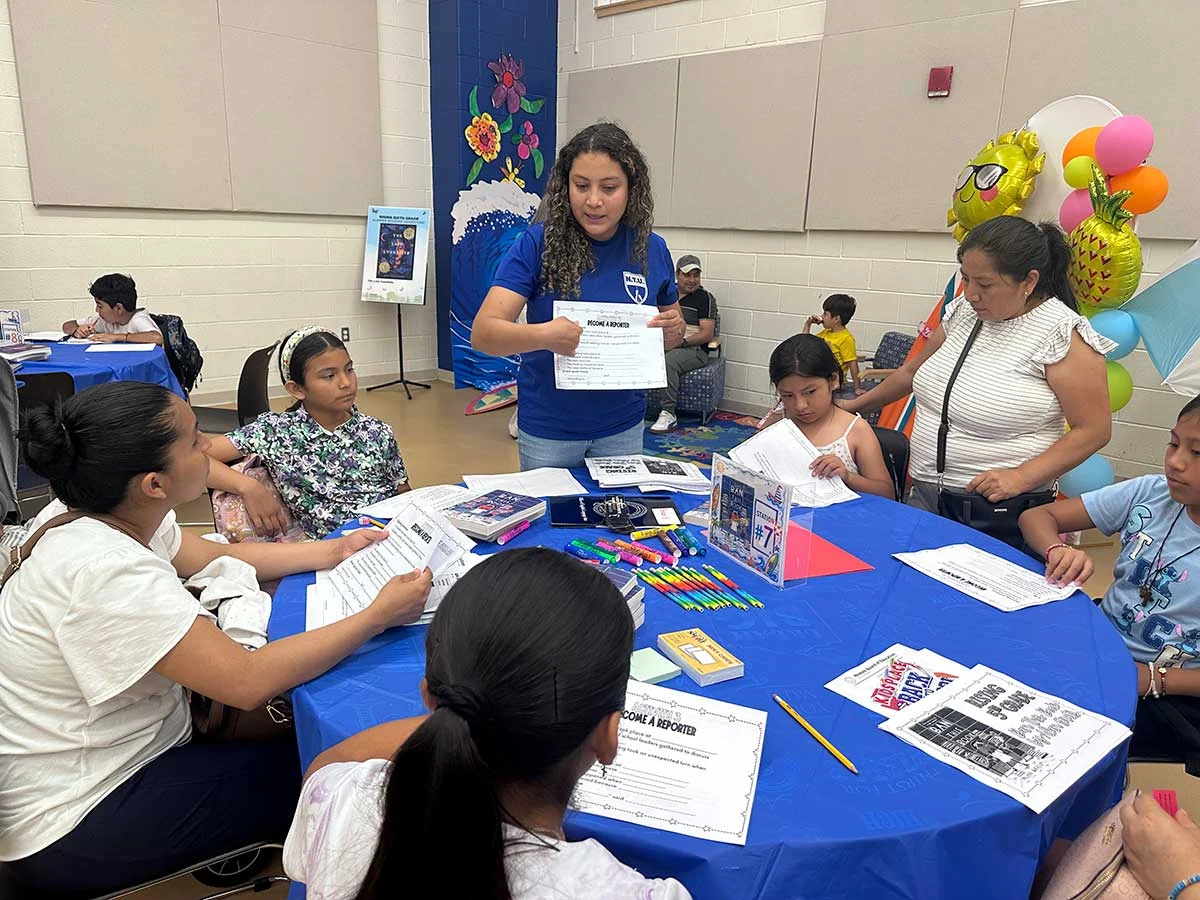
NEWARK, N.J. — As the final weeks of summer vacation wane, the halls of Newark’s public schools are far from dormant. Instead of the quiet stillness usually associated with August, classrooms at the Oliver Street School and the Thirteenth Avenue School have been buzzing with the sounds of intellectual discovery. Despite inclement weather and the typical distractions of the summer break, hundreds of students and their families have converged on district campuses for a pivotal initiative: the Newark Public Schools (NPS) Family Summer Literacy Nights.
This district-wide program, designed to transform mandatory summer reading from a solitary task into a collaborative, community-building experience, serves as a cornerstone of the district’s strategy to prevent the "summer slide" and ensure a seamless transition into the new academic year.
The Core Mission: Transforming Assignments into Engagement
For many students, summer reading requirements can feel like an arduous, disconnected hurdle. The Family Summer Literacy Nights are engineered to dismantle that perception. By providing a structured, supportive environment, the district is turning these assignments into gateways for creativity and critical thinking.
During these evening events, the traditional reading list—comprised of carefully curated texts—is brought to life. Students engage in deep-dive discussions, participate in writing workshops, and embark on creative projects that reflect their understanding of the literature. The district’s approach is tripartite: each book is paired with two assignments focused on reading comprehension and analytical writing, alongside a third, more expansive project that encourages students to showcase their learning in a personalized, creative format.
A Chronology of Connection: The Summer Literacy Series
The initiative is structured as a three-part series, strategically scheduled in the final weeks before the September 8th return to school.
- The Launch: The series kicked off at the Oliver Street School. Despite a stormy forecast that threatened to dampen attendance, nearly 100 students and their families braved the weather, signaling a strong commitment from the community to academic excellence.
- The Second Wave: The momentum continued at the Thirteenth Avenue School, where participation grew to 118 students and their families. The energy at these sessions has been palpable, with parents working alongside their children to navigate complex texts and project requirements.
- The Finale: The final installment of the series is set to take place at the Elliott Street Elementary School, starting at 5:30 p.m. this evening, serving as the capstone for this district-wide effort to ensure that no student enters the new year feeling unprepared.
Bridging the Gap: Insights from District Leadership
The success of the program is rooted in its accessibility. By providing families with direct, in-person access to educators, the district is removing the barriers that often lead to frustration during summer assignments.
"Families had somewhere to come where we could explain the assignments and help students get a significant portion of the work completed," said Jazleen Othman, District Director of English Language Arts Education. "When students return on September 8th, they will feel empowered to present their projects and confident about starting the first day of school."
Othman noted that the transition from passive reading to active creation is the program’s greatest triumph. "The summer reading list is really coming to life," she explained. "Students are not only reading the books; they are thinking deeply about them, expressing their ideas through writing and creating projects that demonstrate what they have learned."
The Superintendent’s Vision: A Culture of Continuous Learning
Superintendent León has been a vocal proponent of the program, framing it not just as a compliance measure for summer work, but as a vital component of the district’s holistic approach to student well-being and academic achievement.
"Summer learning should give students the confidence to return to school ready to succeed," Superintendent León stated. "By bringing our teachers, students, and families together, these literacy nights provide the guidance and resources students need while reinforcing a love of reading that extends well beyond the classroom."
This sentiment is echoed by the Board of Education. President Hasani K. Council highlighted the collaborative nature of the initiative, noting that the partnership between the home and the school is the most significant indicator of student success. "The Board of Education is proud to support programs that make learning accessible to students and families throughout the summer," Council said. "Family Summer Literacy Nights demonstrate the power of our schools and families working together to prepare every student for a strong start to the new school year."
On the Ground: Perspectives from the School Level
The logistics of hosting these events require significant coordination and enthusiasm from local school leadership. Ivone Cardoso-Neto, who serves as a Summer Principal for the program and a vice principal at Oliver Street School during the regular academic year, has been at the forefront of these efforts.
"This is an opportunity for families to engage with our faculty and for students to work on their summer reading assignments in a supportive environment," Cardoso-Neto observed. "We are always promoting a love of reading, and it is wonderful to see our students and families learning together."
Cardoso-Neto emphasized that the Oliver Street School has remained an active hub throughout the summer. By keeping the school doors open, the district provides a sanctuary for students to explore new interests and maintain a vital connection to their school community. "It is a great day whenever our students are here and our scholars are learning," she added. "We want them to remain active, engaged, and excited about learning throughout the summer."
Supporting Data and Incentives
Beyond the pedagogical support, the district has gone to great lengths to ensure that the events are rewarding. Recognizing that access to physical books is a critical factor in literacy, families were invited to select free books to take home. This initiative extends the reach of the program to siblings who were unable to attend, fostering a culture of reading within the household.
To maintain high engagement levels, students and their families were entered into raffles for various prizes, ranging from additional books to LEGO sets and other educational materials. These incentives serve a dual purpose: they reward participation while providing tools that encourage further learning and development at home.
The Broader Implications: Preparing for the Future
The implications of the Family Summer Literacy Nights are far-reaching. By front-loading the academic year with support and confidence-building, the district is effectively setting the stage for higher engagement in the classroom once the school year commences.
The program addresses three primary areas of concern for urban school districts:
- Equity in Resources: By providing books and direct tutoring-style assistance, the district ensures that all students, regardless of their family’s economic background, have the same opportunity to complete their assignments.
- Community Cohesion: The events foster a sense of belonging and partnership, reinforcing that the school is a resource for the entire family, not just the student.
- Academic Momentum: The program minimizes the "summer learning loss," ensuring that the first day of school is focused on progress rather than remediation.
As the final event concludes at Elliott Street Elementary, the impact of these sessions will likely be felt in the classrooms of Newark when the bell rings on September 8th. Students will return not with the anxiety of unfinished work, but with the pride of completed projects and the confidence that they are well-prepared to tackle the curriculum ahead.
In a landscape where educational challenges are often complex and multifaceted, the Family Summer Literacy Nights stand as a testament to the effectiveness of a simple, direct, and community-centric approach. By prioritizing the human connection—teacher to student, school to parent, and child to book—Newark Public Schools is not only improving literacy rates but is also cultivating a lifelong love of learning that will serve its students well beyond their time in the district.
As the sun sets on the summer, the district is clearly looking toward a horizon of success, one page-turn at a time.
