

Haverford College, a prestigious private liberal arts institution in Pennsylvania, has reached a formal settlement with a group of Jewish students and faculty members who initiated legal action against the school. The plaintiffs, represented by the legal advocacy organization The Deborah Project, had accused the college of fostering a hostile environment and failing to protect Jewish and Zionist community members from discrimination and harassment.
The resolution of this case marks a significant inflection point in the ongoing national debate regarding how elite universities navigate the intersection of academic freedom, anti-discrimination policies, and the volatile political climate surrounding the Israeli-Palestinian conflict.
The Terms of the Settlement: Institutional Policy Shifts
Under the terms of the agreement, Haverford College has committed to a series of comprehensive policy updates and administrative changes aimed at curbing antisemitism. Key provisions of the settlement include:
- Explicit Protections: The college has formally agreed to amend its anti-discrimination policies to specifically prohibit bias against students and employees based on their Zionist views, as well as their Jewish or Israeli identities.
- Mandatory Training: All students, faculty, and staff will now be required to undergo annual antisemitism awareness training.
- Advisory Oversight: The college will establish a permanent antisemitism committee tasked with providing direct recommendations to the president regarding campus climate and safety.
- Masking Policy: In a move addressing concerns regarding identification and accountability during protests, the college will now require individuals wearing masks or face coverings on campus to disclose their identity if requested by college officials. Refusal to comply will result in disciplinary action.
- Recommendation Letters: The college has agreed to bar faculty from denying letters of recommendation to students on the basis of their Jewish, Zionist, or Israeli identity.
A Chronology of Conflict and Litigation
The legal battle originated in 2024, when a group identifying as "Jews at Haverford"—comprising students, employees, alumni, and parents—filed suit against the institution. The plaintiffs alleged that the college had violated Title VI of the Civil Rights Act, which prohibits discrimination based on race, color, or national origin in programs receiving federal financial assistance.
The complaint detailed a series of incidents that the plaintiffs argued constituted a "severe and pervasive hostile environment." These included the tearing down of posters advertising Jewish community events—such as Shabbat dinners—and the rise of pro-Palestinian protest encampments on campus that featured rhetoric calling for the destruction of the State of Israel.
The Judicial Hurdles
The path to this settlement was fraught with legal obstacles. In early 2025, U.S. District Judge Gerald McHugh dismissed the plaintiffs’ primary Title VI claims, ruling that many of the cited incidents, while distressing, fell under the protection of the First Amendment.
Judge McHugh’s ruling was nuanced; he acknowledged that tearing down posters exclusively related to Jewish events could be considered an act of antisemitism, but noted that the plaintiffs failed to prove these actions resulted in a "concrete negative educational impact." He did, however, allow a breach-of-contract claim regarding the college’s failure to respond to student complaints to proceed. The settlement was finalized after the college and the plaintiffs opted to resolve the remaining claims outside of the courtroom.
The Controversy Over Academic Boycotts
A central component of the lawsuit focused on Professor Tarik Aougab, a mathematics faculty member who had implemented a policy refusing to write letters of recommendation for students pursuing careers that involve intelligence agencies, policing, or those that violate the U.S. Campaign for the Academic and Cultural Boycott of Israel (USACBI).
The plaintiffs argued that this policy inherently targeted Jewish and Zionist students. Conversely, Professor Aougab maintained that his stance was a matter of moral principle and was never intended to discriminate against students based on their religious or ethnic identity.
In his 2025 ruling, Judge McHugh noted that the plaintiffs provided no evidence that a Jewish student had been denied a recommendation for a position unrelated to Israel, nor that any student felt prevented from asking due to the policy. Nevertheless, the final settlement now restricts the ability of professors to deny these professional endorsements based on a student’s political or national identity, creating a direct conflict with the tenets of some faculty-led boycott movements.
Official Responses and Stakeholder Perspectives
Haverford College Administration
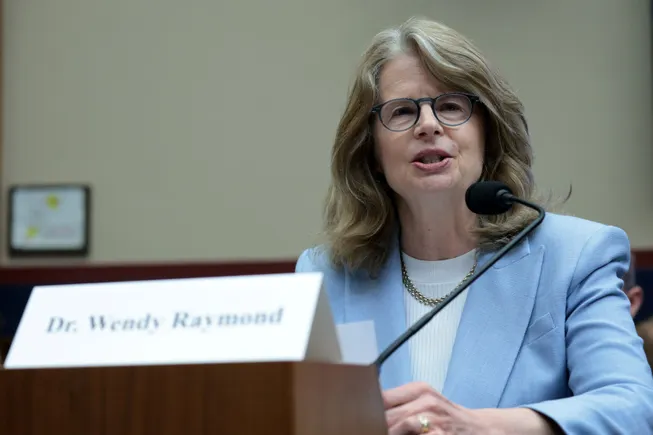
Haverford President Wendy Raymond, who announced her upcoming retirement for June 2027, issued a statement framing the settlement as an extension of the college’s core values. "Harassing, excluding, or seeking to silence Jewish community members on the basis of their beliefs, their commitment to Jewish observance, or any other element of their Jewish identity, including Zionism, is anathema to the College’s core principles of trust, concern, and respect," Raymond stated. She emphasized that while vigorous debate regarding government policies is permitted, it must not descend into harassment or bias.
Criticisms from Civil Rights Advocates
The settlement has drawn sharp criticism from groups like the Council on American-Islamic Relations (CAIR). Ahmet Tekelioglu, executive director of CAIR’s Philadelphia chapter, warned that the agreement sets a "troubling precedent for academic freedom."
"Protecting Jewish people is not the same as protecting Zionism from criticism," Tekelioglu said in a statement. He argued that by conflating the two, the college has opened the door to institutional censorship, potentially chilling legitimate political discourse on campus regarding international relations and human rights.
The Perspective of the Legal Plaintiffs and Supporters
Conversely, the agreement was lauded by external commentators, including the editorial board of The Wall Street Journal, which criticized the administration for requiring a lawsuit to address what the board described as a long-standing antisemitism problem at the college. The Deborah Project, representing the plaintiffs, viewed the settlement as a vital safeguard for Jewish students who have felt marginalized in an increasingly polarized academic environment.
Broader Implications for Higher Education
The Haverford settlement is emblematic of the intense pressure faced by college administrators nationwide. In May 2025, President Raymond was called before a U.S. House of Representatives committee to testify on campus antisemitism, where she faced threats regarding the potential loss of federal funding. Shortly thereafter, the U.S. Department of Education launched a formal investigation into the institution.
This case highlights several critical challenges for universities:
- The Definition of Antisemitism: The inclusion of "Zionist views" within the college’s anti-discrimination policy is a contentious development. It reflects a growing trend of institutions attempting to clarify where political speech ends and discriminatory harassment begins.
- The Limits of Faculty Autonomy: By restricting the criteria professors can use when deciding whether to write recommendation letters, the settlement imposes new boundaries on academic freedom and individual conscience, a move that is likely to be debated by faculty senates across the country.
- Institutional Risk Management: The shift toward "risk aversion," as described by Professor Aougab, suggests that legal threats and federal investigations are now driving institutional policy more than ever before. For many colleges, the cost of protracted litigation—both financial and reputational—has made settlement an increasingly attractive, if controversial, option.
Conclusion: A New Campus Paradigm
The resolution at Haverford College serves as a warning and a guide for other institutions grappling with similar tensions. As universities seek to balance the fundamental right to free expression with the legal mandate to provide a non-discriminatory learning environment, the specific mechanisms adopted at Haverford—mandatory training, oversight committees, and revised anti-bias policies—are likely to be replicated elsewhere.
However, as critics like CAIR point out, the cost of these policies may be the narrowing of the academic "marketplace of ideas." Whether this settlement succeeds in fostering a more inclusive environment for Jewish students without silencing political dissent remains to be seen. For now, Haverford stands at the forefront of a national re-evaluation of what it means to foster a respectful and safe campus community in an era of deep ideological division.
