

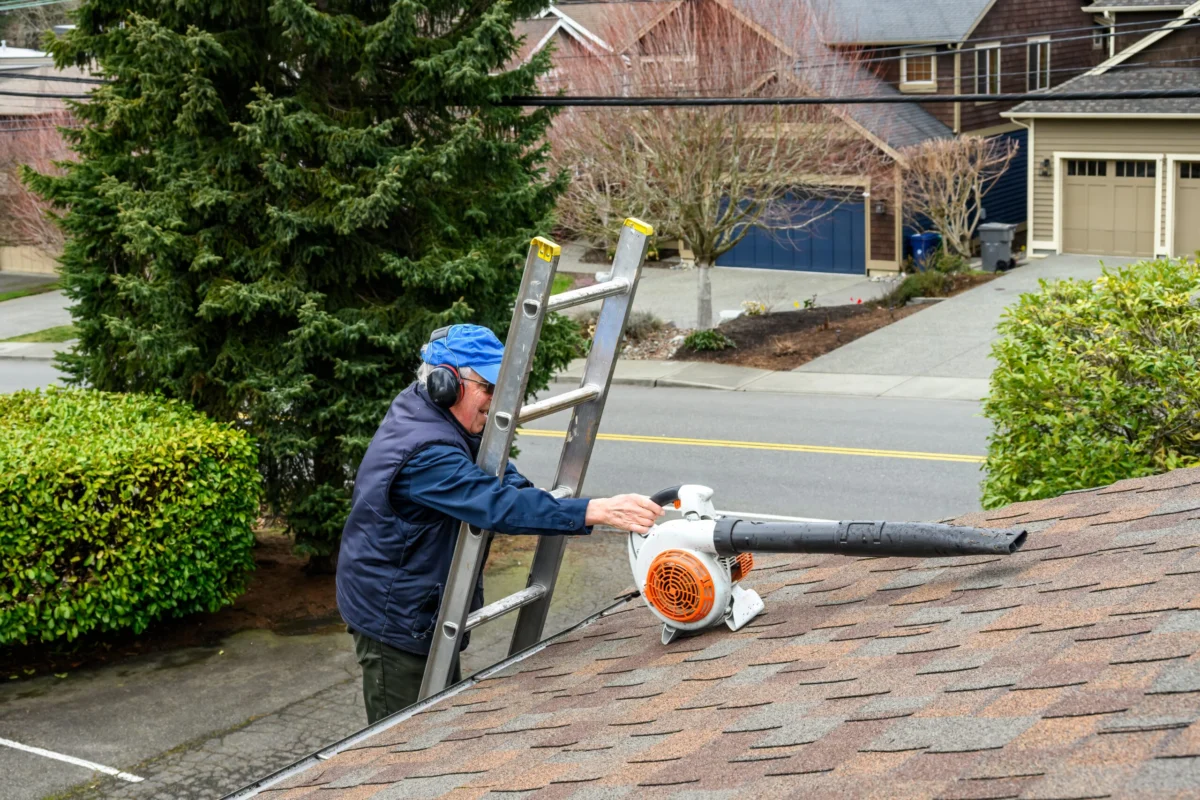
For many homeowners, the leaf blower is a seasonal specialist—a tool relegated to the dark corners of the garage, emerging only when the autumn foliage demands a mass evacuation. Yet, industry experts and professional landscapers are increasingly recognizing that this high-velocity tool is among the most versatile assets in a modern homeowner’s arsenal. By leveraging the power of forced air, you can streamline maintenance tasks that would otherwise require hours of manual labor, stiff brushes, or expensive specialized equipment.
This article explores the untapped potential of your leaf blower, examining how this piece of machinery can be repurposed for home maintenance, detailing the mechanics behind its utility, and offering expert-backed guidance on how to use it safely and effectively.
The Evolution of the Leaf Blower: From Seasonal Tool to All-Purpose Utility
The primary function of a leaf blower is to generate a high-volume, high-velocity stream of air. While originally designed for clearing leaf litter, the physics of that air stream—specifically its ability to dislodge light debris and move particles across flat surfaces—is inherently suited for a wider variety of domestic chores.
Whether you are dealing with grit on a driveway, light snow, or dust in a workshop, the principle remains the same: kinetic energy transferred from the air stream to the surface material. By understanding the limitations and capabilities of your specific model—be it gas-powered, corded electric, or the increasingly popular battery-operated lithium-ion variety—you can optimize your home maintenance routine throughout all four seasons.
1. Mastering Hardscape Maintenance: The Secret to Pristine Patios
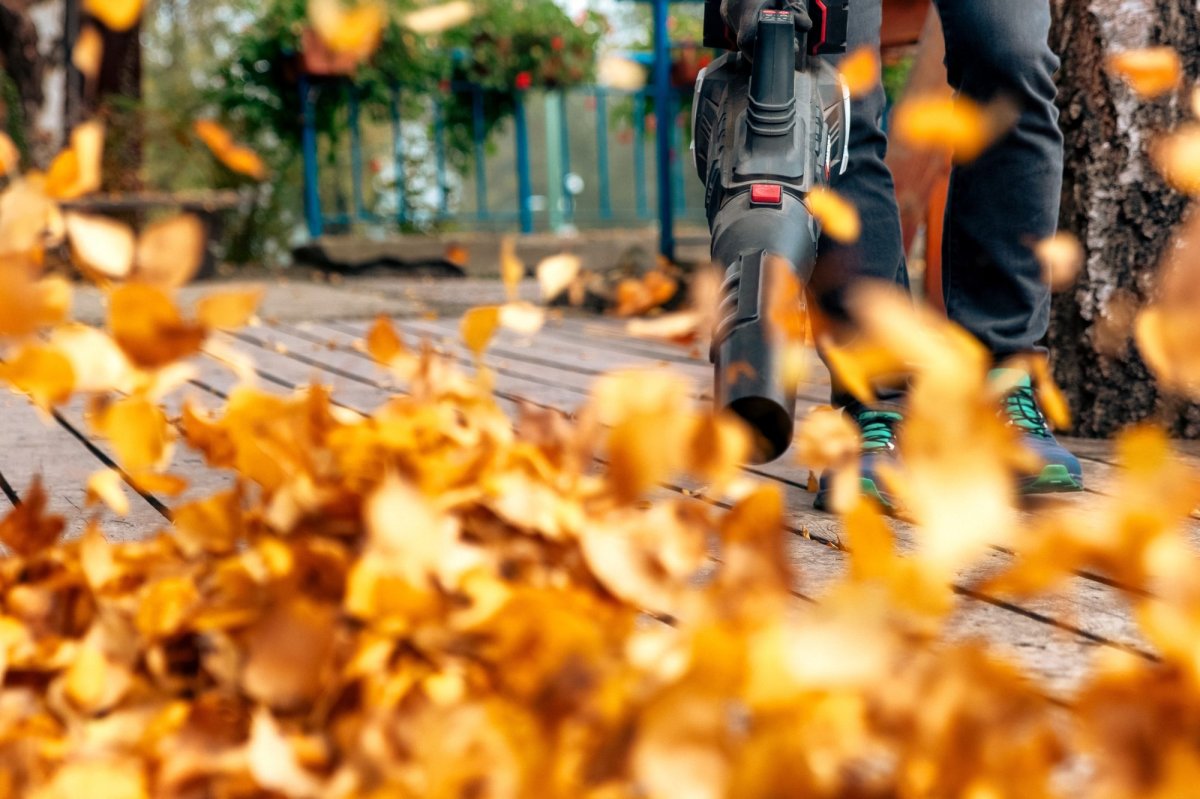
The most immediate and effective secondary use for a leaf blower is the maintenance of hardscape surfaces. Tom Polkinghorne, director at Creations Building & Landscaping, emphasizes that the utility of a blower often outshines the traditional broom.
“I use leaf blowers more for hard surfaces than leaves,” says Polkinghorne. “It blows grit, dust, and sand out of joints between your patio and driveway ten times quicker than a brush could.”
The Mechanics of Hardscape Care
Beyond the efficiency of speed, there is a preventative benefit. Over time, organic matter, sand, and dust settle into the joints of pavers and flagstone. This buildup provides a fertile environment for moss, algae, and weeds to take root. By regularly using a blower to clear these grooves, you are effectively denying these unwanted guests the moisture and nutrients they need to colonize your patio.
Pro-Tips for Success:
- Consistent Direction: Always blow in a singular direction to avoid simply rearranging the dust across the surface.
- Attachment Usage: Utilize flat-head or tapered nozzles to increase the velocity of the air, allowing for a more surgical strike against stubborn dirt embedded in cracks.
- Angle of Attack: Keep the blower nozzle at a shallow angle to the ground to ensure the air stream digs into the gaps rather than skipping over them.
2. Gutter Management: Efficiency Without the Risk
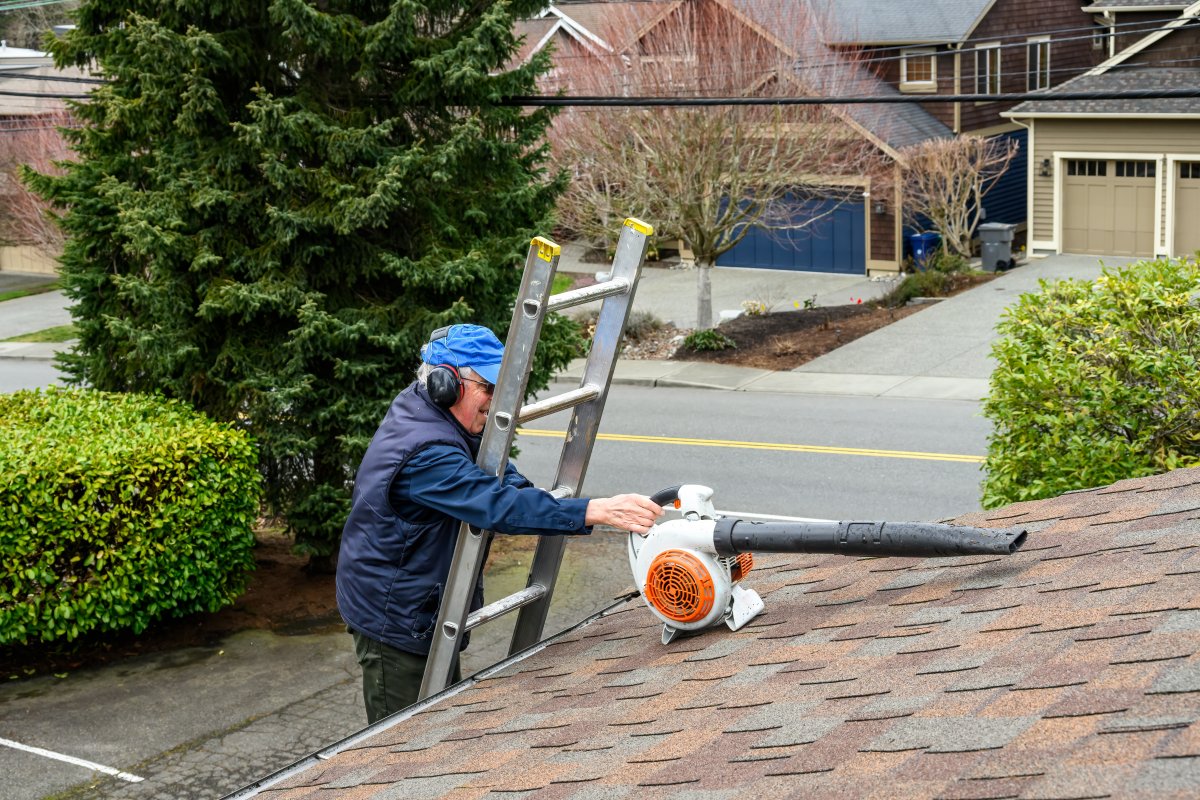
Clogged gutters are a primary cause of water-related structural damage, including foundation erosion, fascia rot, and the formation of ice dams during the winter months. Traditionally, this chore requires a ladder, a bucket, and a significant amount of manual scooping.
The Modern Approach
Using a leaf blower to clear gutters is a time-tested strategy for those looking to avoid constant ladder repositioning. Many manufacturers now offer gutter-cleaning kits—long, curved extension tubes that allow you to reach the gutter line from the safety of the ground.
Important Safety Considerations:
- Recoil Management: High-power blowers generate significant "blowback" force. When using long extension tubes, the torque can make the wand difficult to control.
- Structural Awareness: Do not attempt to clear water-logged, heavy debris. The force required to move saturated sludge can cause damage to your gutter brackets.
- Protective Gear: Always wear eye protection. Blowing dry debris from 15 feet above will result in a shower of twigs, pine needles, and dust falling directly toward the operator.
3. Winter Utility: The Case for the "Snow Blower" Alternative
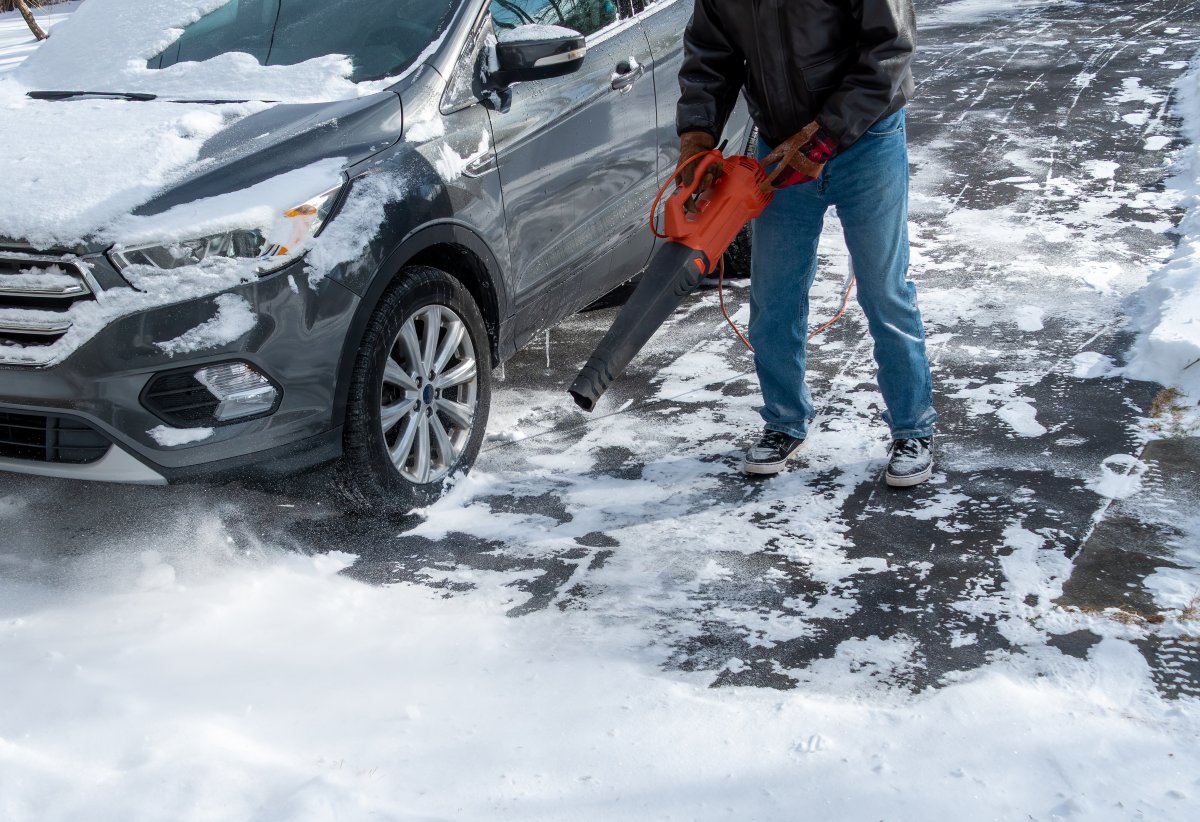
When the temperature drops, the leaf blower doesn’t have to go into storage. For regions that experience light, powdery snowfalls, a leaf blower acts as a rapid-response tool for clearing walkways, decks, and vehicle surfaces.
Setting Expectations
It is critical to distinguish between "light" and "heavy" snow. A standard leaf blower is designed to move low-mass particles. Attempting to move heavy, wet, or packed snow will likely lead to motor burnout and frustration. However, for a quick dusting of one to two inches of "fluffy" snow, a blower can clear a driveway in a fraction of the time it takes to shovel, significantly reducing the physical strain on your back and joints.
4. Automotive Detailing: The Professional Secret
Professional car detailers have long used forced air to achieve a showroom finish. Using a leaf blower to dry a vehicle after a wash is an efficient way to avoid the dreaded "towel marks" or water spots caused by slow-drying, mineral-heavy water.
The "Spot-Free" Technique
Water naturally pools in crevices—around side mirrors, door handles, gas caps, and wiper wells. A chamois or microfiber towel often fails to reach deep into these areas, leading to water dripping out later and ruining your polish job.
- Distance is Key: As Polkinghorne notes, "I use medium power and stay a reasonable distance away from the vehicle."
- Preventing Damage: Ensure your blower nozzle is clean and free of debris that could scratch the paint. If you are using a gas-powered blower, be mindful of the exhaust, which can leave a fine residue on the clear coat. Battery-operated units are generally preferred for this task to avoid accidental fuel or oil contact.
5. Industrial Hygiene: The Garage and Workshop
For the DIY enthusiast, the workshop is a hub of sawdust, metal shavings, and cobwebs. Traditional sweeping is often counterproductive, as it simply kicks fine particulate matter into the air, where it settles on surfaces again moments later.
A New Workflow for Cleanliness
By using a leaf blower, you can clear an entire workshop in minutes. To maximize effectiveness:
- Work Back-to-Front: Start at the furthest wall and work toward the door.
- Use Low Settings: You don’t need maximum power to clear sawdust. A lower speed setting prevents "dust clouds" and gives you more control.
- Personal Protection: This is the most important step. Because a leaf blower aerosolizes dust, wearing an N95 mask or a respirator is essential to prevent inhaling fine wood dust or chemical residues.
Chronology of Technological Advancements
The versatility of the modern leaf blower is a result of rapid innovation over the last decade.
- 2015–2018: The market saw a massive shift from heavy, noisy two-stroke gas engines to quieter, more efficient electric alternatives.
- 2019–2022: Battery density improvements meant that handheld blowers could finally match the "cubic feet per minute" (CFM) output of their gas counterparts, making them practical for professional use.
- 2023–2026: The industry has focused on modularity. New 2026 "Tool of the Year" winners highlight the rise of interchangeable nozzle systems, variable speed triggers, and ergonomic designs that reduce vibration—making these tools viable for the domestic applications discussed above.
Implications: Cost-Effectiveness and Longevity
Integrating your leaf blower into your year-round maintenance plan is a matter of maximizing your return on investment. A high-quality blower is a significant purchase; by utilizing it for cleaning, drying, and clearing, you extend its utility far beyond the two-week leaf-falling window of autumn.
Furthermore, these practices can lead to secondary savings. Regularly clearing debris from gutters prevents expensive roof repairs; keeping driveways and patios clear of grit prevents the premature degradation of sealants and stone.
Final Thoughts on Safety
While the leaf blower is a powerful ally, it is still a tool that requires respect. Always be mindful of local noise ordinances, especially when using the device for non-yard chores in residential neighborhoods. Additionally, ensure you are wearing appropriate eye and ear protection, regardless of how "light" the task may seem.
By rethinking the leaf blower as an "air-delivery system" rather than just a "leaf-pusher," you unlock a level of home maintenance efficiency that saves time, preserves your property’s condition, and gets the most out of the equipment you already own. Whether it’s a pristine car, a moss-free patio, or a dust-free workshop, the power of air is your greatest advantage.
