

When we discuss core strength, the conversation almost inevitably gravitates toward the plank. It is the gold standard of abdominal stabilization, a static movement that has become synonymous with functional fitness. However, as we navigate life past the age of 55, the requirements for our midsection evolve. We need more than just the ability to hold a position; we need the endurance to maintain structural integrity while our limbs move through space.
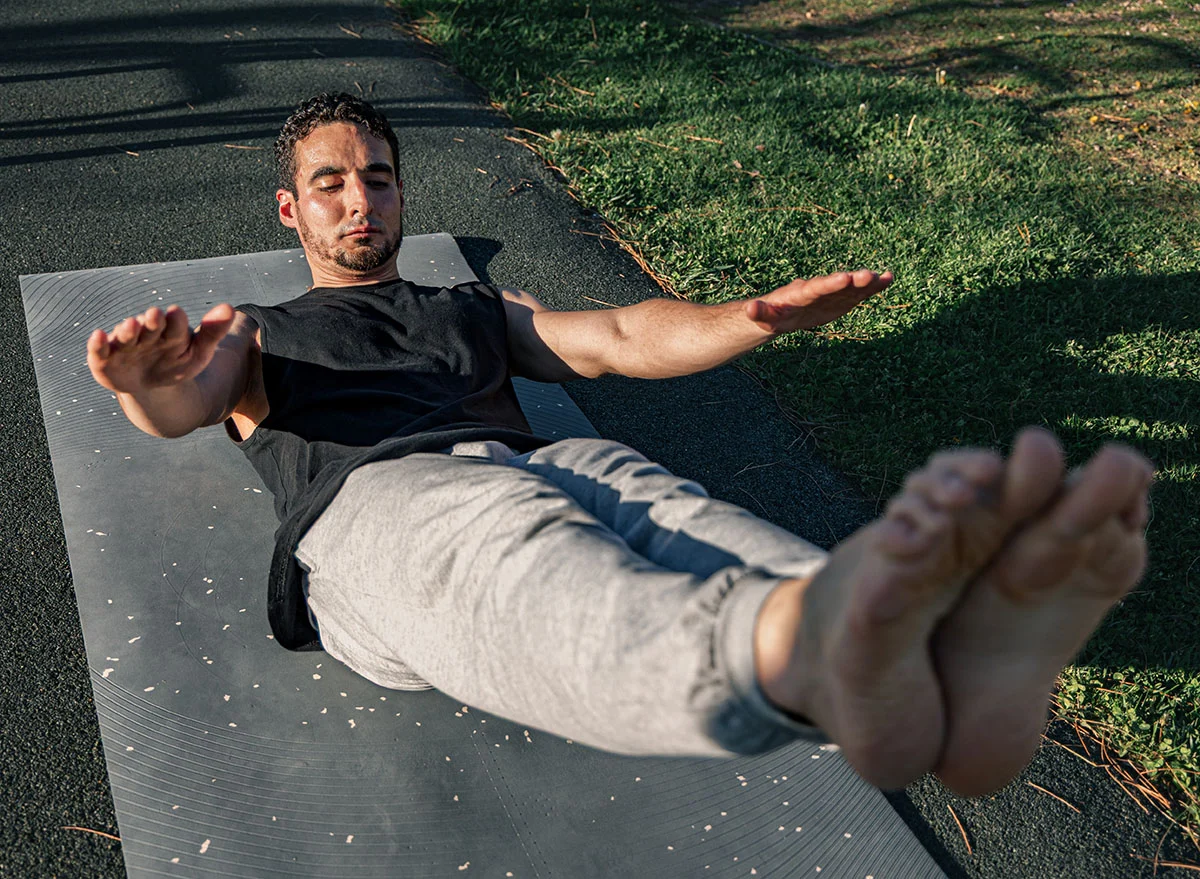
Enter the "hollow hold"—the unsung hero of core training. While the plank has you facing the floor, the hollow hold flips the script, demanding that you press your lower back into the ground while creating a rigid, boat-like shape with your body. It is a deceptively simple movement, but holding it for a clean 60 seconds is a benchmark that signals a high level of physical resilience and spinal health.
The Anatomy of the Hollow Hold: Why It Matters
The hollow hold works by manipulating the center of mass. By extending your arms and legs away from your torso, you create a long lever arm. This dramatically increases the torque on your abdominal wall. To maintain the position, your rectus abdominis—the "six-pack" muscle—must contract isometrically, while your deep-seated transverse abdominis acts as a corset, protecting your lumbar spine.
For those over 55, this is not just about aesthetics; it is about longevity. As we age, the ability to manage force through the trunk—the bridge between our upper and lower body—becomes vital for preventing lower back pain and maintaining independence. Whether you are lifting a heavy grocery bag, gardening, or simply getting up from a chair, your core acts as the stabilizer. If that stabilizer is weak, the force is transferred directly to your joints, increasing the risk of injury.
Chronology: Building Toward the One-Minute Milestone
Progressing to a 60-second hold is not a linear sprint; it is a systematic building process. Because the hollow hold is physically demanding, attempting to "power through" with poor form can lead to the very thing we are trying to avoid: back strain.

Phase 1: The Foundation (Weeks 1–2)
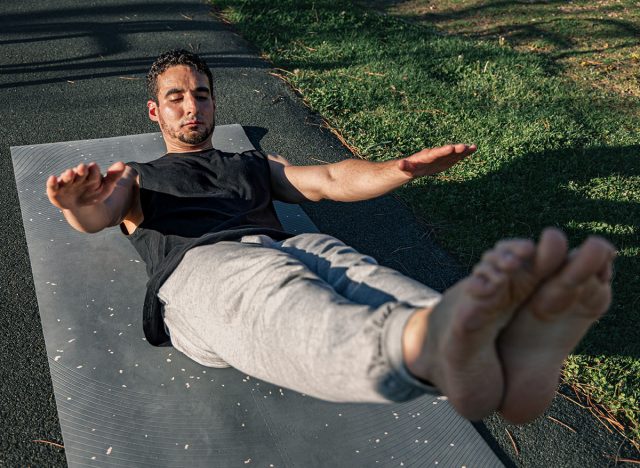
Begin with the Bent-Knee Hollow Hold. By keeping your knees tucked toward your chest, you shorten the lever arm, making the exercise more manageable. Focus entirely on the "imprint"—the sensation of your lower back being glued to the floor. If you feel a gap forming under your spine, your core has disengaged.
Phase 2: Increasing the Lever (Weeks 3–6)
Transition to the Arms-Down or Single-Leg Hollow Hold. By extending one leg at a time, you slowly introduce more weight for your abs to stabilize. During this phase, aim for three sets of 20 to 30 seconds. The goal here is not duration, but consistency in form.
Phase 3: The Full Extension (Weeks 7+)
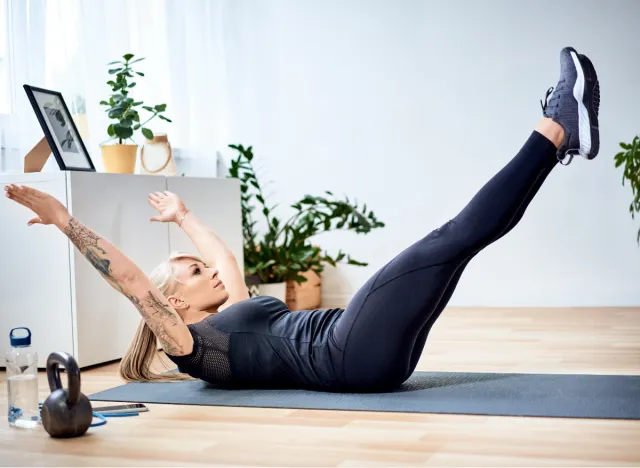
Once you can hold the single-leg version with total control, graduate to the Full Hollow Hold. Arms overhead, legs fully extended, toes pointed. This is where the true endurance test begins. Your goal is to accumulate 60 seconds total per workout, eventually pushing for a single, unbroken minute.
Supporting Data: What Your Time Reveals
In clinical sports performance, the ability to hold a position under fatigue is a primary indicator of "core endurance." A 2023 study published in The Journal of Strength and Conditioning highlights that after age 50, the capacity to maintain intra-abdominal pressure during movement is a significant predictor of fall prevention and balance.
- Under 20 Seconds: You are in the foundational stage. Focus on pelvic tilt exercises to ensure you are engaging the correct deep core muscles rather than over-relying on the hip flexors.
- 20–40 Seconds: You possess functional baseline strength. You are likely stable during daily activities, but you may experience "form decay" when carrying heavy loads or engaging in high-intensity movement.
- 40–60 Seconds: You have achieved advanced core endurance. This level of strength allows for better force transfer, reducing the reliance on the lower back during physical exertion.
- 60+ Seconds: You are in the elite tier for your age group. Your ability to maintain spinal rigidity indicates a highly efficient neuromuscular connection.
Expert Perspective: The Role of Tension
Jarrod Nobbe, a renowned USAW National Coach and performance specialist, emphasizes that the hollow hold is fundamentally about staying power. "I see this with clients all the time," says Nobbe. "They can create a strong brace for five seconds, but as fatigue sets in, the position shifts. The lower back peels off the floor, and the shoulders drop. Training the ability to hold that tension longer is what provides ‘staying power’—the ability to keep your core engaged even when the rest of your body is tired."
Nobbe notes that for the over-55 demographic, the psychological aspect is just as important as the physiological. "When you hold that position for 60 seconds, you are training your brain to stay connected to your core. It’s a mindfulness practice for your muscles."
Implications for Daily Living
The benefits of mastering the hollow hold extend far beyond the gym floor. Consider the mechanics of "functional mobility":
- Reduced Lumbar Load: By strengthening the anterior core, you create a natural "weight belt" that supports the spine during bending and lifting tasks.
- Improved Postural Alignment: A strong core naturally pulls the shoulders back and aligns the pelvis, reducing the "slump" that often accompanies aging.
- Enhanced Athleticism: Whether you play golf, tennis, or enjoy hiking, a stable core allows you to generate power from your hips without losing energy through your midsection.
- Fall Prevention: A core that can handle tension is more responsive to sudden shifts in balance. If you trip, a conditioned core allows you to recover your center of gravity faster.
How to Perform the Perfect Hollow Hold
To reap these benefits, you must adhere to strict movement standards. If you cannot maintain the form, the exercise loses its efficacy.
The Step-by-Step Execution:
- Setup: Lie flat on your back with your arms and legs fully extended.
- The Imprint: Exhale deeply, bringing your ribcage down. Press your lower back into the floor with intent. This is the most critical step.
- The Lift: Simultaneously lift your shoulders and legs about six inches off the ground. Your body should look like a "banana" or a shallow boat.
- The Tension: Point your toes and squeeze your quads and glutes. This full-body tension prevents the core from shaking and helps you maintain the position.
- The Breathing: Do not hold your breath. Use short, rhythmic breaths into your side-ribs while maintaining the abdominal brace.
Movement Standard: The moment your lower back loses contact with the floor, your set is over. It is better to hold a perfect 15-second set than a "cheated" 45-second set where your back is arched.
Final Thoughts: The Journey to 60
The beauty of the hollow hold lies in its accessibility. You don’t need a gym, expensive equipment, or even a trainer. You only need a small patch of floor and the discipline to measure your progress.
If you find yourself stuck at 30 seconds, don’t be discouraged. The adaptation process takes time. By dedicating just a few minutes, three times a week, to this practice, you are actively investing in the structural integrity of your body. When you finally hit that 60-second mark, you’ll find that the strength you’ve cultivated carries over into every aspect of your life—from the way you walk to the way you carry the burdens of the day.
Remember: the goal is not to prove how long you can suffer, but to prove how effectively you can control your body. Start where you are, stay consistent with your form, and the endurance will follow. Your future self will thank you for the strength you build today.
