

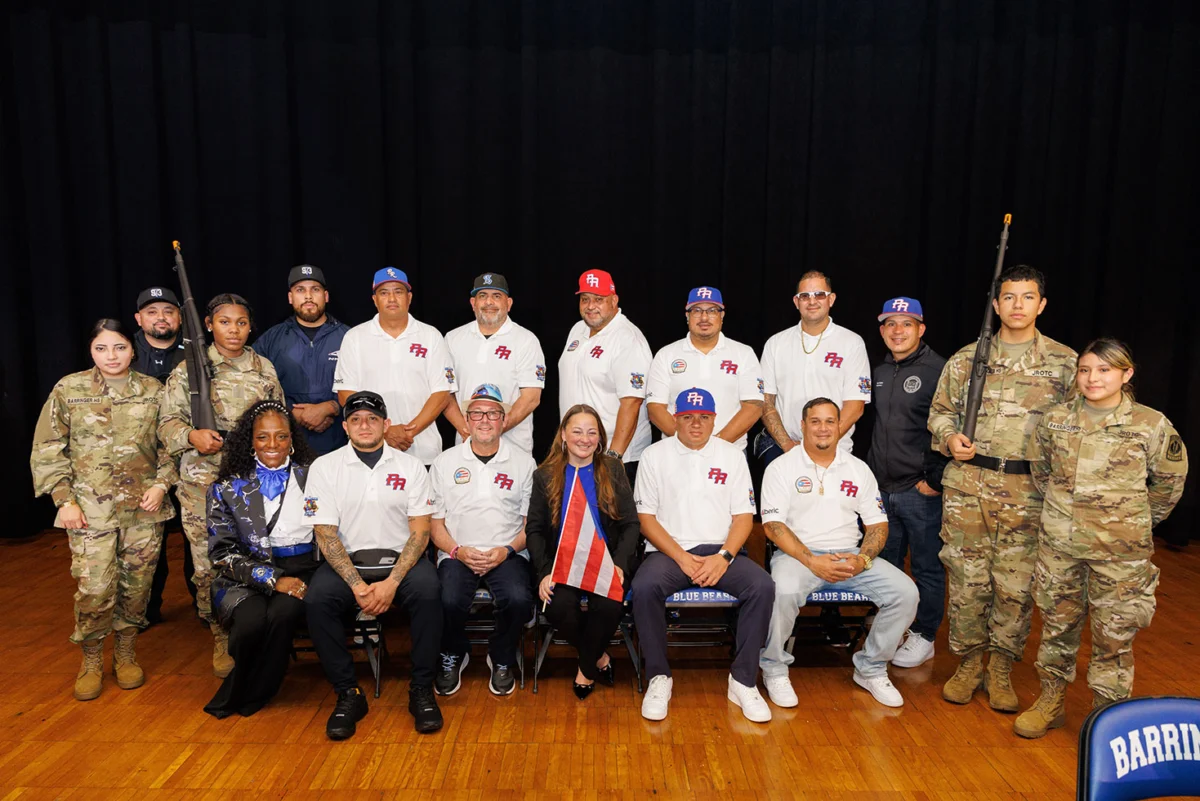
NEWARK, N.J. — In a powerful cross-cultural exchange that bridged the distance between the Caribbean and the Garden State, nine veteran police officers from Puerto Rico descended upon Barringer High School this week. The visit served as more than just a meet-and-greet; it was a masterclass in resilience, civic duty, and the transformative power of education for 113 students, including 34 members of the school’s dedicated Junior ROTC program.
The delegation, which collectively brought centuries of combined experience in fields ranging from maritime tactical operations to narcotics investigations, offered the students a candid look at the realities of law enforcement. By sharing stories of personal struggle and professional triumph, these officers provided a roadmap for success that transcended their specific badge numbers.
A Legacy of Service: The Core Mission
The event was facilitated by Newark Board of Education member Louis Maisonave, Jr., a Newark firefighter who has long championed exchange programs between public safety professionals in Newark and Puerto Rico. The visit aligns with a strategic push by Newark Public Schools to demystify careers in public safety, following the district’s official launch of "Police and Fire Career Pathways" last April.
Principal Natasha Pared welcomed the delegation into a classroom environment that felt less like a lecture and more like a mentorship circle. The officers, who were in the region as part of a charitable police softball team, brought an authenticity that resonated deeply with the student body.
"This was an opportunity for our students to hear directly from police officers who have dedicated their careers to serving others," said Superintendent Roger León. "The lessons the officers shared about education, discipline, family, and perseverance transcend any particular career. Those are lessons that will serve our students wherever their futures take them."
Chronology: From the Caribbean to the Classroom
The engagement began with introductions, as the officers outlined their diverse backgrounds within the Puerto Rican law enforcement apparatus. The group represented the breadth of policing, including traffic enforcement experts, specialized tactical units, and veteran instructors.
As the morning progressed, the dialogue moved from professional backgrounds to the "why" behind their service. Officer Rubén Castillo Román, a 35-year veteran of the Arecibo traffic division, set the tone for the day with a stirring personal narrative. He spoke of his childhood and the driving desire to improve the community that raised him—a sentiment that mirrored the aspirations of many students in the room.
Following the opening remarks, the session transitioned into a Q&A format. Students, particularly those in the JROTC, grilled the officers on the training required to enter high-stakes fields. The officers were blunt about the hardships: they described the emotional toll of dangerous encounters, the strain on family life, and the necessity of mental fortitude.
The session concluded with an emotional plea from the officers, who urged students to respect their teachers, cherish their families, and view their current education as a non-transferable asset that would serve as the foundation for their future, regardless of their eventual career paths.
Supporting Data: Diverse Roles in Law Enforcement
The expertise brought to Barringer High was wide-reaching, offering students a comprehensive view of how law enforcement functions at a systemic level. The roles represented included:
- Traffic Enforcement: Focus on public safety, infrastructure management, and community order.
- Fuerzas Unidas de Rápida Acción (FURA): Officer Efraín Pérez Rodríguez, a 25-year veteran, represented this elite unit. FURA encompasses specialized SWAT capabilities, canine handling, deep-sea diving, and maritime rescue.
- Narcotics Enforcement: A focus on the complexities of regional security and the dangers of illicit trade.
- Instruction and Outreach: Officers specialized in training the next generation of police and fostering community relations.
This diversity of roles helped dispel the myth that law enforcement is a monolith. For students interested in technology, medicine, or maritime operations, the officers highlighted how these interests are integrated into modern police work.
Official Responses and Reflections
The impact of the visit was immediate, as evidenced by the reflections of both school leadership and the visiting officers.
"Don’t let anyone tell you that you can’t do anything in life," Officer Castillo Román told the assembly. "Don’t let anyone put up walls for you. Show everyone they’re wrong. We can do good, move forward, and build a better world for all of us and for those who come after us."
The sentiment was echoed by Board of Education President Hasani K. Council, who emphasized the importance of exposing students to diverse narratives.
"Our students benefit when accomplished professionals take the time to tell them not only how they succeeded, but what they endured and learned along the way," President Council stated. "These officers gave our students an important message: value your education, listen to the people who are trying to help you, stay disciplined, and believe in what you can accomplish."
Principal Pared noted that the cultural and linguistic connection played a vital role in the day’s success. "They were able to ask questions directly of experienced officers, hear about both the rewards and sacrifices of public service, and see professionals who share their language and cultural connections," she said. "Most importantly, our students heard again and again that their education, their choices, and their discipline will determine what opportunities are available to them."
Implications for Future Career Pathways
The visit was more than a motivational speech; it served as a practical building block for the Newark Public Schools’ Police and Fire Career Pathways program. By connecting students with professionals who have spent decades in the field, the district is providing a "real-world" vetting process for students who may be considering careers in public service.
Lessons on Discipline and Peer Pressure
A significant portion of the conversation centered on the psychological challenges of high school. The officers provided a candid warning about the dangers of peer pressure and the lure of "looking cool." A narcotics officer in the group urged the students to think independently, noting that the "best way is to be yourself."
The officers stressed that the discipline required for a career in law enforcement begins in the classroom. They advised students that the habit of following rules, meeting deadlines, and respecting authority—skills often practiced in JROTC—are the exact same traits that allow an officer to survive and thrive in a high-pressure environment.
A Culture of Charitable Giving
Beyond their professional credentials, the officers demonstrated the importance of community service through their own charitable endeavors. As members of a police softball team, they routinely support communities in Puerto Rico by donating essential supplies, including bicycles, backpacks, notebooks, and pencils.
This detail was not lost on the students. It provided a tangible example of how professional success can—and should—be used to uplift others. By witnessing these officers acting as both protectors and providers, the students at Barringer High gained a new perspective on what it means to be a "public servant."
Conclusion: A Lasting Impact
As the officers departed, they left behind a clear, actionable message for the student body: Education is the ultimate insurance policy.
For the 34 JROTC members in attendance, the visit served as a validation of their commitment to discipline and leadership. For the broader student population, the interaction with these Puerto Rican officers provided a rare opportunity to see their own potential reflected in the eyes of successful, dedicated professionals.
The long-term impact of this visit will likely be measured in the coming years, as students decide whether to pursue the paths laid out by the officers. However, in the immediate term, the visit succeeded in its primary goal: to show that no matter where a student comes from, a commitment to education, discipline, and hard work can open doors to a world of opportunity.
As one officer summarized during the closing, "What you learn is yours; nobody can take it away from you." It was a message that resonated through the halls of Barringer High, marking a successful, inspiring chapter in the Newark Public Schools’ ongoing effort to prepare students for a future of service and leadership.
