

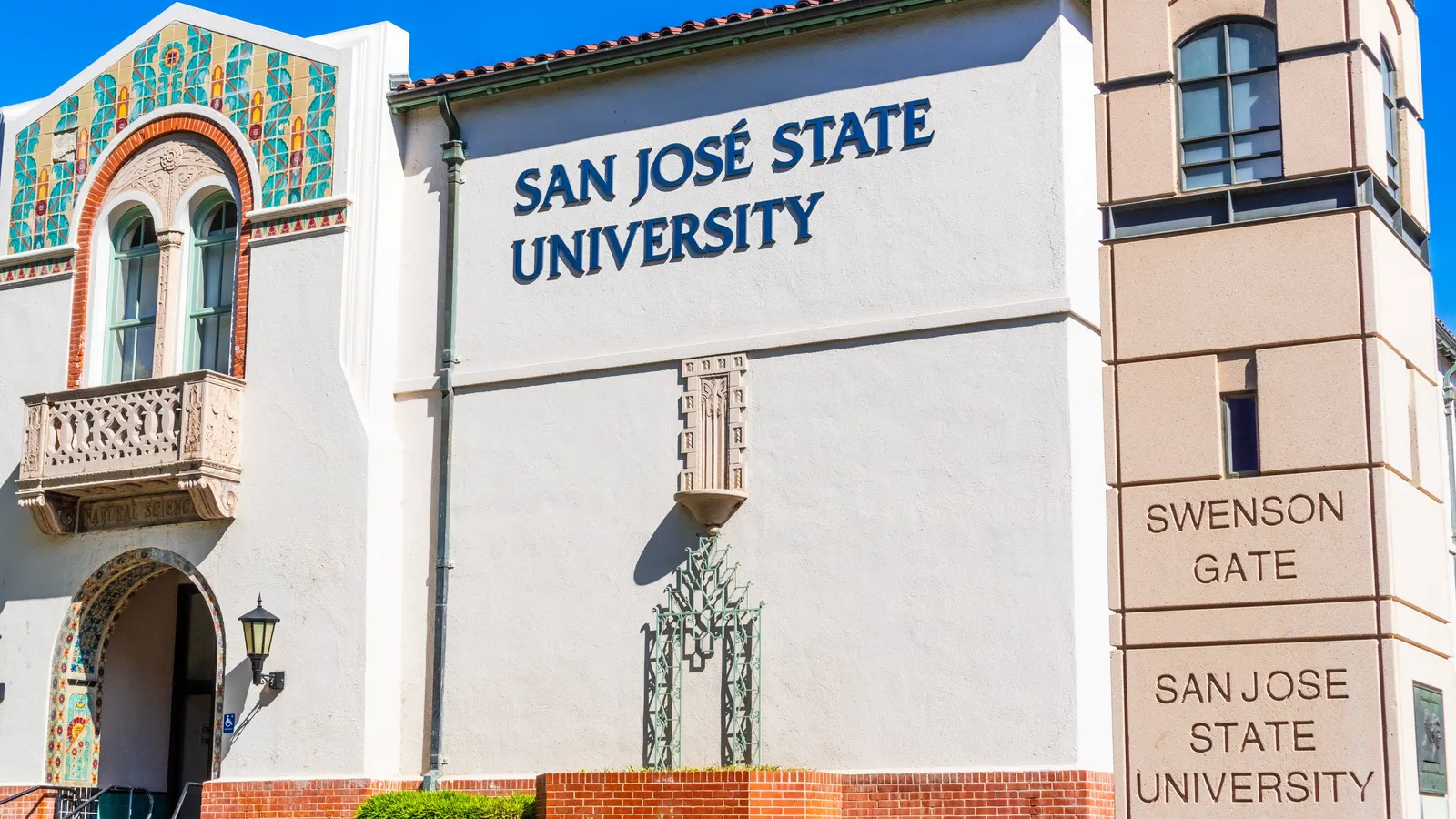
A high-stakes legal confrontation at San José State University (SJSU) has entered a new phase, casting a spotlight on the volatile intersection of religious expression, institutional policy, and federal civil rights law. On October 13, a former assistant women’s volleyball coach filed a renewed lawsuit against the California State University (CSU) system, alleging that her eventual termination was a direct result of her vocal opposition to the inclusion of a transgender athlete on the team’s roster.
The litigation, Batie-Smoose v. The Board of Trustees of the California State University, strikes at the heart of the ongoing national debate regarding gender identity in collegiate athletics. The plaintiff, who identifies as a Christian with the "sincere religious belief that God created human beings male and female," contends that the university’s actions violated her rights under the First and 14th Amendments, as well as Title IX protections against sex discrimination.
The Genesis of the Conflict: A Timeline of Escalation
The dispute traces back to 2023, shortly after the plaintiff began her tenure as an assistant coach for the women’s volleyball team. According to the court filings, the plaintiff was informed by the head coach that one of the team members was transgender. The head coach allegedly instructed the plaintiff to maintain confidentiality regarding the student’s status, warning that any disclosure to players, parents, or staff would result in immediate termination.
As the situation evolved, the plaintiff began to document her objections. The chronology of the dispute unfolded as follows:
- Early 2024: The plaintiff formally expressed her discomfort to the head coach, stating she could not "in good conscience treat a male athlete as female." She further initiated a formal Title IX complaint, raising concerns that the university’s preferential treatment of the athlete compared to other female team members constituted sex discrimination.
- April 2024: Following media reports confirming the player’s status as transgender, the university’s assistant athletic director for diversity, equity, and inclusion was allegedly assigned to "monitor" the plaintiff’s communications. The plaintiff asserts that this level of scrutiny was unique to her and was not applied to other coaching staff.
- September 2024: As the controversy gained national attention, a team co-captain joined a broader lawsuit against the team’s athletic conference, alleging Title IX violations. The plaintiff renewed her internal protests, leading to alleged threats of termination from the university administration. Shortly thereafter, she submitted her formal Title IX complaint and engaged with the media.
- Late 2024: The university officially removed the plaintiff from the volleyball program and placed her on administrative leave.
- 2025: SJSU declined to renew the plaintiff’s employment contract, citing the ongoing Title IX investigation and alleged violations of the Family Educational Rights and Privacy Act (FERPA).
- September 2025: The plaintiff filed her initial lawsuit in the U.S. District Court for the Central District of California.
- October 2025: A federal judge granted a motion to transfer the case to the Northern District of California, where it remains active.
The Legal Tug-of-War: FERPA vs. Freedom of Speech
A central pillar of the university’s defense rests on the assertion that the plaintiff violated the Family Educational Rights and Privacy Act (FERPA) by disclosing the athlete’s transgender status. SJSU argued in a 2025 memorandum that the termination was a "non-discriminatory and non-retaliatory" measure taken to protect the privacy of a student.
However, the plaintiff’s legal team has aggressively challenged this narrative. They argue that the information disclosed was derived from "public or personal knowledge" and did not constitute protected student records under the purview of FERPA.
Crucially, the U.S. Department of Education’s Office for Civil Rights (OCR) provided a significant boost to the plaintiff’s case in January 2026. In a landmark finding, the OCR concluded that SJSU had indeed violated Title IX. The report noted that the university’s justification for suspension—the alleged FERPA breach—appeared to be applied unevenly. The OCR pointed out that the head coach, who had also discussed the matter with the media, did not face similar disciplinary measures, suggesting that the plaintiff had been subjected to "disparate treatment" based on her sex and political expression.
Institutional Stance and Official Responses
When approached for comment regarding the renewed filing, SJSU remained tight-lipped, referring all inquiries to the California State University (CSU) system. Representatives for the CSU system have consistently declined to comment on the specifics of the pending litigation.
Despite the silence, the university’s previous filings suggest they intend to maintain a strict legal posture. Their defense rests on the premise that the university must comply with state and federal mandates regarding gender identity and student inclusion. By framing the plaintiff’s dismissal as a matter of professional conduct—specifically the handling of sensitive student data—the university aims to pivot away from the ideological aspects of the case and toward a more standard employment law defense.
Broader Implications for Higher Education
The Batie-Smoose case is not an isolated incident but rather a microcosm of the intense friction currently defining the landscape of American higher education. The case highlights three major areas of concern for universities across the country:
1. The Clash of Constitutional Rights
The case forces a direct confrontation between the First Amendment rights of employees—who may hold deeply rooted religious or philosophical views—and the institutional requirements to provide an inclusive environment for transgender students. As more states and federal agencies weigh in, universities are finding themselves caught in a "no-win" scenario, potentially facing litigation regardless of which side they prioritize.
2. The Title IX Transformation
The shifting interpretation of Title IX has become a battlefield. While the Biden-era Department of Education sought to expand Title IX protections to encompass gender identity, recent legal and political shifts suggest a potential reversal. The fact that the OCR found SJSU in violation of Title IX serves as a reminder that these regulations are subject to the political tides of the executive branch.
3. Regulatory Uncertainty
The case also illustrates the volatility of the U.S. Equal Employment Opportunity Commission (EEOC). Recent shifts within the commission suggest a move toward classifying certain religious accommodations as standard practice, effectively walking back previous policies that labeled such conduct as discriminatory. For human resources departments, this creates a environment of profound uncertainty, where policies written today may be deemed illegal tomorrow.
The National Context: A System Under Pressure
The litigation at San José State is occurring against a backdrop of wider systemic instability. The CSU system itself is currently engaged in a separate legal battle against the federal government, challenging threats to withhold federal funding over policies regarding the inclusion of transgender athletes.
This broader context underscores the high stakes for the university. If the university loses the Batie-Smoose case, it could set a precedent that protects employees who openly dissent against institutional diversity policies on religious grounds. Conversely, a victory for the university would reinforce the authority of institutions to regulate the conduct of their staff in the name of student privacy and inclusivity.
As the lawsuit proceeds in the Northern District of California, it serves as a bellwether for the future of employment law in academia. For the plaintiff, the case is about the fundamental right to speak one’s conscience. For San José State University, it is a test of its ability to manage a diverse student body while navigating a legal system that is increasingly polarized on the definition of sex and gender.
With the legal fees mounting and the OCR finding already casting a shadow over the university’s actions, the outcome of this case is expected to influence how public institutions across the United States structure their codes of conduct, manage personnel, and reconcile the often-conflicting mandates of civil rights law. The resolution of this case will likely remain a focal point for policymakers, educators, and legal scholars for years to come.
