

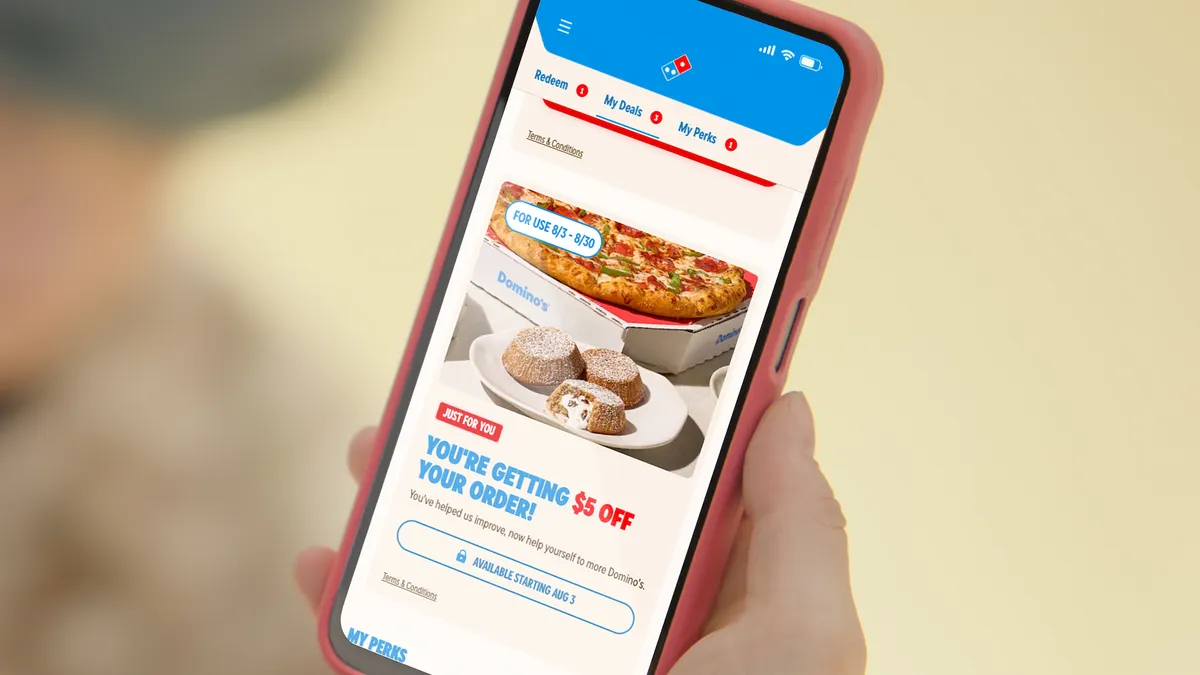
In a bold move to solidify its dominance in the digital food service space, Domino’s Pizza has launched a massive, month-long incentive campaign aimed at gathering real-world feedback on its newly overhauled digital ordering ecosystem. Throughout August 2026, the pizza giant is offering customers a $5 discount on future orders as a "thank you" for engaging with its revamped website and mobile application.
The initiative, supported by a high-energy multimedia marketing campaign, highlights a critical juncture for the brand: while over 85% of its U.S. retail sales are currently generated through digital channels, the company is looking to ensure that its tech-forward platform remains intuitive, modern, and engaging in an increasingly competitive—and price-sensitive—market.
The Core Mechanics of the "Beta Tester" Campaign
The campaign, developed in collaboration with Domino’s agency of record, WorkInProgress, positions the consumer as an informal "beta tester." Running from August 3 through August 30, 2026, the program is designed to lower the friction of customer engagement while providing the brand with a massive influx of user activity data.
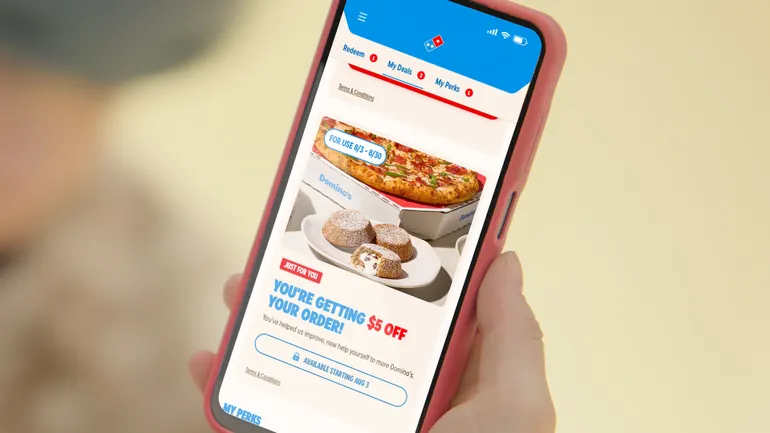
Customers who place a qualifying order via the new digital interface during this window are eligible for a $5 coupon, redeemable the following week. Notably, Domino’s has opted for a "no-strings-attached" approach; while the goal is to encourage feedback, users are not contractually required to submit technical bug reports or formal reviews to receive their discount. The incentive is tied purely to the act of using the updated platform.
"We streamlined our website and app to make them bolder, brighter, more modern and engaging for customers, but we want to hear from them," said Mark Messing, Domino’s vice president of global digital marketing, in a press statement.
Chronology of Digital Transformation
Domino’s has long been regarded as a technology company that happens to sell pizza. This latest campaign is merely the most recent chapter in a long-standing history of digital innovation:
- 2008: Domino’s launches its "Pizza Tracker," a industry-first innovation that revolutionized how customers interact with food delivery. Since its inception, the tracker has monitored over 2.5 billion orders.
- March 2026: Recognizing the need to keep pace with evolving AI capabilities, the company rolled out an updated version of the Pizza Tracker. This iteration utilizes an advanced AI engine to provide more precise delivery estimates and incorporates "Live Activities" for iOS users, allowing for real-time updates directly on the lock screen.
- August 2026: The launch of the current feedback-focused campaign coincides with the rollout of the updated web and app interface.
- August 30, 2026: The promotional period concludes, marking the end of the current incentive window.
Supporting Data and Market Context
The focus on digital experience is not merely an aesthetic choice; it is an economic necessity. In 2025, digital channels accounted for more than 85% of Domino’s U.S. retail sales. This reliance on digital infrastructure makes every millisecond of latency and every UI hurdle a direct threat to the bottom line.
However, the brand faces a challenging economic climate. During the second quarter of 2026, Domino’s reported U.S. same-store sales growth of just 0.1%. While the brand remains a leader in the category, consumers are currently grappling with inflationary pressures and high menu prices. In this context, the $5 discount serves a dual purpose: it acts as a user-experience research tool while simultaneously providing a tactical price-promotion to drive volume during a period of stagnant category sales.
Despite the modest growth figures, financial analysts remain optimistic about the chain’s positioning. Many industry experts argue that Domino’s is the best-equipped player in the pizza segment to navigate a down-market, largely due to its robust delivery infrastructure and the loyalty built through its high-performing app.
Creative Execution: "The Easiest Job Ever"
The campaign’s creative direction, spearheaded by WorkInProgress, leans into the humor of the "beta tester" concept. A series of 15- and 30-second spots illustrate a diverse range of customers—from college students procrastinating on assignments to people engaged in niche hobbies like LARPing (Live Action Role-Playing), Mahjong, and yoga—all utilizing the app.

The aesthetic is fast-paced and relatable, set to the rhythmic, high-energy track "Such Great Heights" by The Postal Service. To further amplify the message, the brand has tapped content creator "Corporate Natalie" to lead a social media push, focusing on LinkedIn and other platforms to reach a professional demographic that relies heavily on digital convenience.
Matt Talbot, co-founder and chief creative officer at WorkInProgress, summarized the brand’s creative philosophy regarding the campaign: "Domino’s Beta Tester is the easiest job ever. You get paid for ordering pizza. No coding, debugging, or QA reports required."
Implications: The Future of Consumer-Brand Feedback
The strategy of incentivizing feedback through discounts—rather than traditional, often tedious, survey forms—represents a shift in how major QSR (Quick Service Restaurant) brands interact with their user base.
1. The Shift to Passive Data Collection
By rewarding the act of ordering rather than the act of reviewing, Domino’s is effectively capturing "behavioral feedback." The company can track how users navigate the new app, where they drop off, and how quickly they complete transactions. This provides higher-quality data than a survey, where users might provide biased or non-representative answers.
2. Maintaining Customer Loyalty in Inflationary Times
In a market where consumers are increasingly trading down or skipping takeout due to rising costs, the $5 coupon acts as a psychological bridge. It maintains the habit of ordering Domino’s while providing a tangible financial benefit, keeping the brand top-of-mind during a period when discretionary spending is under scrutiny.

3. The AI Integration Challenge
With the update to the AI-driven Pizza Tracker, the company is signaling that the next frontier for fast-food technology is precision and transparency. By syncing their new website/app with advanced AI forecasting, Domino’s is attempting to eliminate the "waiting anxiety" that often plagues the delivery experience. If the feedback gathered in August confirms that these AI-driven estimates are accurate, the brand will have successfully created a moat that competitors will struggle to cross.
4. Setting the Standard for the Industry
Domino’s continues to define the "digital-first" restaurant category. By treating its digital presence as a living, breathing product that requires continuous iteration—much like a SaaS (Software as a Service) company—Domino’s ensures that it remains the benchmark for the industry. Whether this strategy will lead to significant growth in Q3 2026 remains to be seen, but the brand’s commitment to iterating based on direct customer input is a clear indicator of why it remains a category leader.
Conclusion: A Proactive Stance
As the month of August progresses, the success of the campaign will be measured not just by the number of coupons redeemed, but by the stability and efficiency of the new digital platform. By inviting customers into the development cycle, Domino’s is doing more than just selling pizza; it is fostering a community of users who feel invested in the brand’s digital evolution.
For a company that has already processed over 2.5 billion orders via its tracker, this latest push is a reminder that in the modern retail landscape, the quality of the "digital crust" is just as important as the quality of the pizza itself. Whether this campaign leads to a measurable uptick in Q3 sales or simply serves as a successful UI stress test, one thing is certain: Domino’s has no intention of slowing down its digital dominance.
