

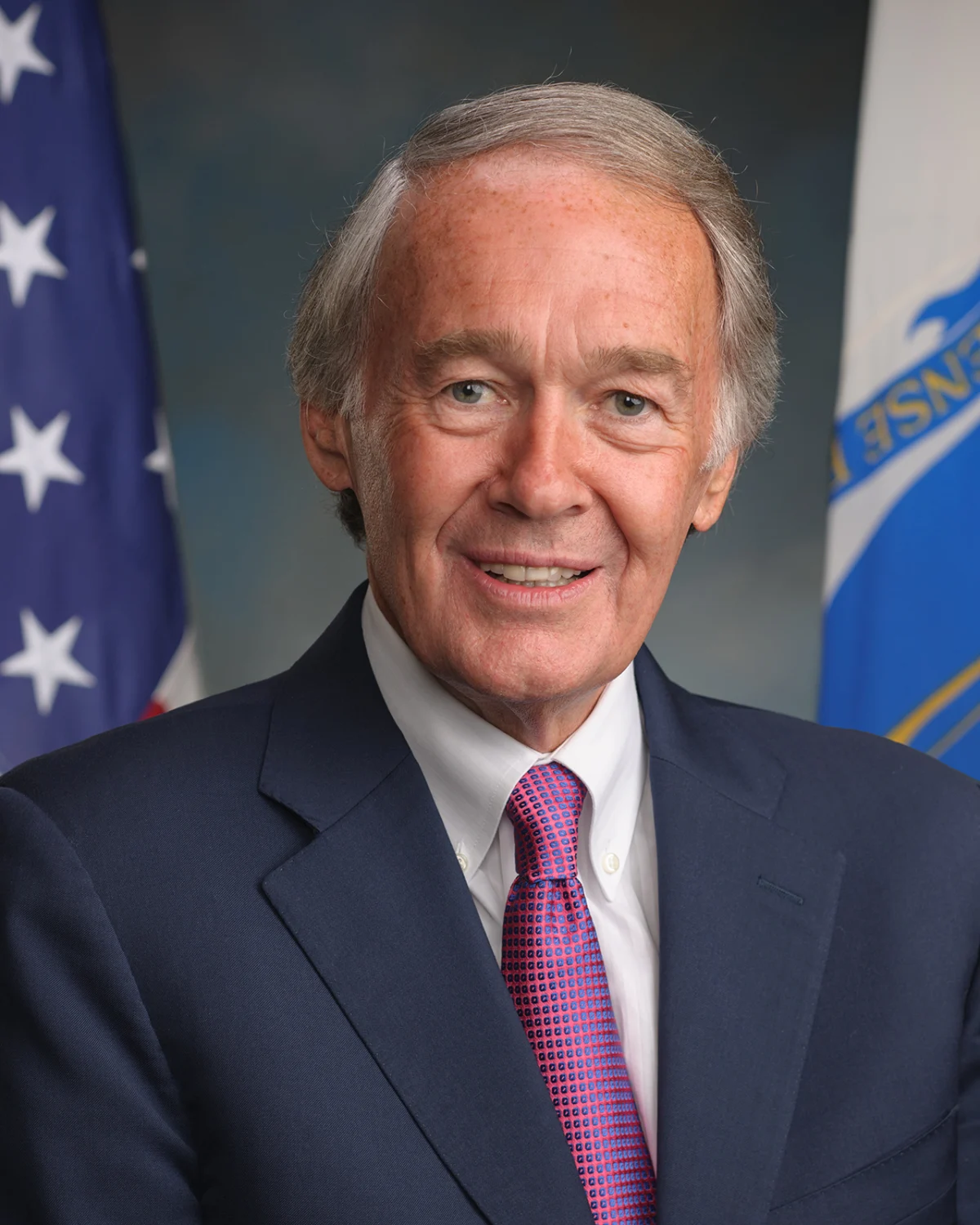
WASHINGTON – As the United States grapples with a volatile energy landscape and surging fuel costs, Senator Edward J. Markey (D-Mass.), a senior member of the Senate Commerce, Science, and Transportation Committee, convened a high-stakes press conference on May 13, 2026. The event served as a clarion call for the Trump administration to abandon its controversial proposal to roll back Corporate Average Fuel Economy (CAFE) standards—a move critics argue will exacerbate the financial burden on American families while undermining decades of environmental progress.
Joined by Senator Alex Padilla (D-Calif.), representatives from the National Consumers League (NCL), Moms Clean Air Force, and local business owners struggling under the weight of current economic pressures, Senator Markey framed the administration’s policy as a self-inflicted wound. He directly linked the current domestic economic strain to the administration’s foreign policy, specifically pointing to the ongoing conflict with Iran as the primary catalyst for a $1.50-per-gallon spike in fuel prices over the last two months.
The Core Conflict: Fuel Economy vs. Economic Reality
At the heart of the debate is the tension between federal regulation and energy policy. CAFE standards, first established in the wake of the 1970s oil crisis, are designed to improve the average fuel economy of cars and light trucks sold in the United States. By mandating higher efficiency, these standards historically reduce the nation’s dependence on foreign oil and lower costs for consumers at the pump.
The Trump administration’s proposal to weaken these standards has sparked intense opposition from environmentalists and consumer advocates alike. Senator Markey utilized sharp rhetoric to characterize the administration’s dual approach to the energy crisis: “With one hand, Donald Trump is rolling back the very standards that keep our vehicles leaner, cleaner, and cheaper, and with the other hand he is driving up gas prices. That’s like a doctor who makes you sick, withholds the cure, and sends you a bill for both.”
Markey emphasized that in an era of global instability and rising energy costs, the government should be prioritizing efficiency rather than dismantling the guardrails that protect the average motorist. He demanded that the administration withdraw the rule immediately, citing an “energy emergency” that he contends the executive branch created through its own policy decisions.
Chronology of the Policy Dispute
The friction regarding fuel economy standards did not emerge in a vacuum; it is the latest chapter in a long-standing ideological battle over climate policy and automotive regulation.
- 2007: Then-Representative Ed Markey co-authored key provisions of the Energy Independence and Security Act, which set the stage for modern, protective fuel economy standards. Since then, Markey has remained a staunch advocate for maintaining and strengthening these benchmarks.
- February 2026: Sensing a shift in the administration’s policy direction, Senator Markey and Congresswoman Doris Matsui (CA-07) led a coalition of 78 lawmakers in a formal letter to the White House. The correspondence demanded that the administration scrap its plan to weaken fuel economy mandates, warning of the economic and environmental repercussions.
- April 2026: As energy prices continued to climb, Senator Markey introduced the No Big Fossil Bailouts on Your Power Bill Act. This legislation was drafted in response to the administration’s use of energy emergency powers to force aging, inefficient power plants to remain operational past their retirement dates—a policy Markey argued was inflating electricity bills and increasing harmful emissions.
- May 13, 2026: The current press conference, marking the latest escalation in the campaign to preserve CAFE standards. During this event, Senator Markey extended his appeal beyond the administration, calling on major automotive manufacturers to voluntarily adhere to previous, more stringent fuel economy standards as a gesture of corporate responsibility during the ongoing cost-of-living crisis.
Economic and Health Implications: A Multi-Front Crisis
The pushback against the rollback is not confined to fuel efficiency; it encompasses a broader argument about consumer protection and public health.
The Consumer Perspective
Daniel Greene, Senior Director of Product Safety & Consumer Protection at the National Consumers League, provided a grim assessment of the current economic environment. “Costs are low when fuel economy standards are high,” Greene stated. “But in the midst of sky-high gasoline prices and a deepening affordability crisis, the Trump administration’s response is to weaken federal fuel economy standards. That’s like pouring gasoline onto an open fire—gasoline that costs $4.50 a gallon.”
Greene’s assertion highlights the compounding nature of the crisis. When vehicle efficiency decreases, the impact is felt most acutely by lower- and middle-income families, who spend a disproportionately higher percentage of their income on transportation. By weakening the standards, the administration risks locking consumers into vehicles that are not only more expensive to operate but also less insulated from the volatility of global oil markets.
The Public Health Argument
The argument also resonated on a personal level through the testimony of Almeta Cooper, the National Manager for Health Justice for Moms Clean Air Force. Speaking as a mother and grandmother, Cooper shifted the focus to the long-term biological consequences of tailpipe emissions.
“Stop putting American families’ health last,” Cooper urged the administration. “Improved fuel economy standards save us money—and save lives too. Tailpipe pollution is a major threat to children’s health and is known to damage our lungs, hearts, and brains.” Her comments underscore the intersectional nature of the issue: the same policies that protect the wallet also act as a defense against the respiratory and neurological hazards associated with vehicle-related air pollution.
The Administration’s Stance and the Legislative Response
The Trump administration has consistently maintained that its efforts to roll back environmental regulations are intended to stimulate the automotive industry, lower the purchase price of new vehicles, and reduce the burden of federal oversight on manufacturers. By loosening CAFE standards, the administration argues that automakers will have more flexibility to produce a broader range of vehicles that align with consumer demand.
However, critics like Senator Markey argue that this logic is fundamentally flawed in the current climate. They point to the administration’s recent use of energy emergency powers as evidence of a systemic failure to balance industrial needs with the broader economic welfare of the citizenry. The Senator’s recent legislative efforts, particularly the No Big Fossil Bailouts on Your Power Bill Act, signal a desire to curb what he describes as an “abuse of authority” that forces families to foot the bill for antiquated energy infrastructure.
Looking Ahead: The Path Forward
As the debate continues, the automotive industry finds itself caught between two competing pressures: the administration’s drive for deregulation and the potential legislative and public backlash. Senator Markey’s call for voluntary compliance from manufacturers suggests that, should the administration successfully implement its rollback, the fight will shift to the private sector.
The outcome of this standoff will have profound implications for the U.S. energy landscape. If the standards are weakened, the environmental gains of the last two decades could be significantly reversed, potentially resulting in millions of additional tons of carbon emissions. Conversely, if the administration is forced to retreat, it would represent a significant victory for a coalition that has successfully linked the abstract concept of “fuel standards” to the concrete, daily anxieties of the American public.
Ultimately, the conflict highlights the growing political importance of energy policy as a kitchen-table issue. With gas prices hovering at record levels and the debate over climate change becoming increasingly integrated with economic stability, the resolution of the CAFE standards controversy will likely serve as a bellwether for the administration’s broader energy and environmental agenda as it heads toward the remainder of the year.
About the National Consumers League (NCL)
Founded in 1899, the National Consumers League is the nation’s pioneer consumer advocacy organization. The NCL is dedicated to protecting and promoting social and economic justice for consumers and workers in the United States and abroad. Through research, advocacy, and public education, the NCL works to ensure that the interests of the public are represented in the halls of government and the marketplace. For more information, visit www.nclnet.org.
