

Sixteen years ago, Eric Augustyn was living the paradox that defines the modern professional experience. He had survived the 2008 financial crisis, maintaining his position at a top-tier firm, yet he was haunted by the same existential dread that keeps millions of Americans awake at night: What happens if I get fired?
Today, that same individual has been appointed as the CEO of BiggerPockets, the world’s premier real estate investing community. His journey—from a nervous newcomer sweating through his first renovation to a seasoned investor with a portfolio spanning multiple states—is now the blueprint for the company’s ambitious new mission: to democratize financial freedom through real estate.
The Foundation: A Career Born in the Shadow of 2008
Augustyn’s path to real estate was not paved with early-onset ambition, but with the stark realization that his W-2 employment, while prestigious, offered no true sovereignty. A mechanical engineer by training who pivoted into the high-stakes world of finance at Goldman Sachs, Augustyn found himself working 12-hour days in Salt Lake City following the market crash.
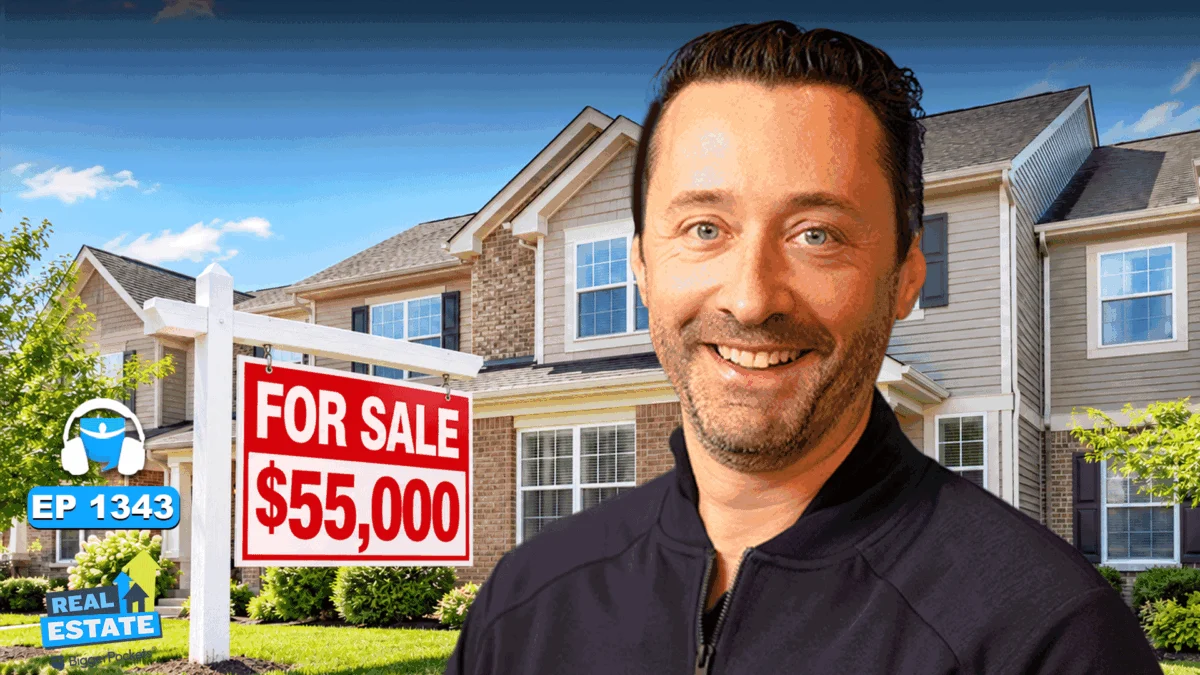
Despite the prevailing narrative of 2010—which characterized real estate as the villain of the global economy—Augustyn chose to swim against the current. He saved 20% for a down payment and purchased a distressed foreclosure in Magna, Utah, for $55,000.
"I was a psychopath," Augustyn jokes, reflecting on the stigma of buying rental property in a post-crash market. "People literally blamed real estate for bringing down the economy. But I wanted an alternative path. I realized that if I wanted to be financially independent, I couldn’t rely on a corporation to dictate my status."
Chronology of a Portfolio: From DIY to Scaled Asset Management
The early years of Augustyn’s investing career were defined by "un-teachable lessons." He spent his nights and weekends performing DIY repairs, stripping electrical wiring, and learning through trial and error. However, he quickly recognized that his time was more effectively spent on strategy than on drywall.
Within two months of renting his first property, Augustyn pivoted to professional third-party management. It was a decision that would define his future investment philosophy. By 2013, he began "house hacking"—living in one unit of a fourplex while renting the others—a strategy that allowed him to build a 20-unit portfolio over time.
His growth was significantly influenced by mentorship. A pivotal relationship with a local loan officer at the Bank of Utah taught him the nuances of FHA financing and the power of compounding. This mentorship served as a catalyst, reinforcing the core BiggerPockets philosophy: that success in real estate is rarely a solitary endeavor.
As his portfolio expanded into Tampa, Colorado Springs, Cleveland, and Huntsville, Augustyn adopted a "vibe check" approach to out-of-state investing. He would visit local businesses, talk to staff, and gauge the pulse of the community before committing capital. This human-centric approach to data gathering allowed him to identify markets where the local populace possessed a quiet confidence in their city’s growth—an indicator often missed by purely analytical models.
Supporting Data: Scaling the "Investor Stack"
Today, Augustyn manages approximately 180 doors. His portfolio consists primarily of single-family rentals and small multi-family units. His investment strategy has evolved beyond direct ownership into the Limited Partner (LP) space and private equity, demonstrating a sophisticated transition from active "hands-on" investing to a broader capital-allocation model.
His approach to property management is equally disciplined. Rather than viewing property managers as vendors, Augustyn treats them as essential partners. By fostering genuine relationships—sending Christmas cards, offering bonuses, and engaging in face-to-face meetings—he secures a level of service and loyalty that transactional investors rarely achieve.
"Good property managers don’t need new clients," Augustyn notes. "You have to show them that you are a partner worth working with."
The BiggerPockets Vision: A New Chapter for the Platform
Augustyn’s appointment as CEO of BiggerPockets is not merely a change in leadership; it is a signal of the company’s strategic realignment. After joining the community in 2017 as a reader and later as a private lender for other investors, Augustyn brings an "OG" perspective to the modern digital landscape.
His vision for the next chapter of BiggerPockets is built on three pillars:
1. People-to-People Connectivity
Augustyn aims to modernize the community’s social infrastructure. While the forums remain a cornerstone of the platform, the company is transitioning toward a 2026-ready interface, including an interactive investor map. This tool will allow members to see where others are investing and facilitate direct, meaningful networking. AI integration is being deployed not to replace human interaction, but to act as a matchmaker, connecting users with the specific community members who have demonstrated expertise in the topics they are researching.
2. People-to-Assets
A frequent pain point for the everyday investor is the hunt for quality off-market deals. Augustyn’s team is working to aggregate these opportunities, onboarding ethical, high-quality operators and institutional sellers to the platform. By centralizing off-market deal flow, BiggerPockets intends to bridge the gap between institutional inventory and the individual investor.
3. The Investor Stack
Perhaps the most significant innovation is the concept of the "Investor Stack." Similar to a tech stack, this feature will allow users to define, share, and debate the components of their real estate business—from loan officers and title companies to property managers and insurance brokers. By making these stacks visible, the platform creates a marketplace of best practices where the most successful combinations of services float to the top.
Implications for the Real Estate Industry
Augustyn’s leadership marks a return to the community’s roots while aggressively pursuing technical scalability. He is acutely aware that the current macroeconomic environment—characterized by higher interest rates and market volatility—creates unique challenges for the modern investor.
His philosophy is that the United States remains the best piece of real estate on the planet, and his role is to ensure that the everyday American has the tools to own a piece of it. He emphasizes that while the fear of signing a large debt instrument never truly disappears, the confidence gained from a network of peers makes the risk manageable.
"When you sign a loan document for a rental property, you are terrified," Augustyn admits. "But having a community that has walked that path before you—that is the difference between paralyzing fear and calculated action."
Conclusion: A Mission-Driven Future
As the new CEO, Augustyn does not intend to reinvent the wheel, but rather to accelerate the momentum built by the company’s founders. He describes his role as an honor, a "calling" that feels far more personal than his previous years in banking.
By fostering a culture where feedback is solicited directly and acted upon by engineering teams in real-time, Augustyn is positioning BiggerPockets to remain the essential infrastructure for real estate investors. As he looks toward the future, the message is clear: whether through AI-driven insights, off-market deal aggregation, or simply the peer-to-peer connection that has defined the brand for two decades, BiggerPockets is committed to ensuring that financial freedom remains within reach of the everyday investor.
For Eric Augustyn, the journey from a fearful, overworked employee to the CEO of a mission-driven organization is a testament to the power of real estate as a tool for personal and financial evolution. It is a story of moving from the sidelines of the economy to the driver’s seat, and it is a path he is now dedicated to clearing for millions of others.
