

By Kim Velsey, Curbed Real Estate Reporter
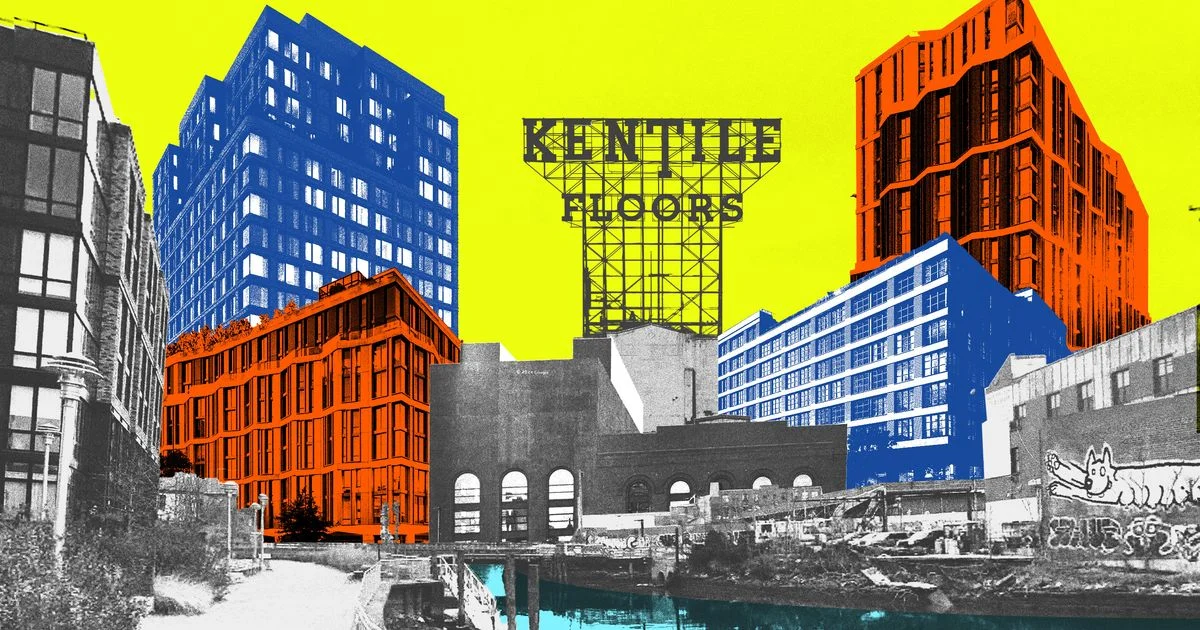
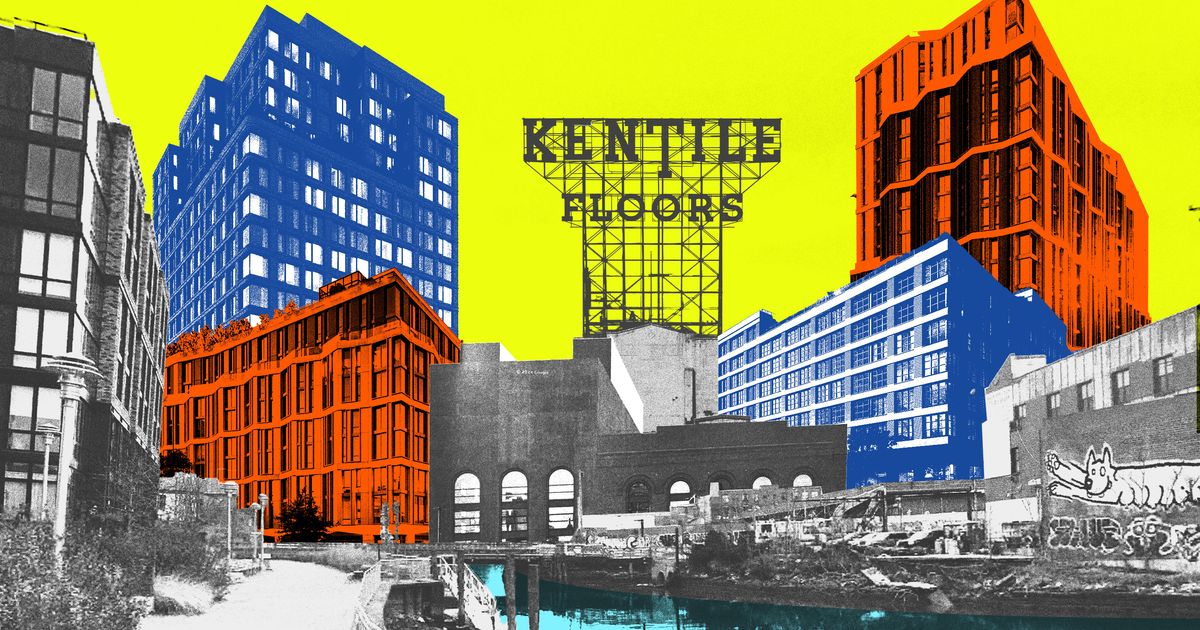
For decades, the Gowanus Canal served as the dark, pulsating heart of Brooklyn’s industrial identity. To the federal government, it was a "Superfund" disaster—a repository for coal tar, heavy metals, and raw sewage. To artists and urban explorers, it was a hauntingly beautiful post-industrial frontier. But today, the narrative of Gowanus is being rewritten in glass, steel, and luxury concrete. As a massive rezoning initiative takes hold, the neighborhood is transforming from a toxic relic into one of New York City’s most ambitious—and contentious—urban experiments.
The Transformation: A Neighborhood in Flux
Jamie Courville and her husband, Chris Reynolds, arrived in Gowanus in 2009, just before the Environmental Protection Agency (EPA) officially designated the canal a Superfund site. They were filmmakers captivated by the area’s rugged, feral aesthetic. In those days, the neighborhood offered something rare in the rapidly sterilizing landscape of North Brooklyn: cheap, expansive studio spaces and a sense of untamed possibility.
"It felt feral and gross and hopeful and free," Courville recalls.
That "feral" quality, however, was tethered to a sobering reality. The canal was, and remains, a waterway filled with pathogens. For years, the toxic sludge discouraged the residential developers who had transformed nearby Williamsburg and Long Island City. But the Superfund designation, rather than acting as a deterrent, served as a green light for institutional investment. It signaled that the federal government would finally foot the bill for the long-overdue remediation of the "century-old cesspool."
Chronology of a Rezoning
The path to the current development boom was paved by years of political maneuvering and community activism. In 2016, then-City Councilmember Brad Lander spearheaded a five-year process to rezone the industrial neighborhood. Lander’s vision was ambitious: he aimed to leverage the rezoning to demand unprecedented community benefits from developers, including thousands of affordable housing units, modernized public housing, and a public esplanade along the canal.
By late 2021, the rezoning was approved, covering 82 blocks. The timing was critical. Developers, eager to qualify for the soon-to-expire 421-a affordable housing tax break, initiated a construction frenzy that far outpaced previous neighborhood transformations.
"Williamsburg evolved over the course of 20 years," says Corcoran broker Deborah Rieders. "Gowanus is happening much more quickly."
The Toxic Reality: Remediation and Risks
While luxury towers rise, the physical reality of the neighborhood remains complex. The remediation of the canal is significantly behind schedule. Dredging and capping the 1.8-mile-long waterway has seen costs balloon from $500 million to an estimated $1.5 billion. Critical infrastructure, such as the combined sewage overflow (CSO) tanks designed to prevent future contamination, is not expected to be completed until 2029.
Perhaps more alarming for current residents is the discovery of "vapor intrusion." Trichloroethylene (TCE)—a toxic carcinogen used in the 20th-century paint and dry-cleaning industries—has been found in the basements of several local structures, including public schools and popular community venues like the Royal Palms Shuffleboard Club.
"We know with cancer that the latency is very long," says Ana Navas-Acien, chair of environmental health at Columbia University. "You’re basically playing the lottery if you’re exposed."
Despite these findings, the regulatory framework is limited. The Department of Environmental Conservation (DEC) has reached out to over 1,600 properties for voluntary testing, yet only a small fraction have participated. For many, the fear of discovering contamination—and the subsequent legal and financial liability—outweighs the desire for transparency.
Official Responses and Bureaucratic Mazes
The burden of cleanup is currently split between private developers, who are responsible for their individual sites, and federal/state agencies tasked with the canal itself. The resulting process is, by many accounts, a "baroque bureaucratic maze."
When residents at the Children’s School, which services students with neurodivergence, expressed concerns about vapor intrusion, the initial response from officials was marked by conflicting narratives. While a janitor noted that industrial fans were running to vent toxic gases, agency representatives later offered conflicting information, fueling public distrust.
Activists continue to push for more rigorous oversight, arguing that the city’s rush to develop has consistently prioritized economic output over public health. The "Gowanus Green" project, a planned 100-percent affordable housing development, has been stalled for years due to disputes over how to safely remediate the land where a manufactured gas plant once stood.
Implications: The New "Venice of Brooklyn"
As the luxury towers reach completion, a new demographic is moving into the neighborhood. These residents are largely drawn to the "vibe"—the proximity to historic brownstone Brooklyn, the high-end amenities like rooftop pools and Equinox-level gyms, and the remaining industrial charm.

For Ethan Russell, a producer who moved to the area with his family, the pollution is a background concern. "I have friends who are like, ‘You’re insane—it’s toxic there,’" he says. "But I was not particularly concerned about that, living on the fifth floor in the short term."
This sentiment captures the paradox of the modern Brooklyn real estate market. In a city where inventory is historically low and prices are at record highs, "toxic sludge" is increasingly viewed as a temporary hurdle rather than a permanent deterrent. Developers have successfully rebranded the canal as an asset, marketing waterfront views and "serene" esplanades.
The Cultural Shift
The transformation of Gowanus is more than just a change in architecture; it is a fundamental cultural shift. The neighborhood is losing its "randomness"—the auto garages, the artist-run spaces, and the gritty, experimental venues that defined its character. While Arts Gowanus has successfully negotiated for 100 affordable artist studios as part of the community-benefits agreement, many fear that the neighborhood’s soul is being replaced by a sterile, albeit beautiful, simulation.
"It’s not just like, ‘Oh, I don’t like how it looks now,’" says filmmaker Jamie Courville, who moved away as the neighborhood became increasingly unaffordable. "It’s a cultural shift. I miss the randomness that used to exist here."
Conclusion: A High-Stakes Bet
Whether the rezoning will ultimately succeed depends on one’s definition of success. If the goal was to transform underutilized industrial land into a dense, transit-oriented neighborhood with a mix of market-rate and affordable housing, the project is well on its way. If the goal was to create a safe, healthy, and culturally authentic environment, the jury remains out.
As of today, a $25,000-a-month penthouse at 544 Carroll Street is occupied, signaling that the luxury market is fully committed to the Gowanopolis vision. Meanwhile, the residents living in the older buildings, the students in the schools, and the families in the affordable units are navigating a reality that is literally and metaphorically being built upon the foundation of the past.
Gowanus is no longer just a canal; it is a laboratory for 21st-century urbanism. The question is whether the neighborhood, once finished, will be a home for New Yorkers or simply another monument to a "plutocrat’s fantasy" of what Brooklyn should look like. For now, the cranes remain, the trucks continue to haul away the dirt, and the city watches to see if this grand experiment will sink or swim.
