

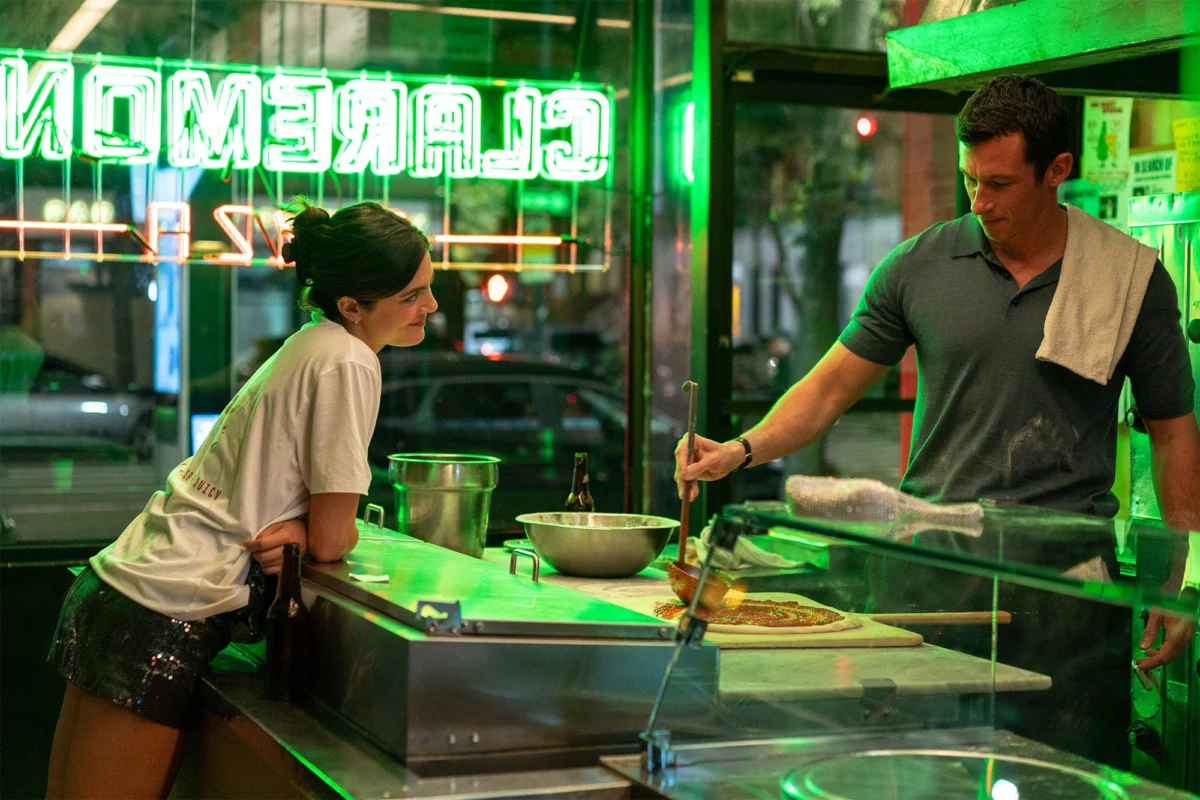
In the landscape of modern cinema, the romantic comedy has frequently been accused of stagnation, often recycling the same tired tropes of "meet-cutes" in airports or coffee shops. However, director Will Gluck’s latest offering, One Night Only, has shattered the mold—and the internet—with a premise so audacious it demands a conversation about the intersection of politics, dating culture, and the necessity of escapism. Starring the formidable duo of Monica Barbaro and Callum Turner, the film explores a fictionalized New York City where, under a draconian government mandate, single people are permitted to engage in sexual activity on only one night per year.
The film has ignited a firestorm of social media discourse. While some viewers are preoccupied with the logistics—questioning how such a mandate would be enforced or what exactly constitutes “sex” in this puritanical, high-stakes universe—the creative team behind the project insists that the absurdity is the point. One Night Only is, at its core, a satire, holding a funhouse mirror to contemporary anti-hookup rhetoric.
The Premise: A Satire of Modern Puritanism
The logline of One Night Only reads like a dystopian thriller: “Two strangers crash into each other in an ever-so-slightly fictionalized New York on the one night when single people are allowed to have sex.” This narrative framework provides more than just a setup for romantic entanglement; it serves as a biting critique of modern political discourse.
The film leans into the current climate of "trad-wife" influencers, incel forums, and rising legislative efforts to curtail reproductive and sexual freedoms. By presenting a world where government intervention has extended into the private bedroom, Gluck crafts a caricature of the "moral majority." When Allie (Barbaro) and Owen (Turner) navigate this landscape, the humor is derived from the terrifying proximity of their reality to our own. As Barbaro notes, "There are moments where I was like, ‘Oh, this could actually happen.’ The reference to incels and the way some of the politicians are portrayed makes you think, ‘Wow, we’re maybe not too far off.’"
Chronology of a Production
The journey of One Night Only from script to screen was marked by a desire to balance the "high-stress" nature of the film’s premise with the inherent lightheartedness of the rom-com genre.
- Development Phase: Will Gluck began conceptualizing the film during a period of increased societal focus on "dating apps and the death of romance," aiming to create a story that felt both grounded in modern frustration and detached enough to be humorous.
- Casting: The selection of Barbaro and Turner was pivotal. Both actors bring a naturalistic chemistry that anchors the film’s more outlandish sequences.
- Principal Photography: Filming in New York City provided the backdrop for the characters’ frantic, one-night search for connection. The production team utilized the city’s inherent energy to mirror the desperation of the characters, who treat the "One Night" like a high-stakes, city-wide holiday.
- The Press Tour: Following the release of the trailer, the cast engaged in a rigorous promotional cycle, defending the film’s thematic weight while simultaneously leaning into the flirtatious banter that defined their characters.
Supporting Data: The Resurgence of the Rom-Com
The film’s release comes at a time when the romantic comedy genre is experiencing a significant cultural renaissance. After a decade of being relegated to streaming-only content or B-tier releases, the genre is finding its footing back in theaters.
Industry analysts suggest that the return of the rom-com is a direct response to the "catharsis" required by a global audience exhausted by political and economic uncertainty. According to recent box office trends, films that prioritize human connection—specifically those focusing on the intricacies of dating in a big city—are outperforming darker, more cynical genres.
"People love love," says Callum Turner. "Watching people fall in love is a universal experience, and after the last few years, there is a renewed hunger for that kind of emotional resonance on the big screen."
The Stars Weigh In: Monica Barbaro and Callum Turner
In a candid interview ahead of the film’s release, Barbaro and Turner discussed the logistical "nightmare" of their characters’ world, revealing that their on-screen chemistry is a reflection of a genuine, easygoing rapport.
On the Logic of the Mandate
When asked how they would personally handle a "One Night Only" scenario, the pair’s responses highlighted the absurdity of the premise.
"It’s that thing where, every New Year’s, I want to do something really nice," Barbaro explains. "But by the time it’s October 28th, I’m like, ‘Oh, shit. I have to find something.’ I would never be able to plan out my One Night Only well, and I would inevitably be disappointed. I’d probably just move to another country!"
The Debate of Build-Up vs. Aftermath
The film features a recurring debate between Allie and Owen regarding whether the anticipation of sex or the post-coital intimacy is the "best part."
"I think they both have a solid case," Turner admits. "The buildup is the tension, but the after is the connection."
Barbaro remains more pragmatic, laughing as she insists, "There are 365 days of the year, we’d be absolutely fine. Humans would be fine. I don’t believe in this mandate."
The "Ick" Factor of Serenading
One of the film’s most memorable motifs is the act of being serenaded. In the movie, Allie experiences two diametrically opposed reactions to being sung to—one charming, one inducing the "ick."
"I think there’s always an okay time to be sung to," Barbaro says. "It’s more about the lyrics of that particular song." She goes on to highlight her favorite line in the script: "It’s not a duet."
Implications: The Future of Romantic Satire
The success of One Night Only suggests that the future of the genre lies in its ability to adapt to modern anxieties. By taking a satirical approach to the "anti-hookup" culture, the film invites the audience to laugh at the very policies that are currently being debated in real-world legislative chambers.
Furthermore, the film challenges the industry to trust that audiences are capable of holding two conflicting ideas in their heads simultaneously: that the premise is terrifyingly plausible, and that the love story is entirely worth rooting for.
As Barbaro and Turner demonstrated during their press interviews—effortlessly rattling off each other’s coffee (Cortado for her, Cappuccino for him) and pizza (Margherita for both) orders—the key to a great rom-com isn’t just a high-concept premise; it’s the ability to make the audience believe that, even in a world governed by restrictions, human connection remains the most potent form of rebellion.
Ultimately, One Night Only is more than just a story about a government mandate. It is a testament to the resilience of the human heart, the necessity of laughter, and the enduring power of a good, old-fashioned, star-crossed love story. As the film continues its theatrical run, it serves as a reminder that even when the world feels like it’s becoming a caricature of itself, the search for that perfect connection remains the most compelling story of all.
One Night Only is in theaters now.
