

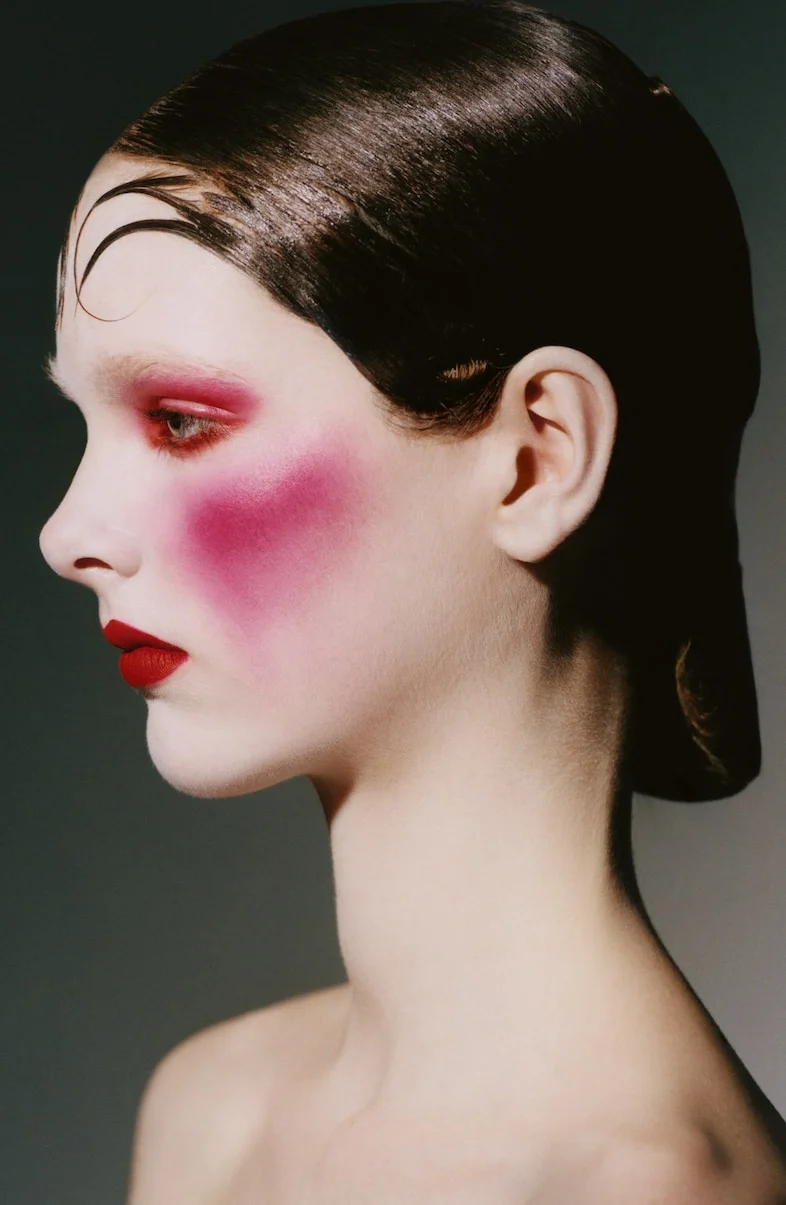
In an era defined by the pervasive "Clean Girl" aesthetic—a trend characterized by neutral palettes, barely-there foundations, and an obsession with minimalism—make-up artist Lucy Bridge stands as a defiant, vibrant anomaly. Her work, a kaleidoscopic exploration of pigment and texture, represents a return to the transformative power of cosmetics. With the release of her debut book, Colour Mode, published by Thames & Hudson, Bridge offers a definitive retrospective of a career spent pushing the boundaries of what face paint can achieve.
Spanning three and a half years of development in collaboration with creative director Veronica Ditting, the book is more than a portfolio; it is a manifesto for maximalism. Featuring ten commissioned shoots with legendary photographers such as Paolo Roversi, Oliver Hadlee Pearch, and Thurstan Redding, Colour Mode documents the intersection of high fashion, art, and the visceral, tactile nature of make-up.
The Genesis of a Vision: A Life in Colour
To understand Lucy Bridge’s aesthetic, one must look back to her formative years. Bridge has lived her life in saturated tones, a trait that manifested early during her school years when she would cycle through hair dyes on a weekly basis, much to the chagrin of her instructors. This early rejection of the status quo set the stage for her professional ascent.
After moving to London in 2008, Bridge’s bold, unapologetic style—often featuring neon pink blusher and shimmering, emerald-toned eyebrows—caught the attention of iconic photographer Tim Walker. While commuting on a London bus, Bridge was scouted by the visionary photographer, an encounter that would serve as the catalyst for her career.

Today, she occupies a rarefied space in the fashion industry. Her client list reads like a roll call of the avant-garde: Jean Paul Gaultier, Charles Jeffrey, and Dries Van Noten. Currently, she serves as the global make-up artist for Tom Ford under the creative direction of Haider Ackermann, a role that further cements her influence on the global stage. Her signature style—characterized by lacquered crimson lips that bleed into deep merlot, acid-green eyeshadows, and molten silver accents—is an urgent, necessary antidote to the homogenization of modern beauty.
A Chronology of Artistic Evolution
The development of Colour Mode was a slow, deliberate process, reflecting the precision Bridge brings to her work. Over the course of 42 months, Bridge and Ditting curated a collection that bridges the gap between commercial editorial work and fine art.
- Early Beginnings (2008–2012): The period following her discovery by Tim Walker, during which Bridge transitioned from a local enthusiast to a burgeoning industry name, defined by experimentation and a "more is more" philosophy.
- The Professionalization Phase (2013–2019): Bridge solidified her reputation by working with major fashion houses, refining her technique while maintaining her signature experimental edge.
- The Colour Mode Project (2023–2026): The intensive collaborative period with Veronica Ditting, involving the commissioning of ten major photographic series and the meticulous documentation of "Looks in Process," captured by photographer Jean Marques.
Behind the Lens: The Collaborative Process
A significant portion of Colour Mode is dedicated to the relationship between the make-up artist and the photographer. Bridge’s work is rarely a solo endeavor; it is a dialogue. In her interview, she highlights three specific partnerships that defined the book’s thematic range.
Carlijn Jacobs: The Surrealist Foot
Perhaps the most striking image in the book features a model’s foot adorned with intricate beadwork. "This shoot really represents my head as a make-up artist," Bridge explains. The process was quintessentially abstract: after failed attempts to place the beads on the face and hands, Bridge pivoted to the feet. "One of these models needs to give me one of their feet," she recalled. The result, complete with fake toenails and vibrant pigments, became a defining image of the book—a testament to Bridge’s ability to find beauty in the unconventional.

Tim Walker: The Psychedelic Return
Bridge’s collaboration with Tim Walker is steeped in history. Having worked together for 15 years, there is an inherent trust that allows for rapid, intuitive creation. For Colour Mode, Walker drew inspiration from the 1970s San Francisco hippie group, The Cockettes. The shoot focused on character creation, using a minimalist white background to ensure the make-up remained the primary narrative force. For Bridge, the experience served as a reminder of the nurturing environment Walker provides, allowing her the freedom to explore psychedelic, gender-bending aesthetics.
Jack Davison: The Magician of Light
Jack Davison, whom creative director Veronica Ditting dubbed "the magician," was the final photographer to shoot for the project. Unlike her usual methodical approach, the shoot with Davison was an exercise in letting go. "I don’t even think he knows what he’s getting on the day," Bridge noted. The cover of the book itself emerged from this spontaneity; Davison projected images of Bridge’s own messy, used make-up palettes onto the model’s skin. The result is a meta-commentary on the craft of make-up, showing not just the final look, but the tools and the labor behind it.
Supporting Data and Industry Implications
The release of Colour Mode comes at a pivotal moment in the beauty industry. Market data suggests a growing "fatigue" among Gen Z and millennial consumers toward the hyper-curated, filter-heavy looks that have dominated social media platforms for the better part of a decade.
- Shift in Consumer Preference: Recent beauty trends indicate a move away from the "Clean Girl" aesthetic toward "maximalist expressionism," a category in which Bridge is a clear leader.
- The Role of the Artist: By highlighting "Looks in Process," the book serves an educational function, demystifying the labor-intensive nature of editorial make-up. It shifts the perception of make-up from a tool for "fixing" imperfections to a medium for identity construction.
- Publishing as Archival Art: The collaboration with Thames & Hudson signals the industry’s recognition of make-up artistry as a legitimate academic and artistic discipline, worthy of long-form documentation rather than just ephemeral social media posts.
Official Responses and Industry Outlook
The industry reception has been overwhelmingly positive. Critics note that Colour Mode provides a blueprint for a new generation of artists who feel stifled by the commercial pressure to produce "wearable" looks. By documenting her failures—or rather, her "process"—alongside her successes, Bridge provides a roadmap for artistic longevity.

In an official statement regarding the book, Thames & Hudson noted that Colour Mode is intended to serve as both an inspiration for young artists and a historical record of the avant-garde beauty movement in London. For Bridge, the implications are clear: the future of beauty is not found in the subtle, but in the bold.
Implications for the Future of Beauty
Lucy Bridge’s work serves as a reminder that beauty is, fundamentally, a form of play. As the fashion industry continues to oscillate between periods of restraint and excess, Colour Mode acts as an anchor for those who view the face as a canvas rather than a chore.
The book challenges the prevailing narrative that beauty must be functional. Instead, Bridge argues for the validity of the ornamental, the surreal, and the overtly artificial. Her success, and the success of this book, suggests that the market is ready for a departure from the "Clean Girl" era. We are entering a phase where the artistic signature of the make-up artist is as important as the brand they are representing.
As Colour Mode reaches the shelves, it is likely to spark a resurgence in artistic make-up training, encouraging students to look toward the surrealism of Jack Davison or the high-fantasy aesthetic of Tim Walker for inspiration. Bridge has not only documented her career; she has set the tone for the next decade of beauty, urging the world to stop blending in and start standing out in full, vibrant colour.
