

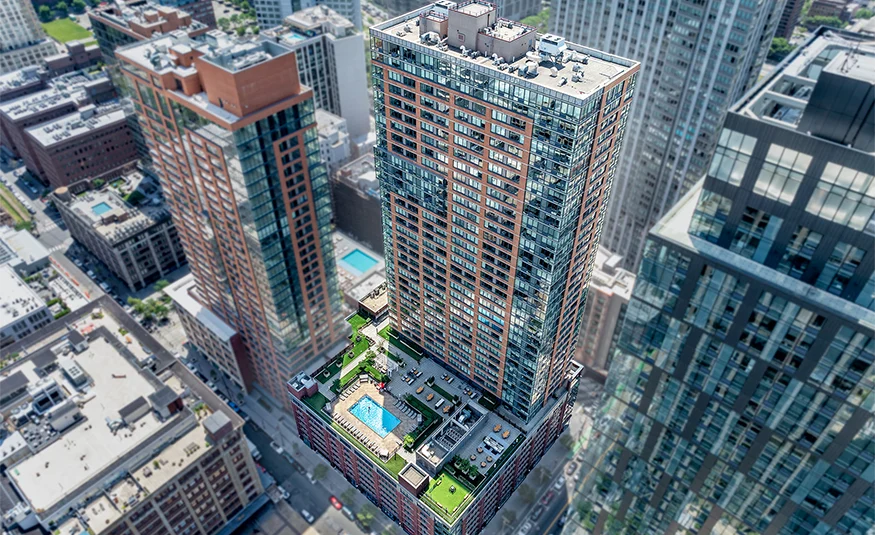
The New Jersey multifamily real estate market has emerged from a period of macroeconomic uncertainty with renewed vigor, anchored by record-breaking occupancy levels and a robust surge in transaction volume. According to the New Jersey Multifamily MarketBeat Year-End 2025 report by Cushman & Wakefield, the sector is experiencing a significant "re-opening" of the investment pipeline, signaling that the Garden State remains a premier destination for institutional capital.
As of the close of 2025, the state’s multifamily sector reached a total sales volume of $2.3 billion—an impressive 136.2% year-over-year increase. This recovery, fueled by stabilizing interest rates and a persistent housing shortage, has set a constructive tone for 2026, where the focus has shifted toward disciplined pricing and the long-term potential of transit-oriented submarkets.
Main Facts: The Numbers Behind the Surge
The narrative of the New Jersey rental market is one of supply constraints meeting relentless demand. Statewide, occupancy rates climbed to an all-time high of 94.1%, marking a 300-basis-point increase compared to the previous year. This tightening of supply has naturally pushed average effective rents upward. In 2025, the state averaged $3.07 per square foot, a 1.0% annual increase, which climbed further to $3.11 as the market entered the first quarter of 2026.
The "Gold Coast"—the stretch of New Jersey waterfront directly across from Manhattan—remains the epicenter of this activity. In 2025 alone, the region accounted for $896.6 million in total transactions. These figures underscore the region’s enduring appeal to both renters, who prize proximity to New York City’s employment hubs, and investors, who view these assets as safe havens in a volatile global economy.
A Chronology of Recovery: From Sidelines to Full Steam
To understand the current state of the market, one must look back at the trajectory of the last 18 months.
Early to Mid-2025: The Re-Opening
For much of 2024 and early 2025, investors largely retreated to the sidelines, deterred by a disconnect between buyer and seller price expectations and the high cost of debt. However, by the second half of 2025, clarity in the debt markets began to emerge. As the cost of borrowing stabilized, the "bid-ask spread" narrowed, allowing transaction volume to pick up pace.

October 2025: A Landmark Deal
The turning point for investor sentiment was solidified in mid-October 2025, when Rockpoint finalized the acquisition of The Morgan at Provost Square in Jersey City. The deal stood as the largest multifamily transaction in New Jersey for the year, serving as a bellwether for the market’s health and proving that institutional investors were ready to deploy large-scale capital once again.
Q1 2026: Maintaining Momentum
As the market transitioned into 2026, the focus shifted from simple recovery to strategic growth. New deals, such as the activity surrounding assets like The Waverton in Secaucus, demonstrate a continued appetite for well-located, professionally managed multifamily properties. The focus has moved toward long-term asset performance rather than speculative gains.
Supporting Data: Regional Disparities and Growth Drivers
The strength of the New Jersey market is not uniform; it is driven by specific submarkets that benefit from infrastructure investment and connectivity.
The Transit-Oriented Advantage
Niko Nicolaou, Vice Chairman at Cushman & Wakefield and co-head of the Northeast Multifamily Advisory group, identifies three primary drivers for the current investment landscape: stable market fundamentals, the tightening of supply, and the enduring demand for transit-oriented development. Submarkets that offer residents a seamless commute to major employment nodes—particularly New York City—continue to command premium rents and lower vacancy rates.
Infrastructure as a Catalyst
Looking ahead, the investment landscape is beginning to shift toward areas that offer better "value-add" potential. While Jersey City and Hoboken have long been the kings of the Gold Coast, new regulatory environments may influence future investment. Marcus & Millichap’s recent market reports highlight that the implementation of bans on algorithm-based rent-setting software in cities like Hoboken and Jersey City could impose administrative burdens on operators.
Consequently, investors are increasingly looking toward neighboring municipalities like Bayonne. This pivot is supported by significant infrastructure improvements, including the opening of new ferry terminals and the planned expansion of the Newark Bay Bridge, slated to begin construction later in 2026. These projects are expected to enhance connectivity, making Bayonne and similar regions increasingly attractive to commuters priced out of the traditional Gold Coast core.

Official Perspectives: Expert Analysis
The consensus among industry leaders is that the multifamily sector has entered a "constructive" phase. Ryan Dowd, Managing Director at Cushman & Wakefield, captured the sentiment of the investment community, noting that the "story of 2025 was the re-opening of the transaction market."
"That momentum, combined with record occupancy and limited long-term supply in core submarkets, sets a constructive tone for multifamily investment across New Jersey this year," Dowd stated.
Nicolaou echoed this outlook, suggesting that the era of "post-pandemic exuberance" has been replaced by a more disciplined approach. "We expect disciplined pricing and well-located assets to continue attracting strong institutional interest in 2026," he added. This focus on "well-located assets" suggests that investors are no longer chasing every available deal, but are instead focusing on high-quality, transit-linked properties that can withstand shifts in the broader economy.
Implications for the Future: Challenges and Opportunities
While the data paints a picture of a flourishing market, the sector faces a complex set of challenges as it navigates the remainder of 2026.
The Regulatory Landscape
The move by cities like Jersey City and Hoboken to regulate software used in rent pricing—such as RealPage—reflects a broader national push to curb rising housing costs. For property owners and developers, these regulations introduce new operational costs and legal considerations. Investors are now calculating the "administrative burden" of operating in these cities, which may lead to a temporary softening of investment interest in these specific locales in favor of less restrictive municipalities.
Rent Growth vs. Affordability
Average effective rent growth of 1.0% represents a moderation from the aggressive, post-pandemic peaks seen in 2022 and 2023. While this is positive for the overall health and sustainability of the rental market—preventing the "burnout" of the tenant base—it also poses a challenge for developers who are managing rising construction and insurance costs.

The Supply-Demand Equilibrium
The defining feature of the New Jersey market remains the limited supply of new, high-quality, transit-oriented housing. Because the process of entitling and constructing new multifamily developments in New Jersey is notoriously complex and time-consuming, there is little risk of a supply glut in the near term. This "supply-constrained" nature of the market is precisely what continues to drive institutional interest, as it provides a buffer against the typical cycles of overbuilding found in other parts of the country.
Conclusion: A Mature Market Outlook
As 2026 progresses, the New Jersey multifamily market stands in a position of strength. The combination of record occupancy levels, a clearer path for debt financing, and the strategic importance of transit-oriented corridors ensures that the state will remain a focal point for real estate capital.
Investors, however, must be more surgical than in previous years. Success in the current market requires a deep understanding of local regulatory nuances, the foresight to invest in emerging transit hubs like Bayonne, and the discipline to adhere to pricing models that prioritize long-term asset stability over short-term volatility. With the "transaction drought" of the previous cycle firmly in the rearview mirror, New Jersey’s multifamily sector is not just surviving—it is evolving into a more mature, resilient, and sophisticated investment landscape.
