

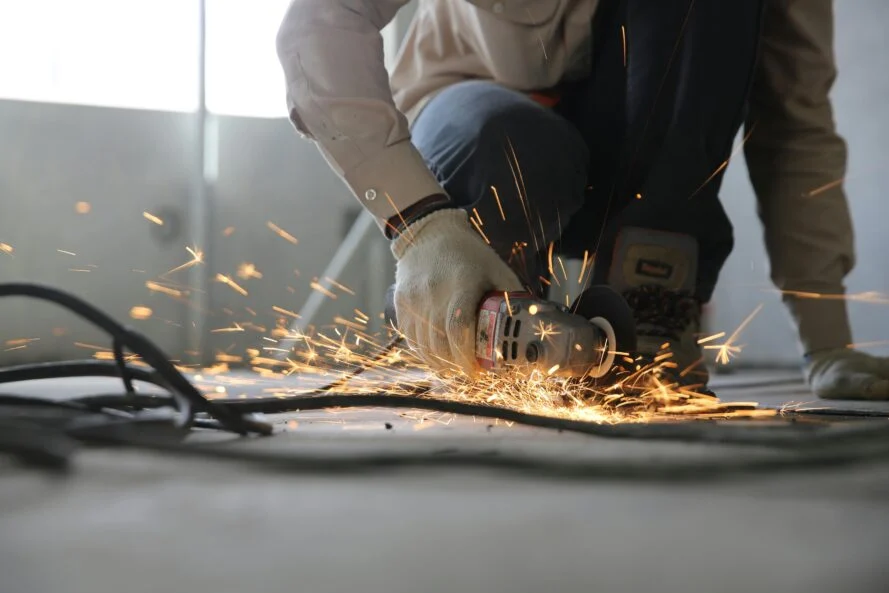
In the world of metal fabrication, woodworking, and restoration, the difference between a professional finish and a botched project often lies in the tool’s ability to navigate the "in-between." While stationary belt sanders are the workhorses of any workshop—perfect for flattening large boards or squaring off stock—they become liabilities when faced with intricate frames, narrow apertures, or curved surfaces.
As modern fabrication trends shift toward more complex, multi-faceted designs, the industry has seen a resurgence in the importance of portable belt sanders. These tools represent a paradigm shift: instead of wrestling a heavy workpiece into a fixed machine, the operator brings the abrasive to the project. This article explores the mechanics, selection criteria, and professional applications of portable and specialized pipe belt sanders, providing a comprehensive guide for those aiming to elevate their craftsmanship in confined spaces.
The Core Challenge: Why Traditional Machines Fall Short
Large-scale belt sanders are designed for volume and surface area. Their wide, flat platens and massive motors are ideal for stock removal on planar surfaces. However, the very features that make them efficient in a production setting make them cumbersome for detailed work. When a welder needs to clean a joint inside a tubular frame, or a furniture maker needs to smooth an internal corner, a large sander is not just inefficient—it is physically incapable of accessing the workspace.
The failure to use a specialized, compact tool in these scenarios often leads to "collateral damage." Operators may attempt to force a large machine into a tight spot, resulting in uneven gouges, damaged surrounding surfaces, or, worse, safety hazards due to lack of control. By contrast, a portable, narrow-profile belt sander allows for surgical precision, enabling the user to maintain full visual and physical contact with the material being removed.
Chronology of Tool Evolution: From Static to Dynamic
The evolution of the belt sander traces back to the industrial revolution, where heavy-duty stationary units were the norm. As the 20th century progressed, the demand for portable power tools grew. The 1970s and 80s saw the miniaturization of motors, which allowed for the development of the "file sander" or "finger sander"—the earliest iterations of the modern compact belt sander.
In the last decade, we have seen a pivot toward "application-specific" portability. Manufacturers have moved beyond simple, small-motor units to sophisticated systems like the pipe belt sander. These machines were born from the specific needs of the stainless steel railing and industrial pipe-fitting industries. By creating an "arch" of contact rather than a flat line, these tools solved the long-standing problem of finishing curved surfaces without creating flat spots—a common defect when using standard grinders.
Supporting Data: Factors Influencing Performance
To understand why one machine excels where another fails, one must look at the technical specifications that dictate performance. According to industry feedback from fabrication professionals, the following variables are critical:

- The Sanding Arm Geometry: The arm is the "probe" of the machine. A slim, tapered arm provides the clearance needed for tight internal frames, whereas a wider arm offers stability for edge work.
- Abrasive Belt Velocity (Surface Feet Per Minute): This is the most misunderstood variable. High-speed operation is not always superior. For heat-sensitive metals like stainless steel, high speeds generate excessive friction, which can cause discoloration and structural hardening of the metal. Variable speed control is non-negotiable for professional-grade work.
- Belt Tracking Systems: A machine that cannot hold its tracking is a liability. Precision engineering in the tensioning spring and the crowning of the pulleys determines whether a belt will stay centered or drift into the housing, causing premature wear and potential safety risks.
- Ergonomic Weight Distribution: Because portable sanders are hand-held, the "center of gravity" is vital. A front-heavy tool might be better for downward pressure, but it will lead to rapid operator fatigue when working on vertical or overhead surfaces.
Official Industry Perspectives: The Expert Consensus
Leading tool manufacturers emphasize that the "buy-once, cry-once" philosophy applies heavily to sanding equipment. Representatives from top-tier power tool brands note that users often underestimate the importance of the abrasive-to-material interface.
"A tool is only as good as the grit it uses," says a lead engineer at a major industrial tool firm. "We see professionals purchase a $500 sander and then try to use low-quality, hardware-store-grade belts. The vibration, the inconsistent grit distribution, and the poor seam strength of cheap belts will destroy the motor bearings of even the best machine."
Industry experts also stress that the transition from a standard sander to a pipe sander is a significant upgrade for any shop doing railings or furniture. The pipe sander’s ability to wrap 180 degrees around a tube means the operator can achieve a uniform finish in one or two passes, whereas a flat sander might require a dozen passes and still result in an unsightly, faceted finish.
Implications for Fabrication and Maintenance
The shift toward more portable, specialized sanding technology has massive implications for workplace efficiency.
1. Reduced Material Waste
By using the correct tool, operators avoid "over-sanding." When you have a machine that can reach exactly the spot that needs attention, you don’t have to remove excess material from the surrounding areas to "even out" a mistake.
2. Enhanced Safety Standards
The use of dust extraction ports on modern portable sanders is a critical development. As the health implications of fine metal and wood dust become better understood, the ability to connect a sander directly to a HEPA-filtered vacuum is no longer a luxury; it is a fundamental requirement for a compliant workshop.
3. Precision Finishing in Metalwork
For metalworkers, the ability to remove a weld without flattening the surrounding material is the hallmark of a master. Using a narrow-belt portable sander allows the operator to "chase" the weld bead. By adjusting the speed and selecting the right abrasive (e.g., a ceramic belt for heavy removal followed by a surface conditioning belt for finishing), one can achieve a seamless transition between the weld and the base metal.

Strategic Selection: How to Choose Your Next Tool
Before investing in a new sanding system, consider the "Five Pillars of Selection":
- Access: Measure the smallest opening your project requires. If you are working on bicycle frames or intricate metal art, you need a finger-sander with a narrow, adjustable arm.
- Material: Are you working with wood, steel, or aluminum? Wood requires high-speed dust collection. Metal requires variable speed to manage heat and prevent clogging the belt.
- Geometry: Are your surfaces flat, curved, or tubular? If you do more than 20% of your work on round surfaces, skip the general-purpose sander and invest in a pipe belt sander.
- Consumables: Before buying the tool, check the availability of the belts. If a tool requires proprietary, expensive, or hard-to-find belt sizes, it will be a drain on your budget in the long run.
- Ergonomics: Test the switch location. Can you reach the speed control while maintaining your grip? Is the tool balanced enough for you to work for 30 minutes without wrist strain?
Conclusion: The Path to Cleaner, Faster Results
The modern workshop is defined by its efficiency and the quality of its output. Portable belt sanders and specialized pipe sanders are not just accessories; they are fundamental tools that bridge the gap between "good enough" and "professional grade."
By understanding the mechanics of these machines—from the importance of variable belt speeds to the critical nature of arm geometry—you can stop forcing square pegs into round holes. Instead, you can choose the right tool for the specific geometry of your project, resulting in faster material removal, more precise finishes, and a much more ergonomic, enjoyable workflow. Whether you are removing a stubborn weld on a stainless steel railing or finishing the delicate joints of a custom furniture piece, the right portable sander ensures that you stay in control of the work, rather than the work controlling you.
Frequently Asked Questions (FAQs)
Q: Is it worth buying a dedicated pipe sander if I only do occasional tube work?
A: If you only work with tubes once or twice a year, a standard compact belt sander with a wide, flexible belt or a flap wheel accessory may suffice. However, if you are doing professional fabrication or multiple projects, the time saved and the consistency of the finish provided by a dedicated pipe sander will pay for the tool in just a few projects.
Q: Why does my sanding belt keep sliding off the track?
A: This is usually due to improper tension or a misaligned tracking knob. Check the tracking mechanism for debris, ensure the belt is the correct width for the machine, and make sure the arm is not bent. If the problem persists, it may be a sign of worn-out pulleys.
Q: What is the best way to clean a belt to make it last longer?
A: Use a rubber sanding belt cleaner (often called a "crepe stick"). Pressing this against a running belt lifts the trapped dust and metal particles from the abrasive grains, effectively "resetting" the belt and extending its lifespan significantly.
Q: How do I avoid burning the metal while sanding?
A: Use a lower speed setting and do not apply excessive pressure. If you are using an abrasive that is too fine, it will generate more heat than material removal. Switch to a slightly coarser grit to "cut" the metal faster, then finish with a fine grit to refine the surface.
